




















 Time:Nov 16, 2026
 Share:


GLP-1 drugs made their name in diabetes and weight management. In 2026 they moved into a field few people linked them with: the biology of aging. That raises a direct question for anyone who makes or buys longevity supplements. If a prescription drug can touch aging itself, what is left for nutrition? Our reading of the evidence is that longevity supplements are not being replaced. The category is being unbundled into specific health goals, and each one needs its own evidence.
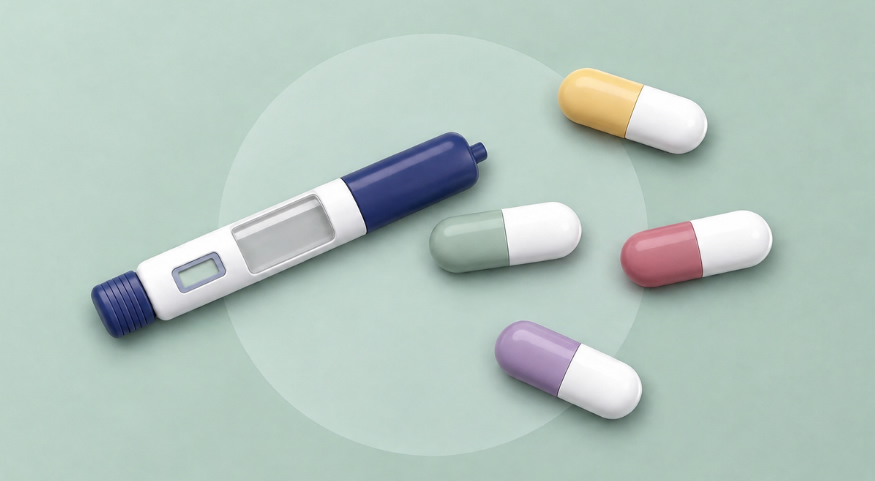
Why GLP-1 Drugs Are Now Part of the Longevity Supplements Conversation
The original logic of GLP-1 receptor agonists such as semaglutide (sold as Ozempic and Wegovy) was simple: lower appetite, lower food intake, lower body weight, better metabolic markers. Over the past few years, trials have extended that picture to the heart, kidneys, and liver. The newest step is the one that has put "GLP-1 longevity" into headlines: studies that measure markers of aging directly, instead of a single disease.
That shift matters for the supplement industry for a practical reason. Longevity supplements have long been sold on the idea that no drug addresses aging. If metabolic drugs start to show effects on aging biology, brands and formulators need a clearer answer to what their products are for.
Can GLP-1 Drugs Slow Aging? What Two 2026 Studies Show
Two studies published in 2026 are behind most of the recent discussion.
Late-Life Semaglutide Extended Lifespan in Female Mice
In September 2026, a team at the University of California, Berkeley reported in Nature that semaglutide, started late in life, slowed several aging-related changes in female mice [1]. Mice treated from 20 months of age showed better cognitive and physical function than untreated animals. In a separate group treated until the end of life, median lifespan was close to 100 days longer than in untreated mice.
The researchers also compared the drug with calorie restriction matched to how much the treated mice ate. Both approaches prevented some age-related decline, but only semaglutide improved exploratory behavior, spatial memory, and glucose tolerance. That suggests the effect was not explained by eating less alone.
Slower Epigenetic Aging in a Human Trial
The human evidence is earlier and narrower. A study in Nature Communications re-analyzed a 32-week randomized, double-blind, placebo-controlled trial of semaglutide in 108 adults with HIV-associated lipohypertrophy, a condition marked by excess abdominal fat [2]. Using DNA methylation "clocks", the authors found slower epigenetic aging in the semaglutide group across several measures, including a roughly 9% slower pace of aging on the DunedinPACE clock.
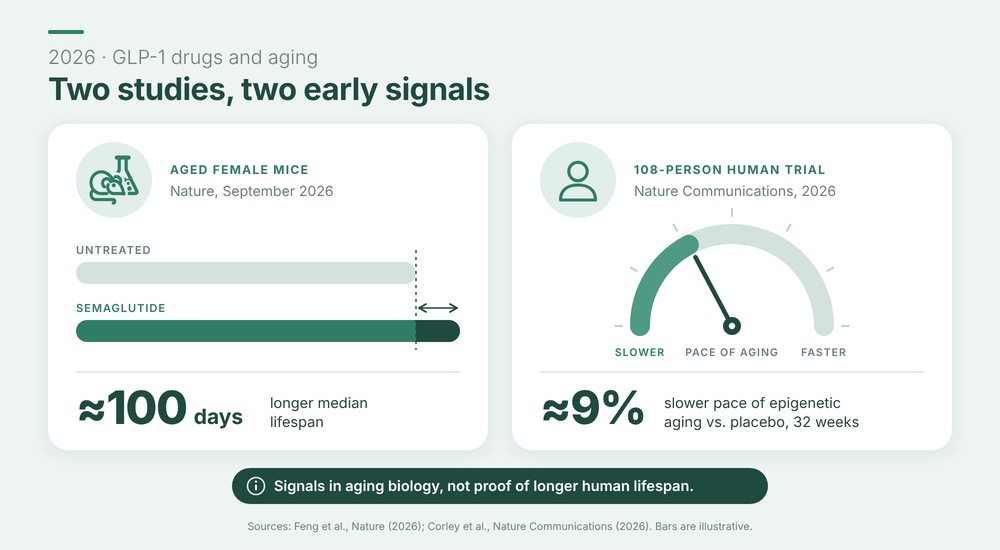
Figure 1. Two 2026 studies behind the GLP-1 longevity discussion, and what each one can and cannot show. [1][2]
What These Studies Do Not Prove
Neither study shows that GLP-1 drugs extend human lifespan, and the authors say so themselves.
The lifespan data are from mice. The Nature study used female mice only.
The human analysis was post hoc. Epigenetic aging was not a planned endpoint of the original trial.
The population was specific. People living with HIV tend to show accelerated biological aging, so results may not carry over to healthy older adults.
Epigenetic clocks are biomarkers. A slower clock is not the same as fewer diseases or more healthy years.
No GLP-1 drug is approved to slow aging. What the two studies do show is a research path taking shape: from metabolic health, to whole-body health, to the hallmarks of aging, to healthspan.
Will GLP-1 Drugs Replace Longevity Supplements?
Not on current evidence. GLP-1 drugs and longevity supplements address different needs, and the rise of GLP-1 use is creating new nutritional questions instead of closing old ones.
Start with the nutrition gap. About 11% of U.S. adults now take a GLP-1 medication for weight loss, according to Gallup data reported by NutraIngredients in August 2026 [3]. Lower appetite means lower intake of protein and micronutrients, which is why food, supplement, and pharmaceutical companies are all building "GLP-1 companion" products. We covered that category in our guide to GLP-1 companion supplements.
Then consider scope. GLP-1 drugs remain prescription medicines centered on weight and metabolic disease. The needs that longevity supplements serve are much more spread out: cellular health, sleep and recovery, women's life stages, and day-to-day metabolic balance in people who do not qualify for, or do not want, a prescription.
So comparing a drug and a supplement on which is "more effective" misses the point. The more useful question is which specific need each one answers.
From Anti-Aging to Healthspan: How Longevity Nutrition Is Being Unbundled
"Anti-aging" was always a loose promise. Two forces are now breaking it into parts.
The first is consumers. Few people care about a biological age number for its own sake. They care about sleeping well, staying sharp, getting through menopause comfortably, and keeping blood sugar steady. In other words, they care about healthspan, the years lived in good health, more than lifespan alone.
The second is science. Aging research no longer treats aging as one target. It separates distinct processes, such as cellular senescence, circadian disruption, hormonal change, and metabolic decline, and looks for interventions at each one.
GLP-1 drugs speed up this unbundling. Once one part of the longevity story (metabolic health) has a powerful pharmaceutical option, the rest of longevity nutrition has to be more precise about what it does. For ingredient suppliers, that is a higher bar and a clearer brief.
Four Types of Longevity Supplements to Watch
Each direction below maps to a different biological process, with its own research path and product logic.
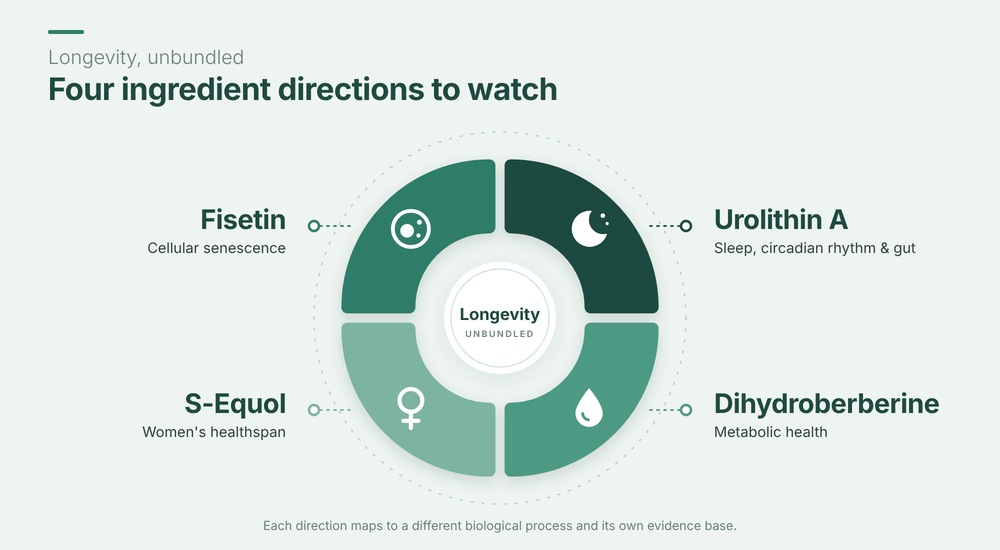
Figure 2. Longevity is being unbundled into specific health goals, each with its own mechanism, evidence base, and ingredient direction.
Senolytic Supplements: Fisetin and Cellular Senescence
Senescent cells stop dividing but do not die, and they release inflammatory signals that affect nearby tissue. Senolytic supplements are built around compounds studied for their ability to help clear these cells. Fisetin, a flavonoid found in strawberries and other plants, is one of the most researched.
The field is getting more rigorous. In September 2026, the SENESCENCE2030 network published a consensus roadmap in Nature Aging calling for standardized, clinically actionable biomarkers of cellular senescence and for "precision senescence medicine" [4]. For fisetin, that means the value lies in a specific, testable hypothesis about one aging mechanism, and human data are still being built. Our fisetin benefits guide covers the current evidence.
Sleep, Circadian Rhythm and Gut Health: Urolithin A
If biological age is abstract, sleep is not. People notice it every morning. Urolithin A is a postbiotic made by gut bacteria from polyphenols in foods such as pomegranates and walnuts, and many adults produce very little of it. Recent research places it at the junction of the gut barrier, the body's circadian rhythm, and sleep.
Most of this evidence is still preclinical, and no published human trial has yet measured urolithin A's effect on sleep directly. We reviewed the mechanisms in the gut-brain axis and sleep.
Women's Healthspan: S-Equol
Women's health needs change across life stages, and those needs are a core part of healthspan. S-equol, a metabolite of the soy isoflavone daidzein, binds preferentially to estrogen receptor beta (ERβ), which offers a nutritional route distinct from hormone therapy.
Human data are growing. A 2026 open-label study in 159 Spanish women found that 10 mg of S-equol per day for 12 weeks was associated with lower menopause symptom scores and better sleep [5]. The design had no placebo group, so controlled trials are still needed. See our summary of the S-equol study in European women.
Metabolic Health Supplements: Dihydroberberine and Insulin Sensitivity
This is the direction closest to GLP-1. The success of GLP-1 drugs has renewed interest in metabolic health supplements, including for people who are not candidates for a prescription or who are coming off one.
The goal is not to copy a drug's pharmacology. It is to support metabolic health through different routes and formats. Dihydroberberine, a derivative of berberine studied for improved absorption, is being investigated for its role in glucose metabolism and insulin sensitivity. Our comparison of dihydroberberine vs berberine explains the difference.
What This Means for Longevity Supplement Brands and Formulators
For product teams, the unbundling of longevity changes the brief in three ways.
Pick a mechanism, not a slogan. "Anti-aging" no longer differentiates. A product positioned on cellular senescence, sleep and circadian health, menopause, or metabolic health can be matched to specific biomarkers and study designs.
Build an evidence chain. As drugs raise expectations for proof, longevity ingredients need a traceable line from ingredient quality, to mechanism, to safety, to human data.
Keep claims separate from drugs. Supplements should not be positioned as GLP-1 alternatives or as treatments. Mechanism-level and structure-function language is easier to defend with regulators and retailers.
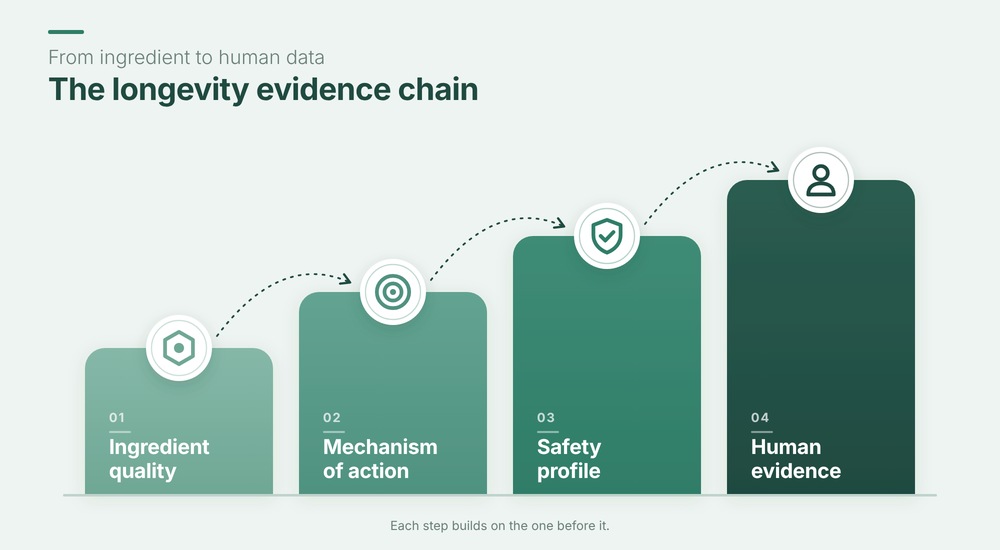
Figure 3. An evidence chain for longevity ingredients: from ingredient quality and mechanism to safety and human data.
Bonerge's own clinical work follows these directions. With Huazhong University of Science and Technology, we are running a 12-week randomized, placebo-controlled trial (NCT06990256) of urolithin A, fisetin, and their combination in adults with poor sleep quality, with senescence and DNA methylation markers among the secondary measures. An exploratory menopause study of EquoYouth® S-Equol began in 2026, and a metabolic and liver health study of dihydroberberine is also in our clinical program. Results are pending.
Our branded longevity ingredients include BeFisetin® Fisetin, StanYouth® Urolithin A, EquoYouth® S-Equol, and Bonerge's Dihydroberberine. Contact our team for specifications, study summaries, or samples.
Frequently Asked Questions
What are longevity supplements?
Longevity supplements are dietary supplements formulated to support processes linked to healthy aging, such as cellular health, sleep and circadian rhythm, hormonal balance, and metabolic health. They are not drugs and are not approved to treat or prevent any disease or to extend lifespan.
What are senolytic supplements?
Senolytic supplements contain compounds studied for their potential to help the body clear senescent cells, which accumulate with age and release inflammatory signals. Fisetin and quercetin are the best-known examples. Most evidence so far comes from cell and animal studies, and human trials are ongoing.
Can GLP-1 drugs like Ozempic slow aging?
It is not proven. In 2026, semaglutide extended lifespan in aged female mice [1], and a human trial found slower epigenetic aging in adults with HIV-associated lipohypertrophy [2]. Neither study shows that GLP-1 drugs slow aging or extend life in healthy people.
Is semaglutide a longevity drug?
No. Semaglutide is approved for conditions such as type 2 diabetes and obesity, not for aging. Researchers are studying whether GLP-1 drugs act on aging biology, but trials designed around aging outcomes are still needed.
Will GLP-1 drugs replace longevity supplements?
Current evidence suggests they will not. GLP-1 drugs target weight and metabolic disease, while longevity supplements serve a wider set of needs. Reduced food intake on GLP-1 drugs is also creating new demand for nutritional support.
What is the difference between lifespan and healthspan?
Lifespan is how long a person lives. Healthspan is how many of those years are lived in good health, free from serious chronic disease and disability. Most longevity nutrition research now focuses on healthspan.
This article is for informational purposes only and does not constitute medical advice. Please consult a qualified healthcare provider before starting any new supplement or treatment regimen.
References:
[1] Feng Y, Barthez M, Wang Y, et al. Late-life semaglutide treatment slows ageing and extends lifespan in female mice. Nature. 2026. doi:10.1038/s41586-026-10940-7
[2] Corley MJ, Dwaraka VB, Pang APS, et al. Semaglutide slows epigenetic aging in a randomized trial of HIV-associated lipohypertrophy. Nat Commun. 2026;17:6606. doi:10.1038/s41467-026-72861-3
[3] NutraIngredients. GLP-1 nutrition race heats up as Nestlé, supplements and pharma target 'companion' market. August 25, 2026. https://www.nutraingredients.com/Article/2026/08/25/glp-1-nutrition-race-heats-up-as-nestle-supplements-and-pharma-target-companion-market/
[4] Cerrato A, Farsetti A, Bordoni L, et al. A consensus roadmap from the SENESCENCE2030 network towards precision senescence medicine. Nat Aging. 2026;6(10):2049-2053. doi:10.1038/s43587-026-01222-y
[5] Palacios S, Castelo-Branco C, Sugaya K, Chatel D. Effect of S-equol supplementation on menopausal symptoms, sleep complaints, pain, and work engagement: an exploratory, multicentre open-label study in Spanish women. BMC Womens Health. 2026.





 +1(425)866-9043
 sales@bonerge.com