












 Time:Oct 10, 2026
 Share:


Apigenin is a naturally occurring flavonoid found in chamomile, parsley and celery, and it has become one of the most searched plant compounds in the dietary supplement market. In the US alone, "apigenin" draws about 18,000 searches a month, and "apigenin supplement" close to 2,000 (Semrush, 2026).
Nearly every bulk apigenin powder on the market ships with the same line on its certificate of analysis (COA): Apigenin ≥98% (HPLC). We wanted to know how much apigenin that number actually guarantees, so we tested three commercial apigenin powders against an official reference standard. One of them read 100.00% pure by HPLC. Its actual apigenin content was 95.16%.
Here is why that happens, why it matters for every apigenin supplement built on that powder, and four checks formulators and buyers can run before approving a lot.
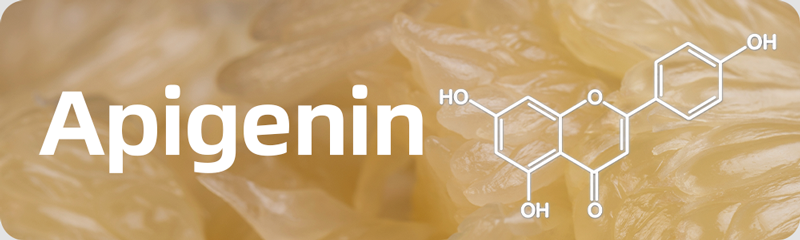
Why Apigenin Supplements Are in Demand: One Ingredient, Three Markets
Sleep: the 50 mg dose behind the "Huberman sleep cocktail"
Apigenin's mass-market moment came from sleep. Neuroscientist Andrew Huberman popularized what is now called the Huberman sleep cocktail: magnesium L-threonate, theanine, apigenin, at roughly 145 mg, 100 to 400 mg and 50 mg respectively, taken 30 to 60 minutes before bed. Almost overnight, apigenin became a mainstream sleep supplement.
The rationale goes back to a 1995 study of chamomile: apigenin binds to benzodiazepine receptors. Sleep is the obvious application, because in animal models that binding produced a calming effect (Viola et al., 1995). In humans the picture is thinner. Some chamomile extract trials have reported improved sleep quality, but evidence-based conclusions about isolated apigenin still need more human studies. For why single-ingredient sleep fixes often disappoint, see Why Melatonin Doesn't Work for You?
NAD+ and healthy aging: apigenin as a CD38 inhibitor
Work from Eduardo Chini's lab at Mayo Clinic has shown that apigenin inhibits CD38, the primary enzyme that breaks down NAD+ in mammalian tissues. In cell culture and in obese mice, apigenin raised NAD+ levels and improved several aspects of glucose and lipid metabolism (Escande et al., 2013).
Because CD38 also degrades NAD+ precursors such as NMN (Camacho-Pereira et al., 2016), formulators increasingly pair apigenin with NAD+ precursors: one ingredient supplies NAD+, the other helps slow the drain.
Cellular health: a senomorphic signal
Apigenin has long been reported to have antioxidant and anti-inflammatory properties. In 2025, researchers who screened 66 natural compounds against senescent human cells pinned down one way apigenin works there: as a senomorphic agent. Rather than killing senescent cells, it dampened their inflammatory secretions (the SASP) by targeting the protein PRDX6, reducing inflammation driven by those cells. In mice with a premature-aging-like state, it improved physical function and eased frailty and cognitive impairment (Zhang et al., Advanced Science, 2025). The author list includes senescence researchers Judith Campisi and James Kirkland.
Senomorphics work differently from senolytics such as fisetin, which aim to clear senescent cells. Our article on zombie cells and fisetin explains the distinction.
A growing market, by most estimates
MarketIntelo values the apigenin 98% segment at about $0.3 billion in 2025, projecting $0.5 billion by 2034 (7.2% CAGR); its broader apigenin market report puts 2025 at $0.4 billion. Estimates for niche ingredients vary widely between firms, so read these as direction rather than precision.
Demand has grown fast. As the next sections show, quality control hasn't always kept up.
What "98% Pure" Really Means on an Apigenin COA
The "98%" on most COAs is an apigenin HPLC purity figure calculated by area normalization. The sample runs through high-performance liquid chromatography, a UV detector records the peaks, and the apigenin peak is reported as a percentage of the total area of all peaks detected.
That is a useful number, but it answers a narrow question: of everything the detector saw, how much was apigenin? It says nothing about what the detector didn't see:
Moisture and residual solvents
Inorganic salts and other ash
Compounds that absorb weakly or not at all at the detection wavelength
Impurities that co-elute with, or hide under, the apigenin peak when the method isn't optimized
Even laboratory reagent catalogs draw this line. Research-grade apigenin is commonly specified as "min. 98.0 area%", while analytical standards meant for quantification come with a w/w absolute assay. For an ingredient going into an apigenin supplement, the number that matters is the second kind: assay content, quantified by the external standard method against a certified reference standard and reported on an as-is basis, meaning the powder exactly as it ships.
HPLC purity (area normalization) | HPLC assa (external standard, as-is) | |
| What it measures | Apigenin's share of the detected peak area | Grams of apigenin per 100 g of powder |
| Needs a reference standard? | No | Yes, a certified standard |
| What it can miss | Water, salts, non-UV-absorbing an co-eluting impurities | Little, when the method is validated |
| Typical COA wording | "98% (HPLC)", "area%" | "Assay (as is)", "content" |
We Tested Four Apigenin Powders Against a Reference Standard
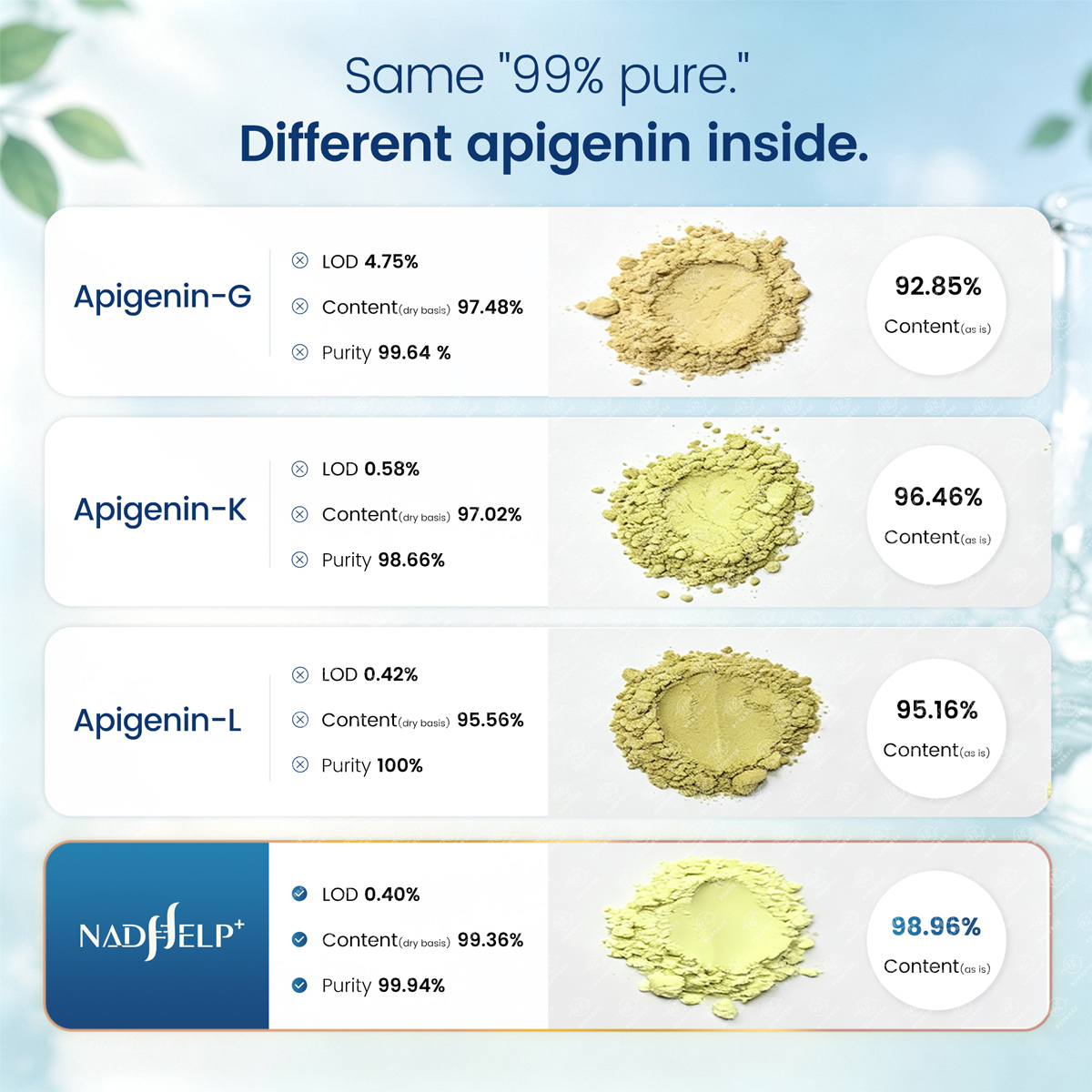
To see how large the gap can be in practice, our lab analyzed three apigenin powders bought on the open market (Samples G, K and L) alongside our own NADHelp+® apigenin. Each was assayed by HPLC against an apigenin reference standard from China's National Institutes for Food and Drug Control (NIFDC), with loss on drying (LOD) measured separately.
Three findings stand out:
Every market sample would pass a "≥98% HPLC" specification. By area normalization they read 98.66% to 100.00%.
Their real apigenin content was 93.32% to 96.46% as shipped.
Water explains only part of the gap. Even after correcting for loss on drying, 1.6 to 4.4 percentage points remain between dried-basis assay and area%. Sample L, the "100% pure" lot, showed the largest gap. That missing mass is material the HPLC-UV method never registered.
A note on scope: this is a small, single-lot comparison meant to show how COA numbers can diverge from content, not to rank suppliers. The point is that the gap isn't in how the report is written. It's in the material.
Color Doesn't Lie: A First-Pass Check for Apigenin Powder
Not every buyer has an HPLC and a reference standard on hand. Color is the fastest screen available.
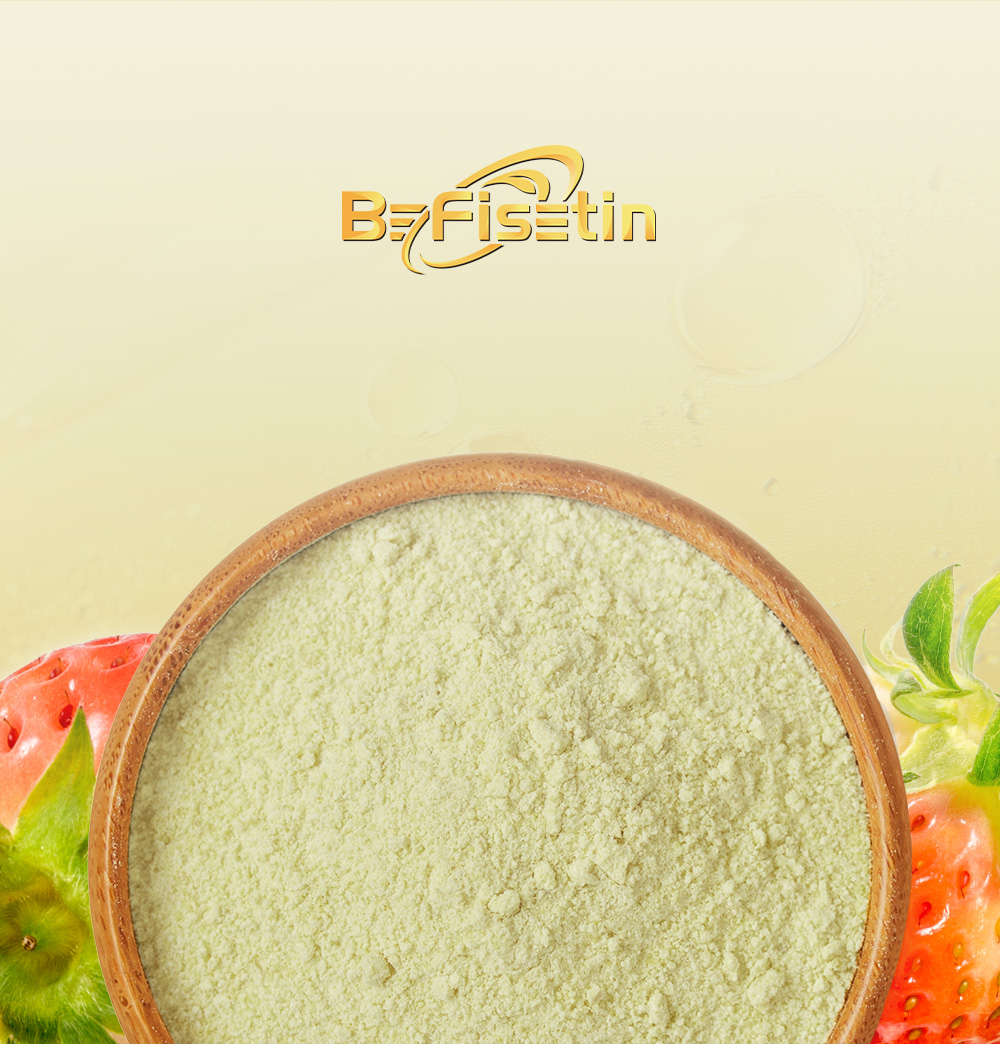
High-purity apigenin (CAS 520-36-5) is a pale yellow crystalline powder, and the color comes from the apigenin molecule itself. When a powder looks grayish, brownish, dull or unevenly colored, the usual causes are:
Oxidation or degradation during processing or storage
Residual plant material from incomplete purification
Other flavonoids that weren't fully removed
In our comparison, NADHelp+® came closest to the expected pale yellow, while the market samples ranged from deeper yellow to noticeably gray.
Color is a screen, not a verdict: reagent suppliers themselves allow a range from light yellow to brown. But it costs nothing. If a sample looks clearly different from a pale yellow crystalline powder, make sure the lot is third-party tested before you approve it.
Why Apigenin Purity Decides Whether the Science Applies
It's tempting to treat a few points of purity as a few points of potency. With apigenin, the stakes are different.
The research was done on apigenin
Researchers studying apigenin's effects on CD38 and senescence used defined, high-purity material. When a brand cites that work, it is implicitly promising the same molecule at the stated dose.
Related flavonoids are different molecules, not filler
Luteolin, apigenin's closest relative, differs by a single hydroxyl group, which is why a poorly optimized method can struggle to separate the two. Luteolin is a valuable ingredient in its own right (it has also shown CD38 inhibition in vitro; Kellenberger et al., 2011), and we supply it separately. But it has its own potency, absorption and safety profile. A product labeled and dosed as apigenin should contain apigenin.
Dose shrinkage adds up fast
Most products on the shelf are labeled "Apigenin 50 mg", the dose popularized by the Huberman protocol. Here is the apigenin dose a 50 mg fill actually delivers at different real-world contents:
| Raw material assay (as-is) | Apigenin delivered by a 50 mg fill |
|---|---|
| 98.96% (NADHelp+®) | 49.5 mg |
| 95.16% (Sample L) | 47.6 mg |
| 93.32% (Sample G) | 46.7 mg |
| 72% (hypothetical worst case) | 36.0 mg |
At 72%, a "50 mg" capsule holds 36 mg, a 28% shortfall on a dose that was chosen deliberately. Even the market samples we tested would leave each capsule 2 to 3 mg short unless the formula compensates, and it can only compensate if the buyer knows the true assay.
There is a compliance angle too. Under the US dietary supplement cGMP rule, manufacturers must run at least one identity test on every dietary ingredient, and may rely on a supplier's COA for other specifications only after qualifying that supplier by confirming its results (21 CFR 111.75). If a supplier's "98%" is an area% figure, a confirmatory assay against a reference standard is exactly where the discrepancy will surface.
The higher the claim, the higher the bar
Sleep support is one thing. NAD+ and healthy-aging positioning rests on specific mechanisms, and low-purity material can't credibly carry those claims.
How to Choose the Best Apigenin Supplement Ingredient: 4 Quality Checks
Whether you're sourcing apigenin powder for a new formula or auditing an existing apigenin supplement, these four checks catch most problems before they reach a finished product.
1. Ask for assay content (as-is), not just HPLC purity
Area normalization reports relative peak share and tends to read high. Ask for HPLC assay content quantified by the external standard method against a certified reference standard (for example, from NIFDC or another official source), reported on an as-is basis with loss on drying alongside it. A COA that shows only "98% (HPLC)" is a starting point, not an answer.
2. Check the color
Pale yellow crystalline powder is normal. Gray, brown, dull, uneven or clumped powder is a warning sign. It's the cheapest screen there is, and it works best when samples from several suppliers are lined up side by side.
3. Test bulk density and flowability
This check is often skipped, but it shows up on the production line. Low purity or an inconsistent crystal form can push bulk density out of range, hurt flow and cause caking, which slows encapsulation and tableting and makes fill weights less consistent. A good ingredient is stable on three fronts: content, color and physical properties.
4. Review three consecutive batch COAs
Ask for COAs from three consecutive batches and look at the spread in assay content. In our experience, batch-to-batch variation from less controlled suppliers can reach 5 to 8 percentage points, a real risk for any product with a fixed label dose.
NADHelp+® Apigenin: High-Purity Apigenin Built for Formulation
As apigenin moves from "sleep aid" toward NAD+ and healthy-aging positioning, the window for low-cost, low-purity material is closing. NADHelp+® is Bonerge's high-purity apigenin ingredient, developed for brands working at the premium end of that shift.
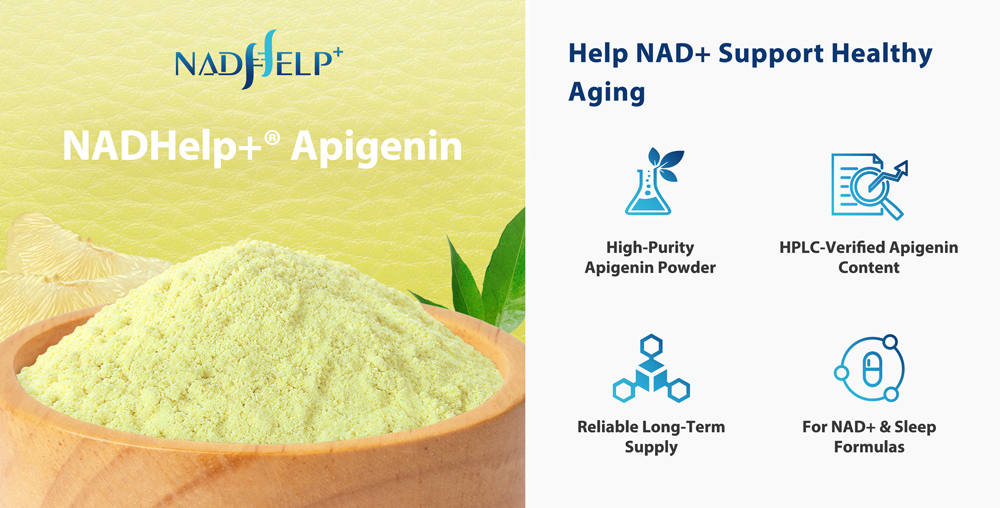
Content you can verify: 98.96% assay (as-is) against an NIFDC reference standard, with 99.94% HPLC purity, in the lot tested above.
The color it should be: a pale yellow crystalline powder.
Built for production: an optimized crystallization process gives NADHelp+® better bulk density and flowability, supporting efficient, consistent encapsulation and tableting.
To review a full COA or request a sample, contact the Bonerge ingredient team, or see NADHelp+® alongside our other classic nutraceutical ingredients.
Frequently Asked Questions
What should I look for in an apigenin supplement?
Start with the raw material: an assay on an as-is basis against a certified reference standard (not only HPLC area%), a pale yellow crystalline powder, and consistent COAs across batches. For finished products, ask the brand whether its apigenin content is verified by assay and whether the label dose reflects it.
Is "98% apigenin" really 98% pure?
Not necessarily. Most "98%" figures are HPLC area-normalization purity, which only compares the peaks a UV detector sees. In our tests, three market samples read 98.66% to 100.00% this way but contained 93.32% to 96.46% apigenin as shipped.
How much apigenin per day is typical?
There is no established apigenin dosage or daily requirement. Most products provide 50 mg per serving, and data on higher doses are more limited. Whatever the label says, the dose actually delivered depends on the raw material's true assay.
What apigenin dosage for sleep is most common?
As for how much apigenin for sleep Huberman recommends: 50 mg, taken 30 to 60 minutes before bed as part of his sleep stack. Human research on isolated apigenin is still limited, so anyone considering it should check with healthcare professionals first, especially if they take other medications.
Does a liposomal apigenin supplement need high-purity raw material?
Yes. Liposomal and other delivery formats can change how apigenin is absorbed, but they don't change how much apigenin the starting material contains. A delivery system built on a 93% powder still carries that powder's shortfall, along with whatever impurities came with it.
Is apigenin safe, and what are the side effects of apigenin?
Apigenin is consumed routinely in foods such as chamomile, parsley and celery. At typical supplement doses, reported side effects are generally mild, with drowsiness the one most often mentioned. Because apigenin may add to the effects of sedatives and has affected some drug-metabolizing enzymes in lab studies, people taking prescription medication, or who are pregnant or nursing, should check with healthcare professionals first. Purity matters here too: unidentified impurities in a low-grade powder haven't been characterized for safety at all.
This article is for informational purposes only and does not constitute medical advice. Please consult a qualified healthcare provider before starting any new supplement or treatment regimen.
References:
[1] Escande C, Nin V, Price NL, et al. Flavonoid apigenin is an inhibitor of the NAD+ase CD38: implications for cellular NAD+ metabolism, protein acetylation, and treatment of metabolic syndrome. Diabetes. 2013;62(4):1084-1093. doi:10.2337/db12-1139
[2] Camacho-Pereira J, Tarragó MG, Chini CCS, et al. CD38 dictates age-related NAD decline and mitochondrial dysfunction through an SIRT3-dependent mechanism. Cell Metabolism. 2016;23(6):1127-1139.
[3] Zhang HW, Xu QX, Jiang ZR, et al. Targeting senescence with apigenin improves chemotherapeutic efficacy and ameliorates age-related conditions in mice. Advanced Science. 2025.
[4] Kellenberger E, Kuhn I, Schuber F, Muller-Steffner H. Flavonoids as inhibitors of human CD38. Bioorganic & Medicinal Chemistry Letters. 2011;21(13):3939-3942. doi:10.1016/j.bmcl.2011.05.022
[5] Viola H, Wasowski C, Levi de Stein M, et al. Apigenin, a component of Matricaria recutita flowers, is a central benzodiazepine receptors-ligand with anxiolytic effects. Planta Medica. 1995;61(3):213-216.
[6] US Code of Federal Regulations. 21 CFR 111.75: What must you do to determine whether specifications are met?
[7] TCI Chemicals. Apigenin (Product No. A1514), product specifications. Accessed 2026.
[8] MarketIntelo. Apigenin 98% Market Research Report 2034; Apigenin Market Research Report 2034.
[9] Bonerge internal analytical data, 2026. HPLC assay against an NIFDC apigenin reference standard.






 +1(425)866-9043
 sales@bonerge.com