













 Time:Aug 28, 2026
 Share:


A newly published clinical study is adding fresh evidence to the case for S-equol supplementation, and this time the data comes from a population that has been largely absent from the research: European women. Published in BMC Women's Health, the multicentre trial followed 159 women aged 45 to 60 across nine hospitals in Spain, and its findings go beyond the usual hot flash and night sweat metrics.
For the first time in S-equol research, the study also measured something closer to everyday life: how well women could stay engaged at work while managing menopausal symptoms.
What Is S-Equol?
S-equol is a bioactive compound produced when specific gut bacteria metabolize daidzein, one of the isoflavones found in soy. Unlike soy isoflavones themselves, S-equol binds selectively to estrogen receptor beta (ERβ), which is part of why it has drawn attention as a non-hormonal option for supporting women through menopause. Not everyone's gut microbiome produces S-equol naturally: those who can convert daidzein into S-equol are known as equol producers, while those who cannot are equol non-producers. For a full breakdown of how S-equol works and its safety profile, see our earlier guide, What Is S-Equol? How It Works, Benefits & Safety.
A New Clinical Study: S-Equol Supplementation in European Women
Most of the clinical evidence for S-equol has come from Japan and the United States, where S-equol supplements have been commercially available for more than a decade. What has been missing is direct evidence from European women, whose rates of natural equol production tend to be lower than those seen in Asian populations. This new study, led by Palacios, Castelo-Branco, Sugaya, and Chatel, is the first published clinical trial to test S-equol supplementation specifically in a Spanish, and more broadly European, population.
Study Design, Dosage, and Duration
The trial enrolled 159 women aged 45 to 60 who were experiencing menopausal symptoms. Each participant took 10 mg of S-equol daily for 12 weeks, followed by a 4-week washout period with no supplementation, for a total observation window of 16 weeks. Researchers tracked outcomes using the Menopause Rating Scale (MRS), a visual analog scale (VAS) for sleep and pain, and the Utrecht Work Engagement Scale (UWES), a validated tool more commonly used in occupational psychology than in menopause research.
Why the European Population Matters: Equol Producers vs. Non-Producers
The reason population matters so much for S-equol research comes down to biology. S-equol is not something the body absorbs directly from food. It is produced when specific gut bacteria metabolize daidzein, and the ability to do this, known as equol-producer status, varies significantly between populations. Research has generally found a higher prevalence of equol producers among Asian populations compared with Western populations, meaning that two women eating identical amounts of soy could end up with very different levels of S-equol in their bodies. Supplementing directly with S-equol sidesteps this metabolic variability, which is part of why it is being developed as a standalone ingredient rather than simply marketed as "more soy."
It's worth noting that this study was not designed to stratify participants by equol-producer status, so it cannot tell us whether non-producers benefited more than producers did. But the underlying biology is exactly why population-specific data matters: it is the foundation for understanding who is most likely to benefit from S-equol supplementation. For more on the mechanism behind S-equol's receptor selectivity, see S-Equol: Mechanisms, ERβ Selectivity & Menopausal Health Benefits.
Menopause Symptom Relief: What the Data Shows
After 12 weeks of daily S-equol supplementation, participants saw measurable improvement across several standard menopause symptom measures.
| Outcome Measure | Change at 12 Weeks |
|---|---|
| MRS total score | Down 11.6 points (p<0.0001) |
| Vasomotor symptoms (hot flashes, night sweats) | Down 20% to 70% in frequency |
| Shoulder pain | Down 1.1 points |
| Back pain | Down 1.9 points |
| Sleep (VAS) | Down 2.1 points |
| Work engagement (UWES total) | Up approximately 9.5% |
Safety findings were consistent with prior S-equol research: most reported adverse events were mild, and more than 80% of participants said they were satisfied with the treatment.
Beyond Symptoms: Sleep and Work Engagement
What sets this study apart from earlier S-equol trials isn't the symptom data alone, it's what the researchers chose to measure alongside it. By including the Utrecht Work Engagement Scale, the study asked a question that most menopause research doesn't: after symptoms improve, does a woman's day-to-day functioning actually improve too?
The answer, at least in this exploratory study, was a qualified yes. Total UWES scores rose by approximately 9.5%, with the vigor and absorption (focus) dimensions showing statistically significant improvement. The dedication dimension did not reach statistical significance, which suggests the effect may have more to do with having the energy and focus to work than with feeling more committed to it.
This distinction matters for how the menopause health category develops. Hot flash relief is now a baseline expectation for many non-hormonal ingredients. Sleep quality, energy, and the ability to stay engaged during a demanding workday represent a less crowded, and arguably more relevant, way to differentiate a product. Menopause is increasingly being discussed as a workplace issue, not just a personal health one, and this is one of the first S-equol studies to build a bridge between the two.
Two Findings Worth a Closer Look
Baseline Severity Matters
When researchers grouped participants by baseline MRS score, those in the severe category (MRS ≥16) saw a 53.0% reduction in symptoms at 12 weeks, compared with a 43.9% reduction in the moderate category (MRS 9 to 15). This wasn't a pre-specified, stratified analysis, so it should be read as a signal rather than a conclusion. But it points to a broader truth in nutrition science: the more useful question is often not "does this work for everyone," but "who does this work best for."
What Happens After You Stop Taking S-Equol
Participants were followed for 4 weeks after supplementation ended. At week 16, MRS scores remained significantly below baseline, meaning the benefit hadn't disappeared. But scores did tick up slightly, from 10.7 at week 12 to 11.4 at week 16. Because the study had no placebo arm and used an open-label, single-arm design, the researchers were careful not to over-interpret this rebound. It could reflect a genuine washout effect, natural fluctuation, or regression to the mean. What it does raise, honestly, is a question that matters commercially as much as scientifically: how long does someone need to keep taking S-equol, and what happens if they stop?
Study Limitations: What This Research Does and Doesn't Prove
The study's authors were candid about its limitations, and they're worth restating clearly. This was an exploratory, open-label, single-arm study, meaning there was no placebo group and no blinding. That design is useful for generating hypotheses and observing real-world patterns, but it cannot establish causation the way a randomized controlled trial can. The subgroup findings on symptom severity were not part of a pre-planned stratified analysis. And with 159 participants across a defined 45 to 60 age range, the results may not generalize to all menopausal women.
None of this diminishes the value of the study. It is exactly the kind of exploratory work that should precede a larger, placebo-controlled trial, and the researchers were transparent about that next step.
What This Means for Menopause Health Product Development
For ingredient formulators and brand teams, this study offers three takeaways that go beyond the topline numbers.
First, S-equol's evidence base is expanding beyond its original Japanese and American research populations. That expansion into European data is a meaningful step toward understanding whether, and how much, results vary by population, a question Bonerge is also investigating directly through our own ongoing S-equol clinical research in Chinese women.
Second, the research endpoints themselves are shifting. Sleep, pain, energy, and work engagement map much more directly to how consumers describe wanting to feel, compared with a symptom checklist alone.
Third, as more nutraceutical ingredients accumulate clinical backing, the differentiator won't just be whether an ingredient has a clinical study, but what that study actually measured and how rigorously. Population relevance, endpoint design, and transparency about limitations are becoming as important to formulators and informed consumers as the topline result itself.
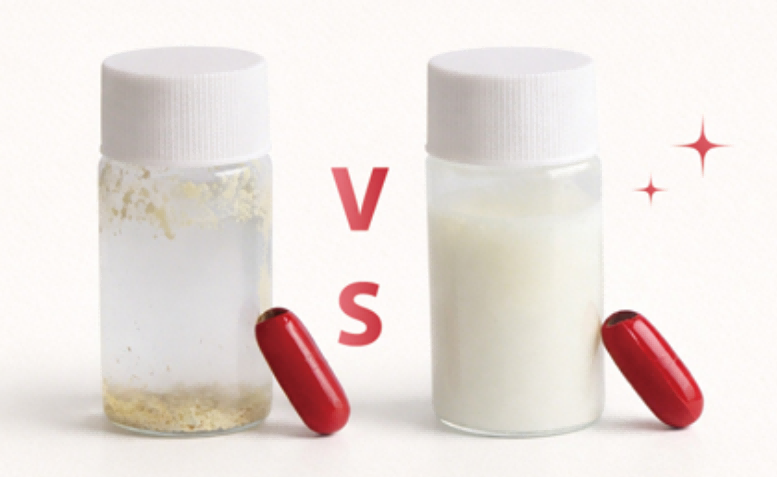
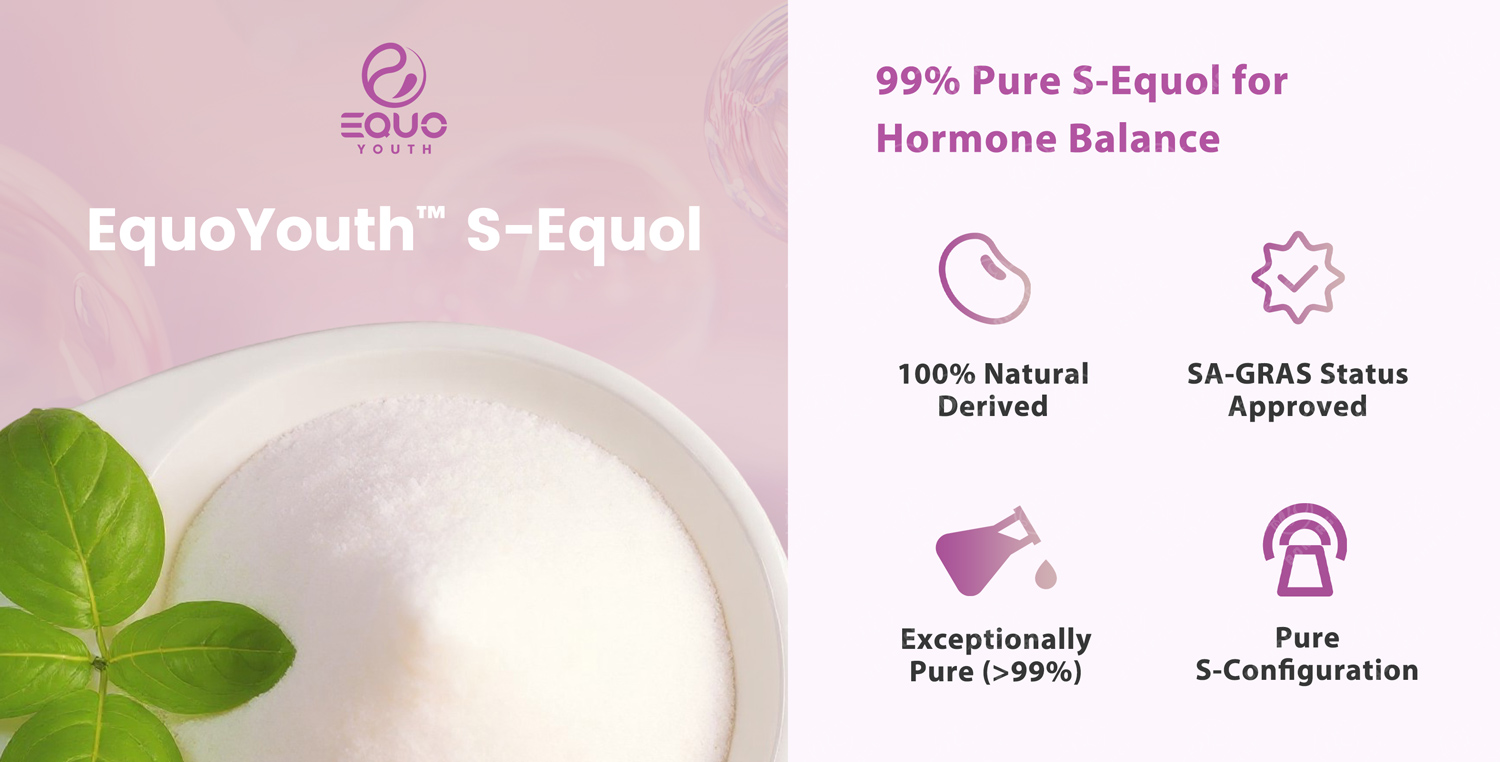
Bonerge's EquoYouth® S-Equol is developed with these questions in mind, backed by a water-soluble delivery format built for real-world formulation needs. Get in touch with our team to explore EquoYouth® S-Equol for your next menopause health formulation.
Frequently Asked Questions
Does S-equol really work for hot flashes?
In this study, vasomotor symptoms (hot flashes and night sweats) decreased in frequency by 20% to 70% after 12 weeks of S-equol supplementation. These results are consistent with earlier S-equol research from Japan and the United States, though this trial's open-label design means larger, placebo-controlled studies are still needed to confirm the effect size.
How long does it take for S-equol to work?
In this study, participants were assessed after 12 weeks of daily supplementation, at which point significant improvements were already measurable. This data doesn't clarify whether benefits appear earlier than 12 weeks.
What happens if you stop taking S-equol?
Four weeks after participants stopped supplementation, symptom scores remained significantly better than baseline but ticked up slightly compared with the 12-week mark. This suggests continued use may be needed to maintain the full effect, though the study wasn't designed to confirm this definitively.
Is S-equol safe to take long-term?
In this 16-week study, most reported adverse events were mild, and patient satisfaction exceeded 80%. Longer-term safety data continues to accumulate from Japan and the United States, where S-equol supplements have been on the market for over a decade.
What's the difference between S-equol and soy isoflavones?
S-equol is a downstream metabolite of the soy isoflavone daidzein, produced by specific gut bacteria. Not everyone's gut microbiome makes this conversion efficiently, so taking S-equol directly delivers a consistent dose regardless of an individual's natural equol-producer status.
Can non-Asian women benefit from S-equol?
This study suggests yes. It is the first published clinical trial testing S-equol supplementation specifically in European women, and it found symptom and sleep improvements consistent with earlier research conducted in Asian and American populations.
This article is for informational purposes only and does not constitute medical advice. Please consult a qualified healthcare provider before starting any new supplement or treatment regimen.
References:
Palacios S, Castelo-Branco C, Sugaya K, Chatel D. Effect of S-equol supplementation on menopausal symptoms, sleep complaints, pain, and work engagement: an exploratory, multicentre open-label study in Spanish women. BMC Women's Health. 2026.





 +1(425)866-9043
 sales@bonerge.com