













 Time:Apr 22, 2026
 Share:


Fisetin has quietly earned a reputation as one of the most exciting compounds in longevity science. Present in small amounts in strawberries, apples, and onions, this natural flavonoid has attracted intense research interest not because of a single effect, but because of an unusually broad one — influencing cellular aging, brain health, skin, immune function, and reproductive wellness through overlapping and complementary biological pathways.
What distinguishes fisetin from the broader field of antioxidant compounds is its senolytic activity. Among the eleven natural compounds evaluated for the ability to selectively clear senescent cells, fisetin ranked highest — reaching over 68% clearance activity, outperforming well-known ingredients including quercetin, resveratrol, and curcumin. Senescent cells are now recognized as one of the primary cellular drivers of biological aging, and their selective removal represents one of the most compelling strategies in modern healthspan research.
This guide presents the current scientific evidence behind fisetin's benefits across multiple body systems — from the landmark 2018 lifespan study that put fisetin on the research map, to the emerging clinical data on skin health, ovarian function, and post-illness recovery. The goal is a rigorous, accessible look at what the science currently shows.
What Is Fisetin
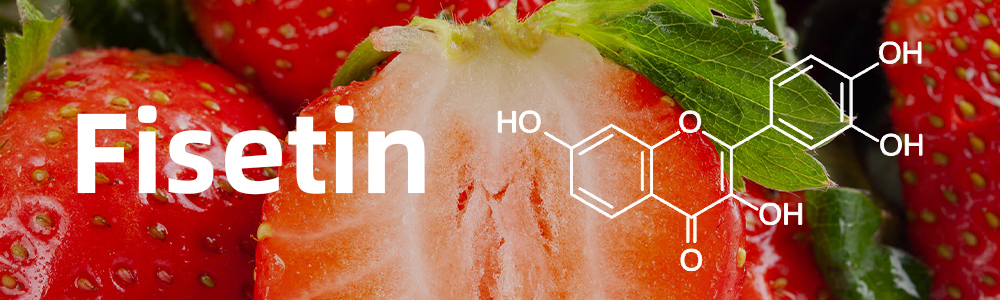
Fisetin is a naturally occurring flavonoid — specifically a flavonol — found in various fruits and vegetables. Its full IUPAC chemical name is 2-(3,4-dihydroxyphenyl)-3,7-dihydroxy-4H-chromen-4-one, with CAS number 528-48-3, molecular formula C₁₅H₁₀O₆, and molecular weight of 286.24 g/mol.[1]
Fisetin features a flavonoid backbone decorated with multiple hydroxyl groups — the structural feature responsible for its potent antioxidant and anti-inflammatory activity. It appears as pale yellow to bright yellow needle-like crystals with a melting point of approximately 330 °C. It is soluble in ethanol, acetone, and DMSO, but practically insoluble in water.
Natural Food Sources of Fisetin
Fisetin is a secondary plant metabolite present in a range of common fruits and vegetables. Fisetin strawberries are by far the richest dietary source, containing approximately 160 μg/g[2] — more than six times higher than the next common source like apples. Other foods including strawberries apple, persimmon, onion, grape, and kiwi contribute far smaller amounts:
Food Source | Fisetin Content (μg/g) | Relative Level |
Strawberry | 160 | ★★★★★ Highest |
Apple | 26.9 | ★★☆☆☆ Moderate |
Persimmon | 10.6 | ★★☆☆☆ Moderate |
Onion | 4.8 | ★☆☆☆☆ Low |
Grape | 3.9 | ★☆☆☆☆ Low |
Kiwi | 2.0 | ★☆☆☆☆ Low |
Table 1. Fisetin content in common dietary sources[2].
For commercial production, fisetin is extracted primarily from smokebush (Cotinus coggygria). While the Chinese lacquer tree (Toxicodendron vernicifluum) is also a source, it contains urushiol — a potent skin sensitizer — making Cotinus coggygria the preferred industrial choice.[3]
Fisetin Potential Benefits Summary
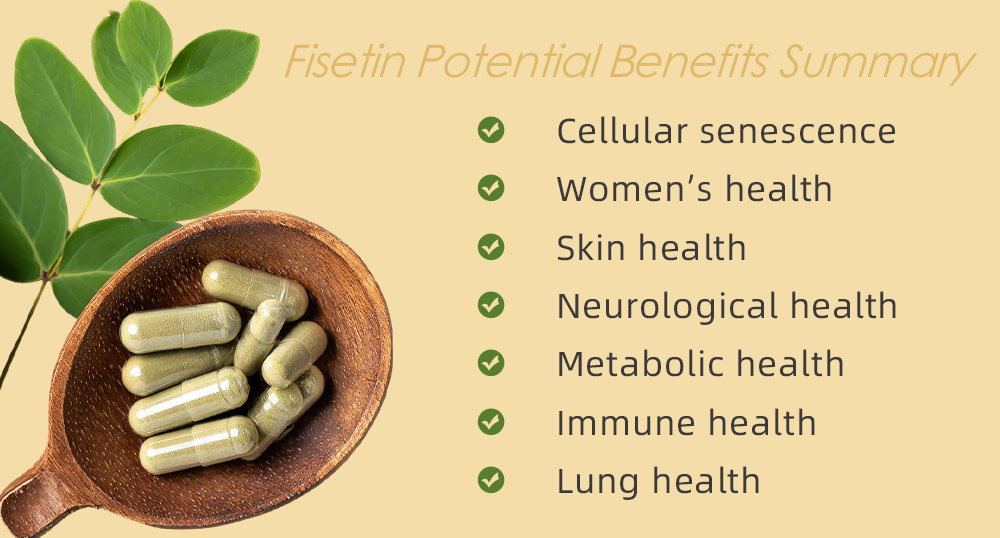
In recent years, fisetin, a powerful natural flavonoid, has gained rapidly growing attention in the field of healthy aging research. An increasing number of preclinical and preliminary studies show that fisetin delivers multi-system supportive benefits for the body, with notable positive effects on the following key areas:
Cellular senescence
Neurological healths
Metabolic health
Immune health
Lung health
Fisetin Benefits for Cellular Aging and Longevity
Perhaps the most researched benefit of this natural compound is its role as a fisetin senolytic agent — one that may help the body eliminate senescent cells and support fisetin longevity. Senescent cells are aged, dysfunctional cells that have stopped dividing but remain metabolically active. They release a cocktail of pro-inflammatory molecules called the Senescence-Associated Secretory Phenotype (SASP), which drives tissue dysfunction and age related diseases. Reducing the burden of these cells is now considered one of the most promising strategies in healthy-aging research, with senolytic drugs like fisetin leading natural product research.
KEY FINDING
A landmark 2018 study in EBioMedicine shown that fisetin significantly reduces senescent cell burden across multiple tissues, restored tissue homeostasis, and extended both median and maximum lifespan in aged mice — the most-cited study on fisetin anti-aging and senolytic potential.[4]
What the Research Shows
In skin aging models, fisetin selectively cleared senescent dermal fibroblasts by activating caspase-3, 8, and 9-mediated apoptosis. In aged human skin grafts, this was associated with increased collagen density and reduced MMP and SASP levels.[5]
In muscle health research using dystrophy mouse model, fisetin reduced senescent immune cell accumulation and restored muscle stem cell populations and function. Separately, it induced apoptosis of senescent fibro-adipogenic progenitors — restoring the cellular environment needed for healthy muscle maintenance.[6-7]
In lung health models, fisetin activated AMPK signaling while inhibiting NF-κB and TGF-β/Smad3 pathways — key drivers of tissue fibrosis and inflammatory response. These effects correlated with reduced alveolar epithelial cell senescence and lower SASP output.[8]
In kidney health models, studies suggesting fisetin was associated with reduced accumulation of senescent tubular epithelial cells and myofibroblasts, as well as lower fibrosis-related SASP factors.[9]
KEY TAKEAWAY
Senescent cell accumulation is one of the officially recognized hallmarks of biological aging. Among natural product compounds, fisetin has accumulated preclinical evidence across an unusually broad range of tissue types — skin, muscle, lung, and kidney — making it one of the more thoroughly studied flavonoids in senolytic research to date.
Fisetin Benefits for Women's Health
Fisetin for women offers powerful support for reproductive wellness, with research highlighting fisetin pcos relief, ovarian health, and hormonal balance. Fisetin's antioxidant and signaling properties have attracted growing research interest in the context of female reproductive wellness, particularly around ovarian health and hormonal balance.
Studies suggested that fisetin may support ovarian health by upregulating SIRT1 expression and inhibiting NF-κB-related reducing oxidative stress pathways. It also activates AKT and JNK signaling, which are involved in ovarian energy metabolism and promoting healthy follicular development, potentially helping delay ovarian aging.[10]
Fisetin has also been studied for its ability to protect granulosa cells — cells critical for egg development — from oxidative damage via Nrf2/HO-1 and Wnt/β-catenin pathway activation, helping prevent cell cycle arrest and supporting follicular health.[11]
In models of polycystic ovary syndrome (fisetin pcos), fisetin modulated AMPK, NF-κB, and SIRT1 signaling pathways, reducing oxidative stress and inflammatory markers associated with metabolic disturbance in reproductive tissue.[12-13]
KEY PATHWAYS IN WOMEN'S HEALTH RESEARCH
Nrf2/HO-1 → antioxidant protection
SIRT1/NF-κB → reduced ovarian oxidative stress
AMPK/SIRT1 → metabolic support in PCOS
AKT/JNK → follicular development
Fisetin Benefits for Skin Health and Collagen
Fisetin for skin delivers multi-targeted care, with fisetin collagen preservation and fisetin anti-aging effects at the core. Beyond its role in cellular senescence, fisetin has been studied specifically for its effects on skin structure, UV protection, and wound healing.
UV protection and fisetin collagen support: In UV-induced skin damage vitro studies, fisetin modulated expression of MMP-1 and MMP-3 — enzymes that break down collagen and elastin — through NOX/ROS/MAPK signaling. Reducing these matrix-degrading enzymes is associated with better preservation of dermal structural integrity.[14]
Anti-inflammatory skin protection: Shown that fisetin inhibits UVB-induced epidermal inflammation by modulating PI3K/AKT/NF-κB signaling, associated with reduced inflammatory cell infiltration, lower pro-inflammatory cytokine levels, and improved DNA damage profiles in animal skin models.[15]
Wound healing support: In diabetic wound healing research, fisetin was linked to improved healthy dermis-to-granulation tissue ratios, reduced SASP factors (including TNF-α and IL-1β) in dermal tissue, and lower M1 macrophage levels — collectively supporting healthier tissue regeneration.[16]
KEY FINDING
MMP-1 and MMP-3 are the primary enzymes responsible for collagen breakdown in photo-aged skin. Fisetin's ability to reduce their activity — studied in both dermal fibroblasts and epidermal keratinocytes — makes it a compound of strong interest in anti-aging skincare formulation.
Fisetin Benefits for Brain and Neurological Health
Fisetin brain health and fisetin neurological health are standout benefits, as fisetin is one of the few dietary flavonoids that can cross the blood-brain barrier[17], making it directly relevant to neurological health research. Studies have examined its potential to support cognitive functions, protect neural tissue, and maintain a healthy inflammatory environment in the brain and blood vessels.
Alzheimer's disease support: Shown that fisetin modulates PI3K-Akt-NF-κB signaling in microglia — the brain's immune cells. This was associated with reduced neuroinflammation, lower amyloid plaque-related microglial clustering, and improved cognitive functions markers in animal models.[18]
Tau protein clearance: By inhibiting mTORC1 and activating the transcription factors TFEB and Nrf2, fisetin upregulates the autophagy-lysosomal pathway — the cellular system for clearing damaged proteins. This correlated with reduced phosphorylated tau and insoluble tau aggregates, independent of direct tau kinase or phosphatase activity.[19]
Brain injury recovery: In traumatic brain injury models, fisetin activated the Nrf2-ARE antioxidant pathway, associated with improved neurological function scores, reduced brain edema, enhanced blood-brain barrier integrity, and modulation of Bcl-2/Bax and caspase-3 — key regulators of neuronal survival.[20]
Mood and stress response: In inflammatory stress models, high doses of fisetin reduced hippocampal and prefrontal levels of pro-inflammatory cytokines including IL-1β, IL-6, and TNF-α. Higher doses also modulated NF-κB-related iNOS expression, contributing to a healthier neuro-inflammatory environment.[21]
Neuroprotection in aging: In age-related oxidative stress models, fisetin activated Sirt1/Nrf2 signaling and inhibited p-JNK/NF-κB pathways, associated with improved synaptic function markers, reduced neuroinflammation, and better cognitive functions outcomes.[22]
KEY TAKEAWAY
Across Alzheimer's, TBI, mood, and aging research, fisetin consistently engages Nrf2, NF-κB, and SIRT1 pathways — the same core trio implicated in neuroinflammation and cognitive decline. Its ability to cross the blood-brain barrier makes it unusually accessible among flavonoids.
Fisetin Benefits for Immune Support and Inflammation
Fisetin immune support and fisetin inflammation reduction are well-documented, with this natural product demonstrating broad immune-modulating activity across cell and animal studies. Its anti-inflammatory profile is one of the most extensively documented among natural flavonoids, spanning cytokine suppression, allergy response, and fisetin long covid recovery.
Anti-Inflammatory Activity
Across multiple study models, shown that fisetin significantly reduces expression of key pro-inflammatory cytokines and mediators, including IL-1β, IL-4, IL-5, IL-6, IL-13, TNF-α, iNOS, and COX-2.[23-26]
Mechanisms of action: fisetin selectively inhibits c-Jun N-terminal kinase (JNK) and NF-κB signaling — but not ERK or p38 MAPK — reducing pro-inflammatory mediator production in a targeted way. This selective pathway action is associated with a favourable safety profile compared to broad-spectrum anti-inflammatory agents.[23]
Anti-Allergy Support
In allergy-related research, fisetin demonstrated the ability to interfere with mast cell–T cell interactions and inhibit NF-κB and MAPK signaling — pathways central to the allergic inflammatory cascade. These actions were associated with reduced mast cell activation and histamine-related mediator release.[27]
Post-Illness Recovery
A Mayo Clinic clinical survey examined fisetin long covid support among 44 patients managing prolonged post-illness symptoms. Among participants, 64% (28/44) reported subjective improvements in fatigue, muscle soreness, and orthostatic symptoms.[28] While preliminary, this aligns with fisetin's senolytic and anti-inflammatory mechanisms — both implicated in the slow tissue recovery characteristic of post-viral immune dysregulation.
Fisetin Benefits for Lung Health
Fisetin's well-characterized AMPK-activating and senolytic properties extend naturally into respiratory tissue research. Preclinical studies have explored its potential to support lung tissue integrity and reduce fibrosis-related cellular remodeling.
In pulmonary fibrosis models, fisetin's activation of AMPK and inhibition of NF-κB and TGF-β/Smad3 pathways significantly reduces inflammatory response, lower collagen deposition markers, and — critically — reduced alveolar epithelial cell senescence. Lower SASP levels correlated with less fibroblast-to-myofibroblast transition, a key driver of fibrotic tissue remodeling.[8]
This lung-protective profile is consistent with fisetin's broader action across other fibrosis-prone tissues, including kidney and skin, suggesting a common AMPK/SASP-mediated mechanisms of action.
Fisetin in Practice: Applications and Formulation
Fisetin's research profile has translated into a growing range of supplement and cosmetic applications. The central formulation challenge is consistent: as a BCS Class IV compound, fisetin has both low solubility and low permeability, meaning standard powder formats deliver limited absorption — requiring higher doses to achieve meaningful results and increasing cost for consumers.
To address this, Bonerge has developed two advanced delivery platforms designed to maximize bioavailability and support practical consumer use.
Bonerge's Enhanced Bioavailability Platforms
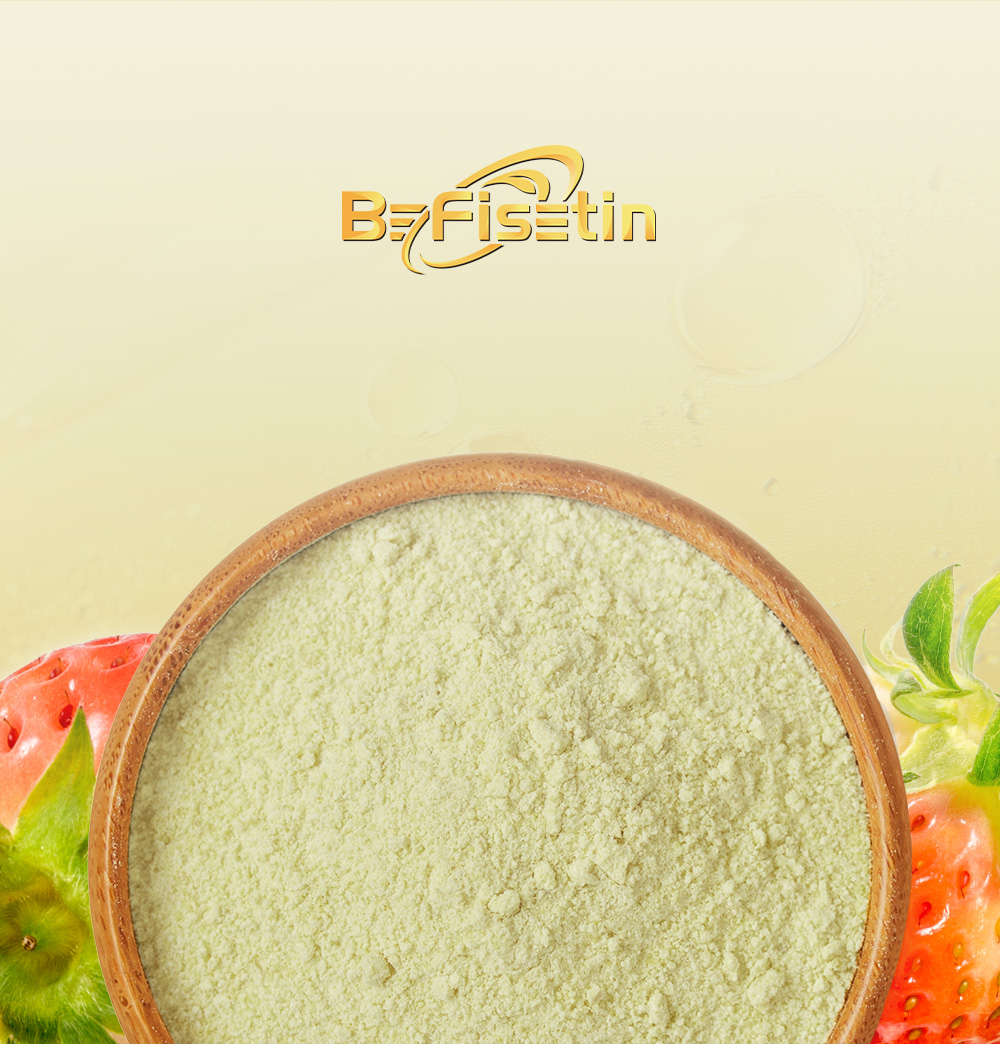
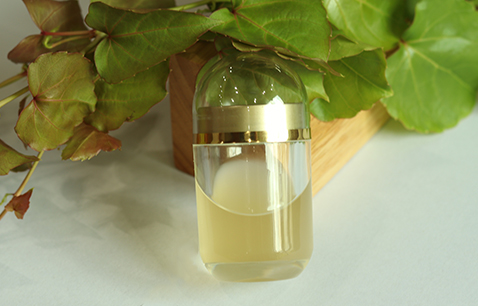
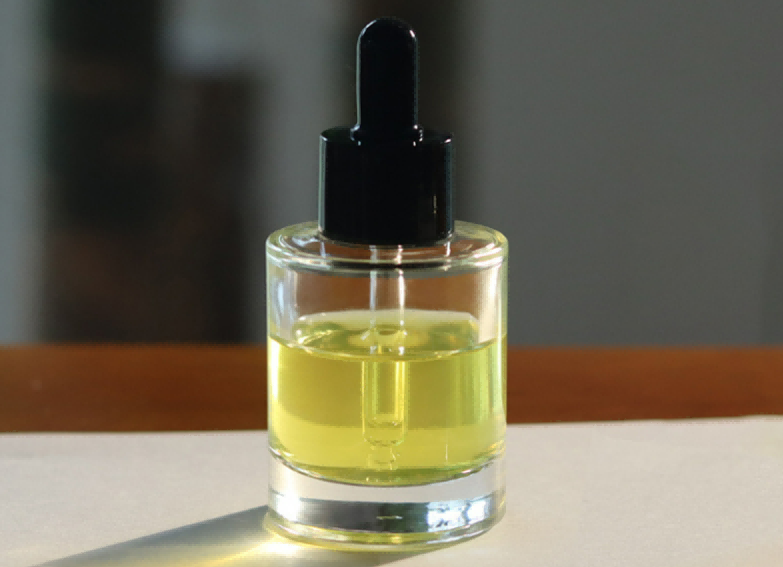
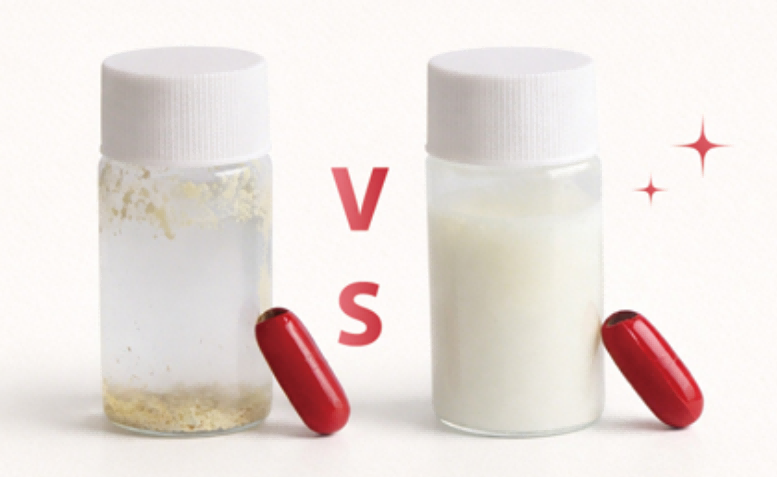
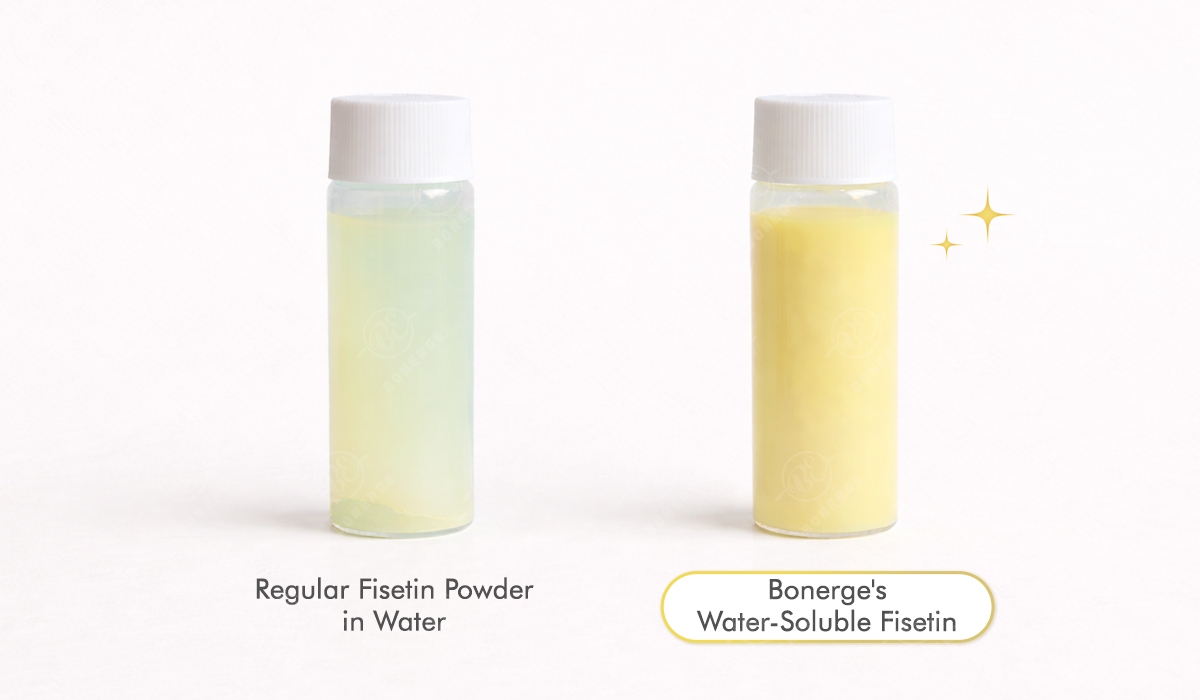
Water-soluble nano-lipid carrier technology: Using proprietary solid lipid encapsulation technology, BeFisetin® is encapsulated into nano-sized lipid carriers of 200–300 nm, enabling dual absorption via transcellular and paracellular transport. The result is a clear, transparent fisetin solution containing 5–10% active ingredient, with customizable concentration options for versatile product applications. Unlike conventional fisetin powder, which clumps and settles in water, Bonerge's nano-lipid form disperses instantly and evenly with no sedimentation.
Self-emulsifying softgel system: Upon contact with gastrointestinal fluids, this micro-emulsion capsule transforms into stable nano-droplets of 100–500 nm, maximizing surface area and membrane contact for significantly improved absorption. The format also supports co-delivery with synergistic lipids such as DHA, krill oil, or CoQ10.
Dietary Supplement Applications
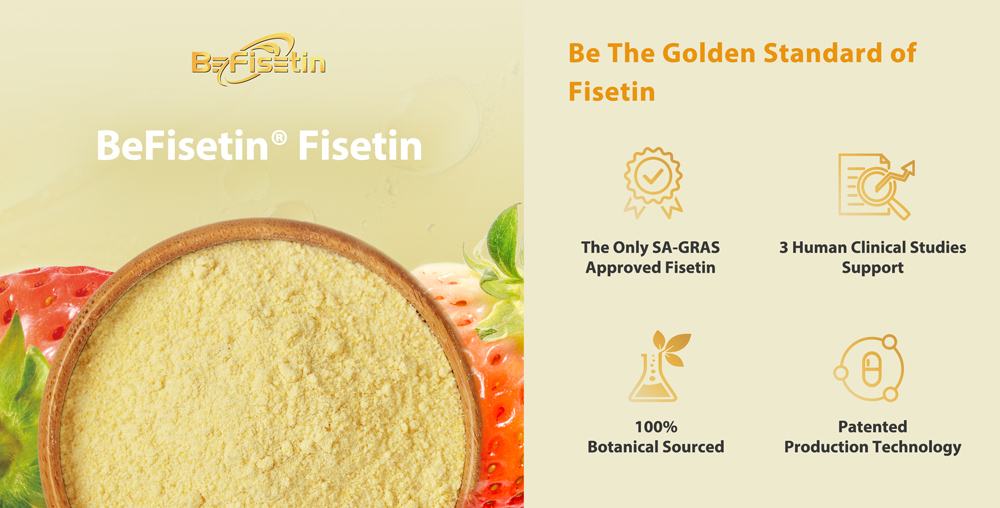
Beyond enhanced delivery formats, BeFisetin® is available across a full range of standard supplement forms — hard capsules, tablets, softgels, gummies, and oral liquids — targeting healthy aging, senolytic activity, immune function, cognitive health, and oral beauty.
Topical Skincare
Fisetin's ability to clear senescent dermal fibroblasts, suppress SASP factors, and inhibit UV-induced MMP activity makes it a promising active for anti-aging skincare. Bonerge has developed BeFisetin® in cosmetic-grade formats, with facial masks and creams available as formulation samples.
Frequently Asked Questions About Fisetin
What is fisetin?
Fisetin is a naturally occurring flavonoid and powerful natural compound best studied for fisetin benefits including healthy aging, cognitive support, skin health, and immune modulation. Its defining characteristic is senolytic activity — the ability to support the body's clearance of aged, dysfunctional cells. It also activates key longevity pathways including Nrf2, SIRT1, and AMPK, and has demonstrated fisetin inflammation reduction effects across numerous tissue types.
How much fisetin is in strawberries?
Fisetin strawberries contain approximately 160 μg of fisetin per gram[2], making them the most concentrated dietary source by a wide margin. However, to reach the doses used in most research studies, supplementation with concentrated fisetin supplement is generally necessary.
Is fisetin a senolytic?
Yes. Fisetin is classified as a natural fisetin senolytic compound — one that can help selectively trigger apoptosis (programmed cell death) in senescent cells while leaving healthy cells intact. This has been demonstrated across multiple tissue types in preclinical studies, including skin, muscle, kidney, and lung tissue.[4]
Can fisetin support brain health?
Preclinical research suggested that fisetin may support fisetin neurological health through several mechanisms: crossing the blood-brain barrier[17], activating autophagy to clear tau protein aggregates[19], reducing microglia-driven neuroinflammation[18], and activating the Nrf2 neuroprotective pathway[20]. These make it one of the most multi-targeted natural compounds for fisetin brain health and cognitive functions.
What makes fisetin good for skin?
Fisetin for skin works through multiple routes: it inhibits MMP-1 and MMP-3 (collagen-degrading enzymes activated by UV exposure)[14] to boost fisetin collagen production, reduces UVB-induced epidermal inflammation[15], and — through its fisetin anti-aging senolytic activity — lowers the burden of SASP-secreting senescent cells in dermal tissue[5].
Is fisetin safe?
Fisetin has a well-established safety profile in preclinical research across a broad range of doses, even at high doses. Human clinical research is still developing. As with any fisetin supplement, individuals should consult a qualified healthcare professional before use, particularly those who are pregnant, breastfeeding, or taking medications.
This article is for informational purposes only and does not constitute medical advice. Please consult a qualified healthcare provider before starting any new supplement or treatment regimen.
References:
[1] Kumar R M, Kumar H, Bhatt T, et al. Fisetin in Cancer: Attributes, Developmental Aspects, and Nanotherapeutics. Pharmaceuticals (Basel, Switzerland), 2023, 16(2).
[2] Kimira M, Arai Y, Shimoi K, et al. Japanese intake of flavonoids and isoflavonoids from foods. Journal of epidemiology, 1998, 8(3): 168-75.
[3] Antal D S, Ardelean F, Jijie R, et al. Integrating Ethnobotany, Phytochemistry, and Pharmacology of Cotinus coggygria and Toxicodendron vernicifluum. Frontiers in pharmacology, 2021, 12: 662852.
[4] Yousefzadeh M J, Zhu Y, Mcgowan S J, et al. Fisetin is a senotherapeutic that extends health and lifespan. EBioMedicine, 2018, 36: 18-28.
[5] Takaya K, Asou T, Kishi K. Fisetin, a potential skin rejuvenation drug that eliminates senescent cells in the dermis. Biogerontology, 2024, 25(1): 161-75.
[6] Liu L, Yue X, Sun Z, et al. Senolytic elimination of senescent macrophages restores muscle stem cell function in severely dystrophic muscle. Aging, 2022, 14(19): 7650-61.
[7] Liu L, Yue X, Sun Z, et al. Reduction of senescent fibro-adipogenic progenitors in progeria-aged muscle by senolytics rescues the function of muscle stem cells. Journal of cachexia, sarcopenia and muscle, 2022, 13(6): 3137-48.
[8] Zhang L, Tong X, Huang J, et al. Fisetin Alleviated Bleomycin-Induced Pulmonary Fibrosis Partly by Rescuing Alveolar Epithelial Cells From Senescence. Frontiers in pharmacology, 2020, 11: 553690.
[9] Ijima S, Saito Y, Nagaoka K, et al. Fisetin reduces the senescent tubular epithelial cell burden and also inhibits proliferative fibroblasts in murine lupus nephritis. Frontiers in immunology, 2022, 13: 960601.
[10] Yang Z, Zhang J, Yuan Q, et al. Flavonoid Fisetin Alleviates Ovarian Aging of Laying Chickens by Enhancing Antioxidant Capacity and Glucose Metabolic Homeostasis. Antioxidants (Basel, Switzerland), 2024, 13(12).
[11] Dong J, Yang Z, Yuan Q, et al. Preventive Effect of Fisetin on Follicular Granulosa Cells Senescence via Attenuating Oxidative Stress and Upregulating the Wnt/β-Catenin Signaling Pathway. Cells, 2025, 14(21).
[12] Moustafa P E, Abo El Nasr N M E, Shabana M E, et al. Fisetin mitigates letrozole-induced polycystic ovarian syndrome in rats. Naunyn-Schmiedeberg's archives of pharmacology, 2024, 397(10): 8077-88.
[13] Chahal S K, Kabra A. Fisetin ameliorates polycystic ovary syndrome in rats via AMPK and SIRT1 molecular pathway. Naunyn-Schmiedeberg's archives of pharmacology, 2024, 397(12): 10017-29.
[14] Jang H Y, Kim G B, Kim J M, et al. Fisetin Inhibits UVA-Induced Expression of MMP-1 and MMP-3 through the NOX/ROS/MAPK Pathway in Human Dermal Fibroblasts and Keratinocytes. International journal of molecular sciences, 2023, 24(24).
[15] Pal H C, Athar M, Elmets C A, et al. Fisetin inhibits UVB-induced cutaneous inflammation and activation of PI3K/AKT/NFκB signaling pathways in SKH-1 hairless mice. Photochemistry and photobiology, 2015, 91(1): 225-34.
[16] Numani A, Carrasco-Jeldres M, Hernandez-Rovira B, et al. Fisetin-Mediated Topical Modulation of Senescent Cells in Skin Improves Wound Healing Dynamics in Diabetic Mice. Advances in wound care, 2026.
[17] Tang X, Deng P, Jiang Y, et al. An Overview of Recent Advances in the Neuroprotective Potentials of Fisetin against Diverse Insults in Neurological Diseases. Biomedicines, 2023, 11(11).
[18] Dai Y T, Chen Q, Ma Y D, et al. Fisetin targets multiple signaling pathways to suppress microglia-mediated neuroinflammation and cognitive decline in Alzheimer's disease. Neuropharmacology, 2026, 290: 110887.
[19] Kim S, Choi K J, Cho S J, et al. Fisetin stimulates autophagic degradation of phosphorylated tau via the activation of TFEB and Nrf2 transcription factors. Scientific reports, 2016, 6: 24933.
[20] Zhang L, Wang H, Zhou Y, et al. Fisetin alleviates oxidative stress after traumatic brain injury via the Nrf2-ARE pathway. Neurochemistry international, 2018, 118: 304-13.
[21] Yu X, Jiang X, Zhang X, et al. The effects of fisetin on lipopolysaccharide-induced depressive-like behavior in mice. Metabolic brain disease, 2016, 31(5): 1011-21.
[22] Ahmad S, Khan A, Ali W, et al. Fisetin Rescues the Mice Brains Against D-Galactose-Induced Oxidative Stress, Neuroinflammation and Memory Impairment. Frontiers in pharmacology, 2021, 12: 612078.
[23] Kim S C, Kang S H, Jeong S J, et al. Inhibition of c-Jun N-terminal kinase and NF-κB pathways mediates fisetin-exerted anti-inflammatory activity in LPS-treated RAW264.7 cells. Immunopharmacology and immunotoxicology, 2012, 34(4): 645-50.
[24] Higa S, Hirano T, Kotani M, et al. Fisetin, a flavonol, inhibits TH2-type cytokine production by activated human basophils. The Journal of allergy and clinical immunology, 2003, 111(6): 1299-306.
[25] Hirano T, Higa S, Arimitsu J, et al. Flavonoids such as luteolin, fisetin and apigenin are inhibitors of interleukin-4 and interleukin-13 production by activated human basophils. International archives of allergy and immunology, 2004, 134(2): 135-40.
[26] Sahu B D, Kumar J M, Sistla R. Fisetin, a dietary flavonoid, ameliorates experimental colitis in mice: Relevance of NF-κB signaling. The Journal of nutritional biochemistry, 2016, 28: 171-82.
[27] Nagai K, Takahashi Y, Mikami I, et al. The hydroxyflavone, fisetin, suppresses mast cell activation induced by interaction with activated T cell membranes. British journal of pharmacology, 2009, 158(3): 907-19.
[28] Hurt R T, et al. Longitudinal Progression of Patients with Long COVID Treated in a Post-COVID Clinic: A Cross-Sectional Survey. Journal of primary care & community health, 2024, 15: 21501319241258671.





 +1(425)866-9043
 sales@bonerge.com