















 Time:Apr 30, 2026
 Share:


Every day, your body wages a quiet battle against invisible saboteurs. They hide in your tissues, refuse to die, and leak a toxic cocktail of inflammatory chemicals that age you from the inside out. Scientists call them senescent cells. Most people call them zombie cells — and for good reason.
Understanding zombie cells is one of the most important breakthroughs in modern aging science. A growing body of research links the accumulation of these cells to nearly every hallmark of aging: wrinkled skin, cognitive decline, weakened joints, poor reproductive health, and chronic low-grade inflammation that silently drives disease [1].
Nature, it turns out, may have already given us one of the most powerful tools to fight back. A plant flavonoid called fisetin — found in strawberries, apples, and persimmons — has emerged as the most potent natural senolytic (zombie cell-clearing agent) yet identified. In studies comparing 11 natural compounds, fisetin cleared over 68% of senescent cells, far outperforming quercetin, resveratrol, curcumin, and other popular supplements [3].
In this article, we break down the science of cellular senescence, explain why zombie cells accumulate faster as you age, and explore what makes fisetin a genuinely exciting development in longevity research.
What Is Cellular Senescence? The Science Behind 'Zombie Cells'
Aging's Hallmarks — and Why Senescence Tops the List
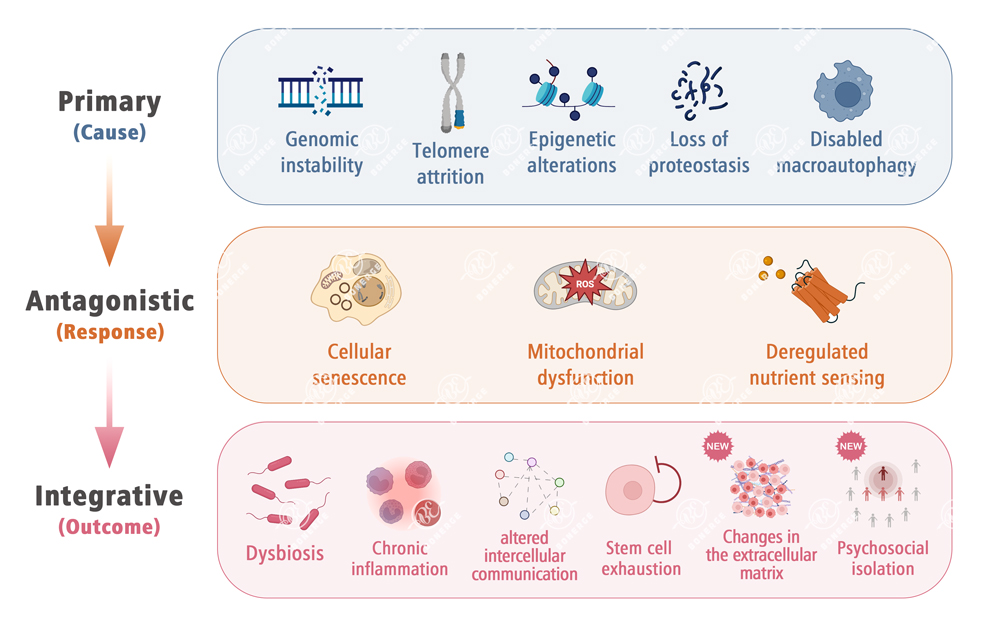
Figure 1: The 14 hallmarks of aging, grouped by biological role — including two newly proposed additions: extracellular matrix changes and psychosocial isolation.
Scientists have mapped aging to 12 distinct biological hallmarks, including telomere shortening, mitochondrial dysfunction, genomic instability, and chronic inflammation [1]. This framework continues to evolve — emerging research suggests the list may extend to 14 hallmarks, with two newly proposed additions: changes in the extracellular matrix and psychosocial isolation [2]. Among these hallmarks, cellular senescence has earned special attention as a root-cause driver of multiple aging pathways simultaneously.
Published in Cell, this framework positions senescent cells not merely as a symptom of aging, but as an active cause — something that can be targeted, reduced, and potentially reversed.
What Happens When a Cell Goes 'Zombie'
Normal cells follow a predictable lifecycle: they grow, divide, perform their function, and eventually die in a controlled process called apoptosis. Cellular senescence happens when a cell suffers enough damage — from DNA strand breaks, telomere erosion, oxidative stress, or radiation — that it can no longer safely divide. Rather than triggering apoptosis, it enters a state of permanent cell-cycle arrest.
This sounds protective at first, and it actually is — in limited contexts. During embryonic development, a small number of senescent cells play beneficial signaling roles. In the short term, senescence also prevents potentially cancerous cells from proliferating. Scientists call these temporary, localized benefits the 'good' side of senescence [1].
The problem begins when these cells refuse to clear. Instead of dying, they persist — and they become increasingly destructive.
Zombie Cells and the SASP: How They Poison the Neighborhood
Here is where the 'zombie' analogy earns its name. Senescent cells don't just sit quietly. They continuously secrete a toxic mixture of inflammatory proteins called the Senescence-Associated Secretory Phenotype, or SASP.
The SASP includes pro-inflammatory cytokines (such as IL-6 and TNF-α), chemokines, and matrix metalloproteinases (MMPs) — enzymes that break down collagen and the structural scaffolding around cells. This chronic, low-level inflammatory output drives what scientists call 'inflammaging' — the slow burn of inflammation underlying most age-related diseases.
More insidiously, SASP factors can trigger neighboring healthy cells to become senescent themselves, creating a spreading, self-reinforcing cycle: senescence → inflammation → more senescence.[1]
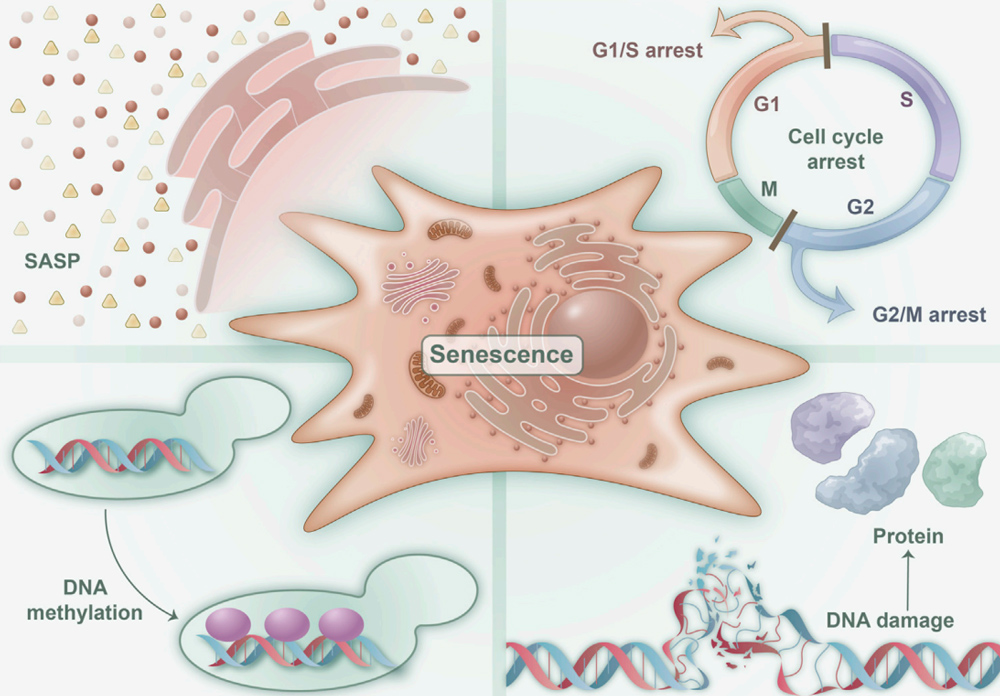
Figure 2: A senescent cell releasing SASP inflammatory signals while undergoing cell cycle arrest and DNA damage — the core mechanisms that make zombie cells a driver of accelerated aging.
Why Do Zombie Cells Accumulate With Age?
The Balance Tips Over Time
In a young, healthy body, senescent cells are produced regularly — through normal DNA damage, oxidative stress, and cellular wear — but the immune system stays on top of them, clearing them within days or weeks. As we age, this balance shifts in two critical ways: senescent cells form faster (more cellular damage, more stress signals) and the immune system's ability to clear them progressively weakens [1].
The result is accumulation — a slow but relentless buildup of zombie cells in tissues throughout the body, particularly in joint cartilage, skin dermis, fat tissue, and skeletal muscle.
What Accelerates Zombie Cell Accumulation?
While age is the primary driver, several factors are known to speed up senescent cell accumulation well beyond your biological age:
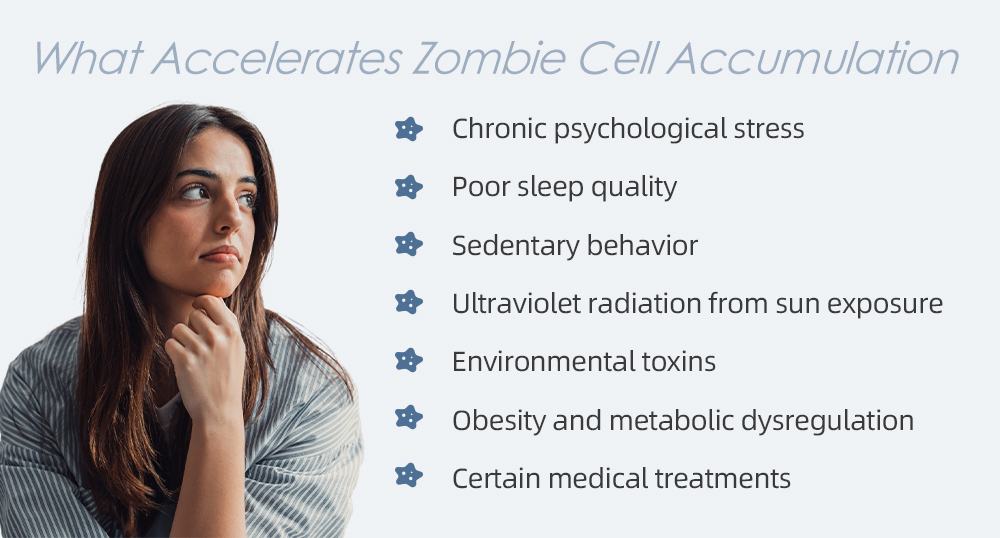
Chronic psychological stress elevates cortisol and increases oxidative stress, accelerating DNA damage and telomere shortening — two major triggers for cellular senescence.
Poor sleep quality disrupts the cellular repair processes that normally correct DNA lesions before they become permanent.
Sedentary behavior removes the mechanical and metabolic signals that help maintain cell health. Exercise, particularly resistance training, has been shown to reduce markers of cellular senescence in skeletal muscle.
Ultraviolet radiation from sun exposure induces senescence in skin cells by causing direct DNA damage and dramatically elevating reactive oxygen species (ROS) in the dermis [4].
Environmental toxins — including heavy metals like arsenic, air pollutants, and food additives like MSG — trigger senescence by generating oxidative stress and mitochondrial dysfunction [5].
Obesity and metabolic dysregulation create a systemic environment rich in pro-inflammatory signals, dramatically increasing senescent cell burden across multiple tissue types.
Certain medical treatments, including chemotherapy and radiation, can induce widespread cellular senescence as a side effect.
The Vicious Cycle: Immune Senescence Feeds Cellular Senescence
There is a particularly troubling feedback loop at the heart of aging biology. The immune system is responsible for clearing zombie cells. But immune cells themselves — T cells, B cells, NK cells, and macrophages — become senescent with age.
As the immune system ages (immune senescence), its ability to detect and eliminate zombie cells deteriorates. NK cells lose their capacity to recognize senescent surface markers; macrophage phagocytic function declines; T cell diversity diminishes.
The result is self-amplifying: more senescent cells accumulate because the immune system is too impaired to clear them, and the SASP from those accumulating cells further impairs immune function. This is why targeting senescent cells directly has become such a compelling therapeutic strategy. [1]
How Does the Body Normally Clear Zombie Cells?
Under healthy conditions, the immune system deploys several mechanisms to eliminate senescent cells: [1]
Natural Killer (NK) cells scan for specific surface ligands that senescent cells express and induce apoptosis through direct cytotoxic killing.
Macrophages are attracted to senescent cells by SASP chemokines and engulf them through phagocytosis.
Neutrophils can be recruited to senescent cell sites where they deploy extracellular traps (NETs) and other mechanisms to eliminate damaged cells.
These mechanisms work well in youth. As immune senescence progresses, however, all three arms of this clearing system become less effective — which brings us to one of the most exciting frontiers in aging science: senolytics.
What Kills Zombie Cells?
What Is Senolytics?
The term senolytics was coined in 2015 by a team at the Mayo Clinic led by Dr. James L. Kirkland [3]. It describes a class of compounds designed to selectively eliminate senescent cells — not by broadly suppressing inflammation, but by going directly to the source.
The distinction matters clinically. Conventional anti-inflammatories (NSAIDs like ibuprofen, or corticosteroids) target the downstream inflammatory mediators that zombie cells produce. They can reduce symptoms but cannot eliminate the cells generating those signals. Senolytics aim to destroy the zombie cells themselves, removing the upstream driver of chronic inflammation.
Several pharmaceutical senolytics — including Dasatinib, Navitoclax, and Ouabain — have shown promise but face significant limitations around safety and side effects. The search for safer, natural alternatives has intensified considerably.
The Top Natural Senolytics: Fisetin and Quercetin
Among natural compounds with senolytic potential, fisetin and quercetin are the two most extensively studied. Both are plant flavonoids, both have demonstrated the ability to selectively clear senescent cells in preclinical models, and both are available as dietary supplements.
Fisetin — found in strawberries, apples, persimmons, and the plant Cotinus coggygria — operates through multiple mechanisms: it inhibits p53/p21 signaling to induce senescent cell apoptosis, modulates NK cell and macrophage activity to enhance immune clearance, activates AMPK signaling to reduce new senescent cell formation, inhibits mTOR overactivation, and reduces intracellular ROS accumulation [3].
Quercetin — found in onions, capers, and apple skin — was one of the first natural senolytics identified. It acts primarily by inhibiting pro-survival signaling pathways that senescent cells rely on, including PI3K/AKT and BCL-2 family proteins [6].
Fisetin vs. Quercetin: What the Evidence Shows
Both fisetin and quercetin belong to the flavonoid family and share some structural features. But head-to-head comparisons in the scientific literature consistently favor fisetin in senolytic potency.
Feature | Fisetin | Quercetin |
Senolytic potency (Mayo Clinic study) | Highest tested (>68% clearance) | Moderate; lower than fisetin |
Crosses blood-brain barrier? | Yes, readily | Limited penetration |
Supports skin health? | Yes, clinical data (elasticity, TEWL, wrinkles) | Limited direct evidence |
Reproductive health support? | Yes, crosses blood-testis barrier | Not well established |
Acts on AMPK/mTOR pathway? | Yes, activates AMPK, inhibits mTOR | Primarily PI3K/AKT and BCL-2 pathways |
In a landmark study published in EBioMedicine, researchers from the Mayo Clinic tested 10 natural flavonoids. Fisetin demonstrated senolytic activity exceeding 68% — the highest of all 11 compounds tested — significantly outperforming quercetin, resveratrol, EGCG, apigenin, and curcumin [3].
Beyond raw senolytic potency, fisetin shows distinct advantages in several areas:
Brain penetration: Fisetin readily crosses the blood-brain barrier, reducing amyloid-beta aggregation, improving dopamine levels, and protecting neuronal mitochondria. Quercetin has comparatively limited CNS penetration [7].
Skin rejuvenation: In clinical studies of women aged 36–60, fisetin supplementation over 56 days reduced transepidermal water loss (TEWL) by 25.29%, improved eye wrinkle volume by 8.37%, and increased skin elasticity by 17.33% [4].
Reproductive health: Fisetin uniquely penetrates the blood-testis barrier, protecting sperm quality and testicular function. It also supports ovarian health through AMPK/SIRT1 pathway activation [5].
Hair regeneration: Fisetin is a potent TERT enhancer that activates dormant hair follicle stem cells, stimulating the telogen-to-anagen (resting-to-growth) phase transition within 12 days in mouse models [8].
Both fisetin and quercetin have value in a comprehensive longevity approach. However, for senolytic potency, neuroprotection, skin health, and reproductive support, the evidence currently favors fisetin as the superior choice.
A note on dietary intake vs. supplementation
Fisetin is naturally present in small amounts in strawberries, apples, and onions. However, the doses used in senolytic research — typically 100–500 mg per day — are far beyond what diet alone can realistically provide. For reference, approximately 625 g of strawberries are required to obtain a single 100 mg dose of fisetin. Supplementation is therefore the only practical route to reach the concentrations studied in the scientific literature.
BeFisetin®: The Gold Standard of Fisetin Supplements
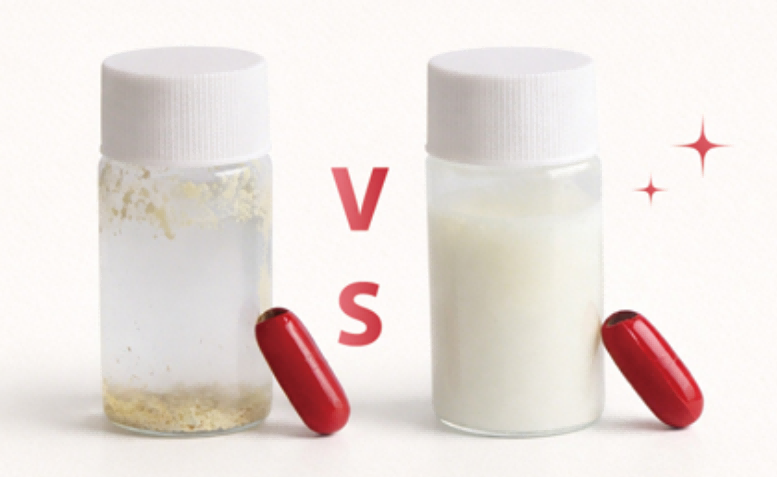
Not all fisetin supplements are created equal. Fisetin is extracted from plants in the Anacardiaceae (lacquer tree) family, which naturally contain allergenic lacquer compounds. Inadequately purified fisetin can carry these toxic impurities — a safety concern largely ignored by budget supplement brands.
BeFisetin® sets the global industry benchmark with:
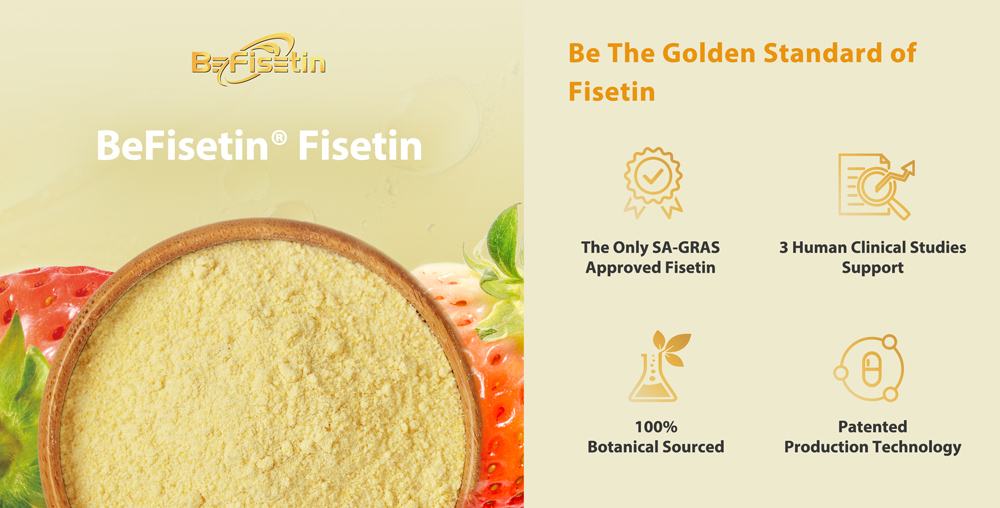
Purity: Total flavonoids ≥ 99%; fisetin content ≥ 98%; total impurities < 1%
Zero lacquer and wax contamination — verified through rigorous proprietary purification
100% plant-derived — confirmed by C14 radiocarbon testing (100% biobased carbon)
SA-GRAS certified — the world's first and only fisetin ingredient with this designation (April 2025), affirmed safe up to 500 mg/day
Sigma international testing standards — full characterization including NMR, ICP-MS, HPLC, UV, and IR
Proprietary extraction patent for high-purity fisetin from Cotinus coggygria
2 completed or ongoing human clinical trials on skin beauty and sleep quality
Frequently Asked Questions
What are zombie cells?
Zombie cells is a popular term for senescent cells — cells that have permanently stopped dividing but refuse to die. Instead, they secrete inflammatory proteins (the SASP) that damage surrounding tissue and accelerate aging throughout the body.
What kills zombie cells in the body?
The immune system — particularly NK cells, macrophages, and neutrophils — normally clears senescent cells within days to weeks. When immune function declines with age, zombie cells accumulate. Senolytics, both pharmaceutical and natural (like fisetin), are designed to selectively eliminate these cells.
What is a senolytic?
A senolytic is a compound that selectively induces apoptosis (cell death) in senescent cells without harming healthy cells. The concept was pioneered at the Mayo Clinic in 2015. Fisetin is currently the most potent natural senolytic identified in the scientific literature.
What is fisetin?
Fisetin is a plant flavonoid found in strawberries, apples, persimmons, and Cotinus coggygria. It functions as both a senolytic (clearing existing zombie cells) and a senoprevention agent (reducing new zombie cell formation) through multiple molecular pathways including AMPK activation, mTOR inhibition, and ROS reduction.
How much fisetin is in strawberries?
Strawberries have the highest natural fisetin content of any common food, but concentrations are still modest: approximately 625g of strawberries are required to obtain a single 100mg dose of fisetin — making supplementation the only practical way to reach therapeutic doses.
Is fisetin better than quercetin for zombie cells?
Both are natural senolytics with valuable properties. However, in direct comparisons, fisetin demonstrates significantly higher senolytic activity (>68% vs. lower scores for quercetin in the same Mayo Clinic study), better brain penetration, and distinct clinical benefits for skin, hair, reproductive health, and skeletal muscle. For most people interested in senolytic supplementation, fisetin offers a stronger evidence base.
What is the recommended dose of fisetin?
Research protocols have used doses ranging from 100mg to 1400mg per day, with many human studies using 100–500mg daily. BeFisetin® is SA-GRAS certified for up to 500mg/day in adults (excluding pregnant and lactating women). Consult a healthcare professional before starting any new supplement regimen.
Is fisetin safe?
Fisetin has a strong safety profile in published literature. BeFisetin® is the world's first fisetin ingredient to achieve SA-GRAS certification — independently reviewed and affirmed safe by an expert panel. Unlike pharmaceutical senolytics (Dasatinib, Navitoclax), which carry significant side effect risks, fisetin has shown favorable tolerability in both animal and human studies.
This article is for informational purposes only and does not constitute medical advice. Please consult a qualified healthcare provider before starting any new supplement or treatment regimen.
References:
[1] López-Otín C, Blasco MA, Partridge L, Serrano M, Kroemer G. Hallmarks of aging: An expanding universe. Cell. 2023 Jan 19;186(2):243-278. doi: 10.1016/j.cell.2022.11.001. PMID: 36599349.
[2] Kroemer G, Maier AB, Cuervo AM, Gladyshev VN, Ferrucci L, Gorbunova V, Kennedy BK, Rando TA, Seluanov A, Sierra F, Verdin E, López-Otín C. From geroscience to precision geromedicine: Understanding and managing aging. Cell. 2025 Apr 17;188(8):2043-2062. doi: 10.1016/j.cell.2025.03.011. PMID: 40250404.
[3] Zhu Y, Doornebal EJ, Pirtskhalava T, et al. New agents that target senescent cells: the flavone, fisetin, and the BCL-XL inhibitors, A1331852 and A1155463. Aging (Albany NY). 2017 Mar 8;9(3):955-963. doi: 10.18632/aging.101202. — Yousefzadeh MJ, Zhu Y, McGowan SJ, et al. Fisetin is a senotherapeutic that extends health and lifespan. EBioMedicine. 2018 Oct;36:18-28. doi: 10.1016/j.ebiom.2018.09.015. PMID: 30279143.
[4] BeFisetin® internal clinical data. Randomized double-blind placebo-controlled trial (n=18/group, 56 days). Skin endpoints: TEWL, inflammation, brightness, elasticity, wrinkles. (Manuscript in preparation for publication)
[5] Ijaz MU, Haider S, Tahir A, Afsar T, Almajwal A, Amor H, Razak S. Mechanistic insight into the protective effects of fisetin against arsenic-induced reproductive toxicity in male rats. Sci Rep. 2023 Feb 22;13(1):3080. doi: 10.1038/s41598-023-30302-x. PMID: 36813806.
[6] Kirkland JL, Tchkonia T. Senolytic drugs: from discovery to translation. J Intern Med. 2020 Nov;288(5):518-536. doi: 10.1111/joim.13141. PMID: 32686219.
[7] Maher P. Fisetin acts on multiple pathways to reduce the impact of age and disease on CNS function. Front Biosci (Schol Ed). 2015 Jan 1;7(1):58-82. doi: 10.2741/s425. PMID: 25553380. — Currais A, et al. Fisetin reduces the impact of aging on behavior and physiology in the rapidly aging SAMP8 mouse. J Gerontol A Biol Sci Med Sci. 2018;73(3):299-307. doi: 10.1093/gerona/glx104. PMID: 28575278.
[8] Kubo C, Ogawa M, Uehara N, Katakura Y. Fisetin Promotes Hair Growth by Augmenting TERT Expression. Front Cell Dev Biol. 2020 Oct 15;8:566617. doi: 10.3389/fcell.2020.566617. PMID: 33178686.







 +1(425)866-9043
 sales@bonerge.com