











 Time:Oct 22, 2026
 Share:


Melatonin, GABA, L-theanine, magnesium: nearly every popular sleep ingredient works on the brain. Yet plenty of people fall asleep without trouble and still wake at 2 or 3 a.m., night after night. New research on the gut-brain axis and sleep suggests part of the problem sits further upstream, in the gut. This article maps the four pathways the gut uses to influence sleep, then reviews the latest urolithin A research at each one, including where that evidence currently stops.

Why Sleep Problems May Start in the Gut
For decades, sleep science looked almost entirely at the brain: the master clock, melatonin, and the neurotransmitters that switch us between waking and sleep. That picture is incomplete. The gut hosts trillions of microbes, and roughly 90% of the body's serotonin is produced there [1]. Gut and brain stay in constant contact through the vagus nerve, the stress hormone (HPA) axis, immune signaling, and metabolites made by gut bacteria. Together, these links form the gut-brain axis, also called the gut-brain connection, or the microbiota-gut-brain axis when researchers want to stress the role of gut microbes.
A growing body of research shows this axis helps regulate sleep, both directly and indirectly, and that the relationship runs both ways [2]. Disrupted sleep reshapes the gut microbiome, and an imbalanced microbiome can send signals associated with lighter, less stable sleep. It is one reason a brain-only approach can leave night waking unresolved, a theme we explored in why melatonin often falls short.
How the Gut-Brain Axis Regulates Sleep: 4 Pathways
Signals travel in both directions along the brain-gut axis, but four gut-side pathways stand out for sleep.
| Pathway | What the gut normally does | What happens when it goes wrong |
|---|---|---|
1. Gut microbiota | Produces messenger molecules such as short-chain fatty acids, secondary bile acids, and tryptophan metabolites | Dysbiosis distorts the signals reaching the brain |
2. Gut barrier | Tight junction proteins (claudin-1, claudin-4, occludin) keep bacterial fragments out of circulation | Leakage feeds low-grade inflammation linked to fragmented sleep |
3. Gut peripheral clock | Gut lining cells run their own clock genes (BMAL1, CLOCK, PER1/2, CRY1/2) | Gut and brain clocks drift out of sync |
4. Gut secretions | Hormones, neurotrophic factors, and exosomes carry messages toward the brain | Gut-to-brain communication weakens |
1. Gut Microbiota: The Brain's Chemical Messengers
Gut bacteria turn food into a steady stream of bioactive molecules, including short-chain fatty acids, secondary bile acids, and tryptophan metabolites. These compounds act on the vagus nerve and the HPA axis, which together influence stress, alertness, and sleep timing. When the microbial community loses diversity, the signal mix shifts, and the brain receives a noisier input around the clock.
2. The Gut Barrier: The First Gate for Sleep Quality
The gut lining is sealed by tight junction proteins such as claudin-1, claudin-4, and occludin. When those seals loosen, bacterial fragments such as lipopolysaccharide (LPS) can reach the bloodstream and drive low-grade, body-wide inflammation. Researchers associate this inflammatory state with lighter, more fragmented sleep and less time in deep sleep.
3. The Gut's Peripheral Clock: The Body's Second Timekeeper
The brain's suprachiasmatic nucleus (SCN) is the body's master clock, but it is not the only one. Cells lining the gut run their own clock genes, including BMAL1, CLOCK, PER1/2, and CRY1/2, which time digestion, barrier renewal, and immune activity across the day. Irregular meals, late nights, and inflammation can push the gut clock out of step with the SCN, and that mismatch feeds back into sleep.
4. Gut Secretions: Messages Sent From Gut to Brain
The gut also talks to the brain through what it secretes. Enteroendocrine cells release hormones, intestinal cells release neurotrophic factors, and tiny vesicles called exosomes carry proteins and genetic material between tissues. These secretions are an emerging route of gut-to-brain communication, and they are where some of the newest urolithin A research focuses.
Urolithin A: New Research at Each Gut-Brain Pathway
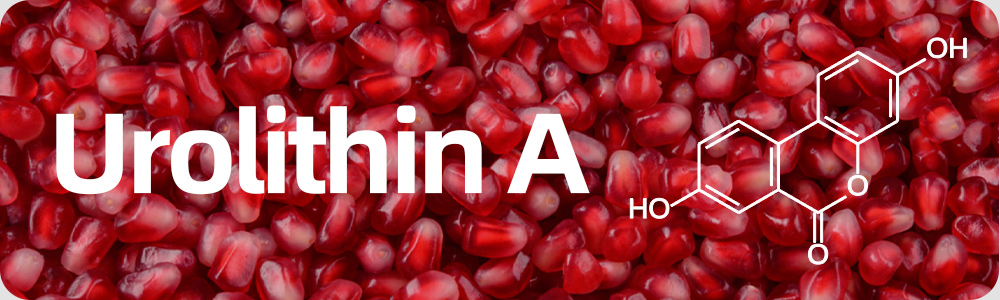
Urolithin A is a postbiotic: a compound gut bacteria make when they break down ellagitannins and ellagic acid, the polyphenols found in foods such as pomegranates and walnuts. (For a full primer on what urolithin A is and its broader urolithin A benefits, see our overview.) Because it is made in the gut, absorbed into circulation, and active in tissues beyond the intestine, urolithin A sits naturally at the junction of the gut, the body's clocks, and inflammatory signaling. Here is what recent studies show at each of the four pathways.
Pathway 1: Reshaping the Microbiota to Raise a Gut-to-Brain Messenger
A 2026 study in Advanced Science tested urolithin A in mice with alcohol-induced cognitive and social dysfunction [3]. Urolithin A enriched two gut bacteria, Bacteroides sartorii and Parabacteroides distasonis, which raised levels of anandamide (AEA), an endocannabinoid messenger. Anandamide then acted on CB1 receptors in the brain through a CB1R-DRD2-Rap1 signaling cascade, supporting synaptic repair and calming neuroinflammation. When the researchers removed the gut microbiota with antibiotics, urolithin A's benefits were suppressed, showing that the effect ran through the gut.
The study measured cognition and behavior, not sleep. But it is one of the clearest demonstrations so far of a specific gut-to-brain route for urolithin A, and the endocannabinoid system it engages is also involved in regulating the sleep-wake cycle.
Pathway 2: Restoring the Gut Barrier and Its Daily Rhythm
A 2024 study in Nutrients examined what inflammation does to the gut barrier's timing [4]. In human intestinal cells (Caco-2), inflammation disrupted the daily rhythms of clock genes (BMAL1, PER2) and tight junction genes (occludin, ZO-1, claudin-1). Urolithin A helped restore those rhythms. In mice with chemically induced colitis, oral urolithin A improved fecal IgA levels, tight junction expression (claudin-1 and claudin-4), and clock gene expression (Bmal1 and Per2). Antagonist experiments pointed to the Nrf2-SIRT1 pathway as part of the mechanism.
A separate 2024 study in Scientific Reports found that one week of urolithin A thickened the protective mucus layer in mice from an average of 6.47 to 11.52 micrometers, an effect that depended on both the AhR and Nrf2 pathways [5]. We cover that work in detail in how urolithin A strengthens the gut barrier.
Pathway 3: Resetting Clocks From the Gut to the Brain
The same Nutrients study [4] went a step further: mice fed urolithin A showed changes in clock gene expression in the SCN, the brain's master clock. That makes it one of the few studies to link a gut-derived compound to the central clock. One caveat, raised in a 2026 review, is that the SCN measurements were taken in colitis mice without a non-colitis comparison group, so their meaning for healthy sleep remains uncertain [6].
Urolithin A also strengthens peripheral clocks outside the gut. In senescent human fibroblasts, a cell model of the aging clock, urolithin A boosted the amplitude of circadian gene oscillation more than urolithins B and C did. It worked by destabilizing the clock protein PER2 while stabilizing SIRT1, which strengthened BMAL1 oscillation [7]. A stronger, steadier rhythm is exactly what aging and chronic disruption tend to erode. For background, see our guide to circadian rhythm.
Pathway 4: Exosomes as Gut-to-Brain Couriers
A 2024 Nutrients study explored how urolithin A taken by mouth could influence the brain [8]. Exosomes released by intestinal cells treated with urolithin A, and exosomes collected from the blood of aged mice fed urolithin A, both activated neuronal cells in culture. Neurotrophic factors secreted by the intestinal cells may also contribute. The authors reported that urolithin A intake suppressed age-related memory decline in aged mice. These are early, largely cell-based findings, but they point to exosomes as one possible carrier for gut-to-brain signals triggered by urolithin A.
The Evidence at a Glance
| Pathway | Study | Model | Key finding |
|---|---|---|---|
| Gut microbiota | Zhang et al., Adv Sci, 2026 | Mice with alcohol-induced dysfunction | Enriched B. sartorii and P. distasonis, raised anandamide, acted via brain CB1R; effect depended on the microbiota |
| Gut barrier | Du et al., Nutrients, 2024; Yasuda et al., Sci Rep, 2024 | Caco-2 cells; colitis mice; mice | Restored rhythmic tight junction and clock gene expression; mucus layer about 78% thicker |
Peripheral & central clock | Du et al., 2024; Kuatov et al., Nutrients, 2025 | Colitis mice (SCN); senescent human fibroblasts | Clock gene changes in the SCN; stronger BMAL1 oscillation via SIRT1 and PER2 |
| Gut secretions | Kubota et al., Nutrients, 2024 | Intestinal and neuronal cells; aged mice | Exosomes from urolithin A-treated gut cells activated neuronal cells |
Urolithin A Foods vs. Direct Supplementation
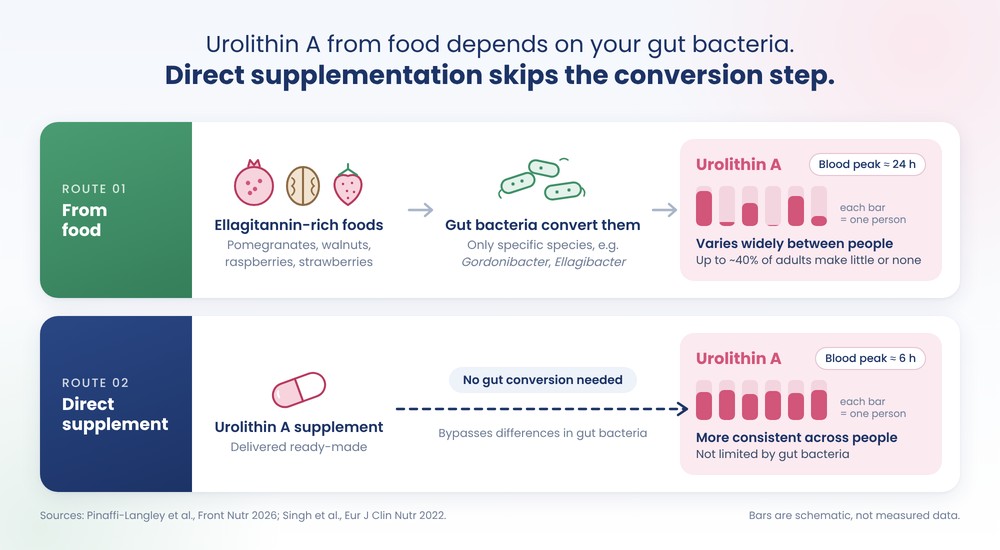
There is a catch to all of this. Urolithin A is not found ready-made in food. Pomegranates, walnuts, raspberries, and strawberries supply ellagitannins and ellagic acid, and only specific gut bacteria (members of the Gordonibacter and Ellagibacter genera have been implicated) can convert them into urolithin A [6].
That conversion varies widely. Researchers sort people into urolithin metabotypes: those who produce mainly urolithin A, those who produce it alongside other urolithins, and those who produce almost none. In some studies, up to about 40% of adults make little or no urolithin A from diet [9], and metabotype patterns shift with age and region [6].
This creates an awkward paradox for gut-brain support. The people whose gut-brain axis is under the most strain, such as those with disrupted sleep or an imbalanced microbiome, may also be the least able to make urolithin A. A 2026 preprint we covered in urolithin A and sleep reported that the bacteria responsible for producing urolithin A were sharply reduced in people with circadian disruption.
A urolithin A supplement sidesteps that variability by delivering the compound directly. It also changes the timing: after direct supplementation, blood levels of urolithin A and its metabolites peak about 6 hours after intake, compared with about 24 hours when the source is food [6].
What the Evidence Does and Doesn't Show
The case for urolithin A along the gut-brain axis is mechanistically strong but still early. A 2026 mini review by researchers at the University of Oklahoma and Columbia University's sleep and circadian research center found no study that has yet measured urolithin A's effect on sleep itself using EEG, actigraphy, or polysomnography [6]. What exists are preclinical studies pointing to plausible routes: modulation of the central clock, protection against neuroinflammation after sleep deprivation, and support for the gut microbiota, including one study in which urolithin A helped preserve gut microbiota balance and barrier function in sleep-deprived mice.
Several limits are worth stating plainly:
Most data come from cells and animals. The models vary (alcohol exposure, colitis, cellular aging), and none were designed with sleep as the primary outcome.
Dose translation is unresolved. Some cell studies use concentrations above the levels urolithin A reaches in human blood, which stay below about 1 micromolar even after a 500 mg dose [6].
No sleep-specific human dose exists yet. Human studies have found urolithin A well tolerated at intakes up to 1,000 mg per day (see our urolithin A safety overview), but those trials were not designed around sleep.
Claims must match the evidence. For finished products, this research supports mechanism-level positioning around gut health and circadian support, not claims to treat insomnia or any sleep disorder.
What This Means for Sleep Product Development
For formulators and brand teams, the four pathways work as a practical design map.
Map each active to a pathway. Most sleep formulas stack several actives on the same brain-side target. Checking a formula against the four gut-brain pathways shows where coverage is thin. Urolithin A's preclinical data sit mainly on the gut barrier and the clock, so it pairs logically with brain-side actives such as magnesium glycinate, L-theanine, or glycine, and with prebiotic fibers or probiotics on the microbiota side.
Plan for people who make little urolithin A. Because natural production depends on the microbiome, delivering urolithin A directly gives every consumer a consistent starting point, including those whose diet or gut bacteria would otherwise leave them short.
Match the claim to the evidence tier. Most gut-brain sleep data are still preclinical. Messaging built on mechanisms, such as gut barrier and circadian support, is easier to defend in regulatory and retailer review than outcome claims about falling or staying asleep.
For the market side of this shift, from melatonin-free launches to the move toward overnight recovery, see our partner feature in NutraIngredients, Beyond sleep aid: Why next-gen sleep supplements are shifting toward sleep recovery.
Bonerge is also working to close the human evidence gap. Together with Huazhong University of Science and Technology, we are running a 12-week, randomized, placebo-controlled trial (NCT06990256) of urolithin A, fisetin, and their combination in adults aged 30 to 75 with poor sleep quality (a Pittsburgh Sleep Quality Index score above 5). It pairs objective sleep measures such as polysomnography and actigraphy with biomarkers including gut microbiota composition and DNA methylation. Results are still pending.
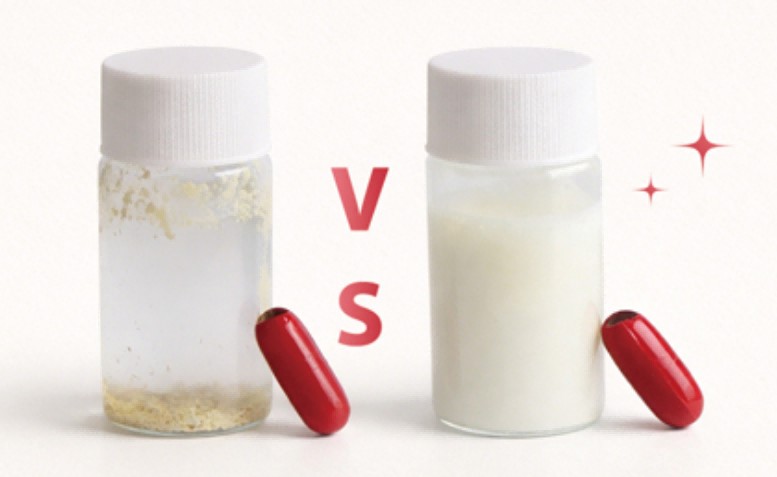
StanYouth® Urolithin A is Bonerge's high-purity urolithin A ingredient, produced to over 99% purity. It is available as a standard bulk urolithin A powder, plus innovative formats built on our BonFusion™ delivery platform, including water-dispersible powder and high-bioavailability softgels. Contact our team for specifications, stability data, or samples.
Frequently Asked Questions
How does the gut-brain axis affect sleep?
The gut influences sleep through at least four routes: microbial messenger molecules, the integrity of the gut barrier, the gut's own circadian clock, and secretions such as hormones and exosomes that carry signals toward the brain. Disrupted sleep also reshapes the gut microbiome, so the relationship runs in both directions [2].
How much serotonin is made in the gut?
Roughly 90% of the body's serotonin is made in the gut, mainly by specialized enterochromaffin cells, and gut bacteria help regulate how much they produce [1]. Serotonin in the gut does not cross into the brain directly. Instead, it acts locally on digestion and sends signals to the brain through nerves such as the vagus nerve, which is one reason gut health and sleep are so closely linked.
Can poor gut health make you wake up at night?
It may contribute. A leaky gut barrier can raise low-grade inflammation, and a gut clock out of sync with the brain's master clock can destabilize sleep timing. Night waking has many causes, though, and persistent problems deserve a conversation with a healthcare professional.
Does urolithin A help with sleep?
Preclinical research shows urolithin A acts on several sleep-relevant pathways, including gut barrier rhythms, clock gene expression, and gut microbiota balance. However, no published human trial has yet measured its effect on sleep directly [6]. Randomized human trials, including one co-run by Bonerge, are underway.
What foods contain urolithin A?
No food contains urolithin A directly. Pomegranates, walnuts, raspberries, and strawberries provide ellagitannins and ellagic acid, which some people's gut bacteria convert into urolithin A. How much you make depends on your microbiome, and some adults make very little.
What are the benefits of a urolithin A supplement?
The main advantage of a urolithin A supplement is consistency: it delivers the compound directly, regardless of a person's gut bacteria. Current research areas include gut barrier support and circadian rhythm regulation. For a full rundown, see our guide to urolithin A benefits.
Does urolithin A have side effects?
In human studies, urolithin A has been well tolerated, with reported effects generally mild. People who are pregnant, breastfeeding, or taking medication should consult a healthcare professional first. Our urolithin A safety overview covers the data in more detail.
This article is for informational purposes only and does not constitute medical advice. Please consult a qualified healthcare provider before starting any new supplement or treatment regimen.
References:
[1] Yano JM, Yu K, Donaldson GP, et al. Indigenous bacteria from the gut microbiota regulate host serotonin biosynthesis. Cell. 2015;161(2):264-276. doi:10.1016/j.cell.2015.02.047
[2] Wang Z, Wang Z, Lu T, et al. The microbiota-gut-brain axis in sleep disorders. Sleep Med Rev. 2022;65:101691. doi:10.1016/j.smrv.2022.101691
[3] Zhang H, Li Z, Xiao Y, et al. Gut microbiota-derived anandamide mediates the therapeutic effects of urolithin A on alcohol-induced cognitive and social dysfunction via CB1R-DRD2-RAP1 signaling axis. Adv Sci (Weinh). 2026;13(20):e08048. doi:10.1002/advs.202508048
[4] Du Y, Chen X, Kajiwara S, Orihara K. Effect of urolithin A on the improvement of circadian rhythm dysregulation in intestinal barrier induced by inflammation. Nutrients. 2024;16(14):2263. doi:10.3390/nu16142263
[5] Yasuda T, Takagi T, Asaeda K, et al. Urolithin A-mediated augmentation of intestinal barrier function through elevated secretory mucin synthesis. Sci Rep. 2024;14:15706. doi:10.1038/s41598-024-65791-x
[6] Pinaffi-Langley ACC, Zuraikat FM, St-Onge MP, Yabluchanskiy A. Potential impact of urolithin A on pathways relevant to sleep health: a mini review. Front Nutr. 2026;13:1779855. doi:10.3389/fnut.2026.1779855
[7] Kuatov R, Takano J, Arie H, et al. Urolithin A modulates PER2 degradation via SIRT1 and enhances the amplitude of circadian clocks in human senescent cells. Nutrients. 2025;17(1):20. doi:10.3390/nu17010020
[8] Kubota D, Sato M, Udono M, et al. Activation of the gut-brain interaction by urolithin A and its molecular basis. Nutrients. 2024;16(19):3369. doi:10.3390/nu16193369
[9] Singh A, D'Amico D, Andreux PA, et al. Direct supplementation with urolithin A overcomes limitations of dietary exposure and gut microbiome variability in healthy adults to achieve consistent levels across the population. Eur J Clin Nutr. 2022;76(2):297-308. doi:10.1038/s41430-021-00950-1





 +1(425)866-9043
 sales@bonerge.com