































 Time:Jul 03, 2026
 Share:


Two people can share a birth year and still age at very different speeds. Part of the answer may come down to something invisible: exactly where senescent cells, the so-called "zombie cells" that stop dividing but refuse to clear out, are quietly building up inside the body.
In June 2026, that picture got a lot sharper. The NIH's Cellular Senescence Network (SenNet) consortium published a cover study in Cell, led by Rong Fan, PhD, of Yale School of Engineering and Applied Science and Yale School of Medicine, together with researchers from nine other institutions, presenting the first Human Senescence Atlas: a tissue-by-tissue map of where senescent cells live and how they behave [1].
For fisetin, long positioned as the leading natural senolytic, this atlas doesn't just confirm what researchers already suspected. It reframes the questions that matter most for the next phase of research.

What Is the Human Senescence Atlas? Inside SenNet's Cell Cover Study
The SenNet consortium's first wave of findings combined single-cell omics, spatial multi-omics, and AI-driven analysis, giving researchers a systematic way to map how senescent cells differ by tissue and by the signals in their surrounding microenvironment [2]. Alongside the main atlas paper, the team built a companion resource called SenCat, a catalog of senescence-related gene activity and protein changes across cell types, published the same week in Molecular Cell [3].
One of the atlas's clearest findings: senescence markers turned out to be better predictors of a person's biological age, and of age-related health measures such as walking pace, diabetes status, blood pressure, and kidney function, than non-senescence markers were. Critically, the health signal wasn't generic. Senescence tied to specific cell types lined up with specific health traits: kidney-cell senescence with kidney disease, fat-cell senescence with body mass index, and immune-cell senescence with future mortality and diabetes onset [3].
Introducing the "Senotype": A New Way to Classify Zombie Cells
To capture this tissue-specific complexity, the researchers introduced a new term: the senotype. Rather than treating cellular senescence as a single biological state, the data point to a diverse spectrum of cellular profiles that vary by tissue and by disease context. The broader SenNet collection released alongside the cover paper also includes new senescence atlases specific to the brain, liver, and skin, along with AI tools built to classify these different aged-cell types [1].
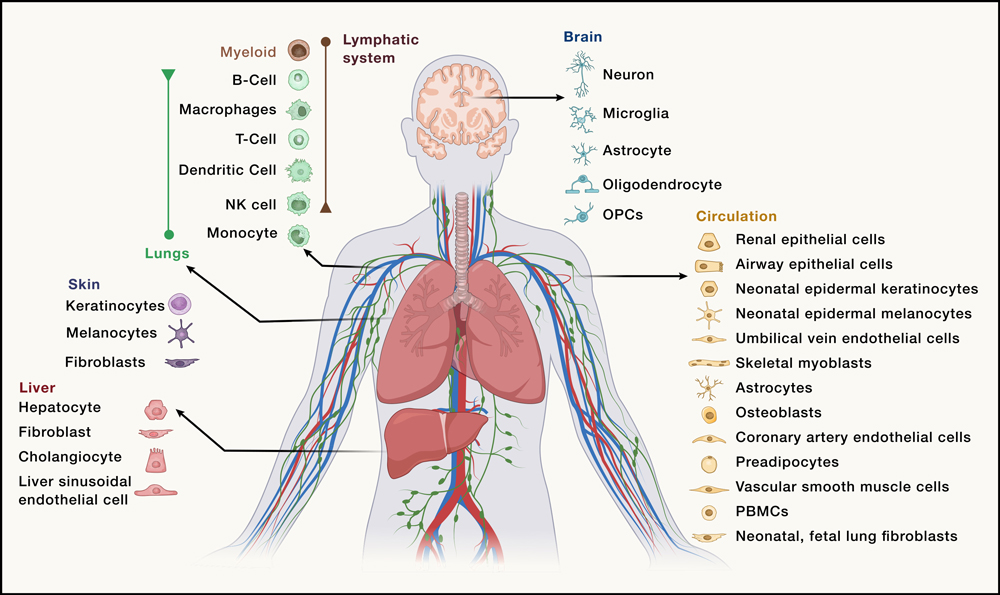
Figure 1. The senotype in practice: the same "senescence" label maps to different tissues and different health outcomes. Source: NIH SenNet Human Senescence Atlas (Cell, 2026)
The stated ambition is precision, not just cataloging. As the project expands, the consortium's stated hope is that this open-source atlas will accelerate precision therapies, with the broader goal of extending not just lifespan but healthy years lived [1].
The Rise of the "Senotype": Why Tissue-Specific Zombie Cells Matter for Longevity Science
The atlas's central lesson for anyone working in senolytics is that "senescent cell burden" is not one number. It's a tissue-specific fingerprint. Kidney-cell senescence tracked with kidney disease. Fat-cell senescence tracked with BMI. Immune-cell senescence tracked with mortality risk and diabetes onset [3]. Three different cell types, three different downstream stories, all captured under the umbrella term "senescence."
A Companion Atlas: Senescent B Cells and Immune Aging in Lymph Nodes
A parallel SenNet study, also led out of Rong Fan's Yale lab, applied this same tissue-specific lens to the immune system. The team built a spatial multi-omics atlas of human lymph nodes spanning donors aged 18 to 100, and found that senescent-like B cells become more common with age and shift location, moving from interfollicular zones into germinal centers, where they show impaired antibody production, metabolic remodeling, and altered chromatin accessibility [4].
The paper was published online June 8, 2026, as a companion piece to the main cover study. Together, the two studies make the same point from different angles: the question is no longer just "do we have senescent cells," but which senotype, in which tissue, and what does it actually do there.
What This Means for Senolytics — and for Fisetin
Fisetin's senolytic profile is well established. A landmark study led by the Mayo Clinic's James L. Kirkland team found that fisetin reduced senescent cell burden and suppressed SASP, the inflammatory secretory phenotype senescent cells release into surrounding tissue [5]. In benchmark comparisons against other bioflavonoids, including quercetin, curcumin, and resveratrol, fisetin showed the strongest senescent cell clearance activity.
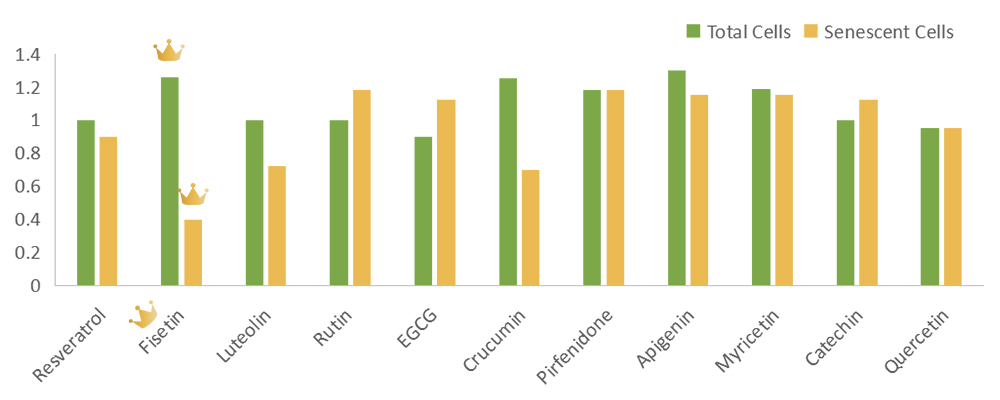
Figure 2. Fisetin clears senescent cells and suppresses SASP, with the strongest clearance among common bioflavonoids.
For a full breakdown of the mechanism, clearance data, and fisetin-vs-quercetin comparison, see our earlier deep dive on Zombie Cells, Senescence & the Science of Fisetin and Fisetin Benefits: The Complete Science-Backed Guide.
From "Does Fisetin Clear Senescent Cells" to "Which Ones, and Where"
The Human Senescence Atlas doesn't change fisetin's underlying senolytic mechanism. What it changes is the research question sitting on top of it. Instead of asking whether fisetin clears senescent cells in general, the field now has a framework for asking which senotypes it clears most effectively, and in which tissue environments that clearance actually translates into a measurable health outcome — kidney, fat, immune, or otherwise. That's a meaningfully more precise starting point for the next generation of senolytic formulation research.
Where We Go From Here: Precision Applications for Fisetin
The atlas leaves formulators and researchers with three practical questions:
Which senescent cell populations should be prioritized for intervention?
Which tissue nodes carry the most health-outcome weight?
And do strategies need to be stratified by age group, given how senescence burden and composition shift across the decades studied in these cohorts?
Emerging Application Areas: Cognitive, Metabolic, and Women's Healthy Aging
Mapping the atlas's tissue-specific findings onto commercial formulation, three areas stand out as near-term opportunities for fisetin-based products:
Cognitive & Brain Health. With a dedicated brain senescence atlas now part of the SenNet collection, tissue-specific formulation targeting neural senescence is a natural next step for memory and cognitive-decline support.
Metabolic Optimization. Given the direct link between fat-cell senescence and BMI, formulations addressing adipose and metabolic tissue senescence have a clearer evidentiary anchor than before.
Female Healthy Aging. As reproductive and hormonal aging research continues to expand, tissue-specific senescence data adds a new layer of scientific grounding to menopause-transition formulations.
BeFisetin®: Built for the Next Era of Senescence Research
Translating tissue-specific science into real product formulations requires more than raw material supply. BeFisetin®, Bonerge's SA-GRAS-certified fisetin ingredient, is built with that next phase in mind: fisetin content above 98%, total flavonoids above 99%, and multiple bioavailable delivery formats, including a water-soluble version and a nano-lipid softgel system, so formulators aren't locked into a single application format as the research picture develops.

Bonerge has backed this with real clinical investment, not just specification sheets. We've completed a double-blind clinical trial evaluating BeFisetin®'s effects on skin health, with additional studies underway, alongside ongoing work in population stratification and synergistic formulation development — the same direction the Human Senescence Atlas points toward.
FAQ
What is the Human Senescence Atlas?
It's the first comprehensive, tissue-by-tissue map of senescent ("zombie") cells across the human body, published by the NIH's SenNet consortium as a cover study in Cell in June 2026.
What is a "senotype"?
A senotype is a tissue-specific functional profile of senescent cells. The atlas's core finding is that senescent cells aren't one uniform biological state — they vary by tissue, disease context, and surrounding microenvironment.
What is SenNet?
SenNet (the Cellular Senescence Network) is an NIH Common Fund–supported consortium of research institutions working to identify and classify senescent cells across human tissues and the lifespan.
Does this change what we know about fisetin?
Not fisetin's underlying senolytic mechanism, no. What it changes is the research framing: instead of asking whether fisetin clears senescent cells broadly, researchers can now ask which senotypes, in which tissues, respond most to fisetin-based intervention.
Is fisetin still the most-studied natural senolytic?
Yes. Fisetin remains the most clinically documented natural senolytic compound, with the strongest senescent-cell clearance data among common bioflavonoids in head-to-head comparisons.
This article is for informational purposes only and does not constitute medical advice. Please consult a qualified healthcare provider before starting any new supplement or treatment regimen.
References:
[1] Scientists Develop First Comprehensive Atlas of Human Cellular Senescence in Aging. Yale School of Medicine, 2026.
[2] Suryadevara V, et al. Charting human cellular senescence in aging and disease. Cell, 2026 Jun 11;189(12):3501-3505.
[3] Senescent cells mapped in human body over the lifespan. National Institutes of Health (NIH), 2026.
[4] Farzad N, et al. A spatial multi-omics atlas of immunosenescence reveals germinal-center B cell alteration in human lymph nodes. Cell Press Blue, 2026 Jun 8.
[5] Yousefzadeh MJ, et al. Fisetin is a senotherapeutic that extends health and lifespan. EBioMedicine, 2018.







 +1(425)866-9043
 sales@bonerge.com