













 Time:Jul 28, 2026
 Share:


Your gut lining has a difficult job: let nutrients in, keep bacteria and toxins out. Two pieces of urolithin A research published between 2024 and 2026 point to a molecule that helps it do that job better, made by your gut microbiota from foods like pomegranates and walnuts. Here's what each study found, and what the two results mean together. For a broader look at urolithin A beyond the gut, see Bonerge's guide, What Is Urolithin A?
What Is the Gut Barrier?
Think of your gut lining as a wall with two layers of defense.
A mucus layer: a slippery coating made mostly of a protein called MUC2, produced by cells in your gut lining. It keeps bacteria from touching the cells underneath.
The lining cells themselves: sealed tightly together, backed up by immune molecules (like a protein called REG3γ) that can neutralize bacteria that get too close.
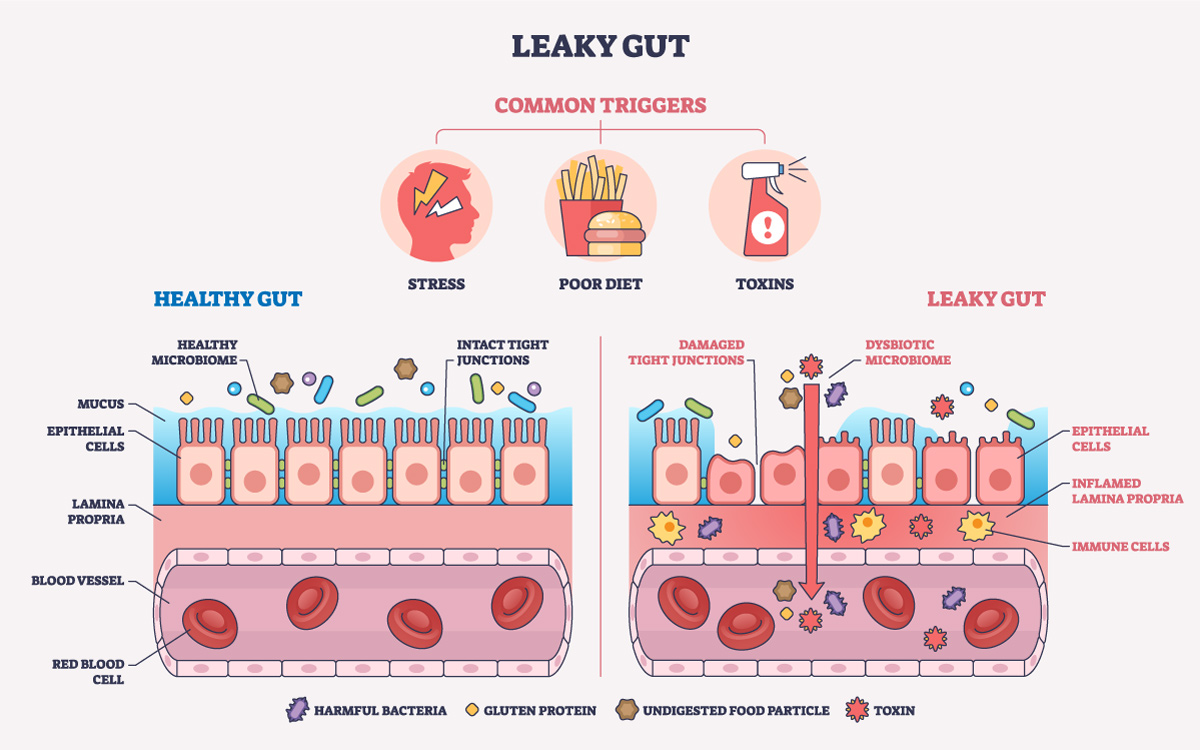
Figure 1. Healthy gut vs. leaky gut: an intact two-layer defense compared to a compromised barrier.
When either layer thins or weakens, more bacteria and bacterial fragments slip through, a state scientists call increased intestinal permeability and most people know as a "leaky gut." Researchers have linked this to digestive conditions like inflammatory bowel disease (IBD), and to inflammatory responses elsewhere in the body. That's why ingredients able to reinforce both layers, not just one, are especially interesting for gut-health products.
Study 1: A Thicker Mucus Layer, Almost Overnight
The first piece of evidence comes from a 2024 study in Scientific Reports. Researchers in Japan gave mice urolithin A for one week, then measured how thick the gut's mucus layer had become [1].
The result: mice given urolithin A had a mucus layer averaging 11.52 micrometers thick, compared to 6.47 micrometers in untreated mice, a significant increase of roughly 80%.
That effect didn't come from flipping just one switch. It required two things happening together:
AhR (a receptor that senses compounds from food and gut bacteria) had to be active: blocking it erased the effect
Nrf2 (a protein that helps cells respond to stress) had to be active too: in mice bred without it, urolithin A stopped working
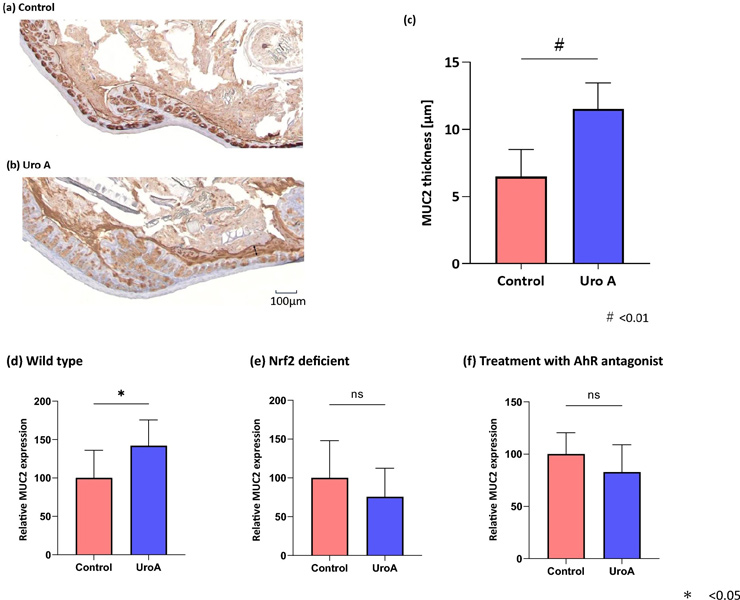
Figure 2. Urolithin A increased mucus layer thickness in mice, an effect lost when AhR or Nrf2 was blocked. [1]
There was a bonus finding. Urolithin A also increased the number of gut bacteria that produce short-chain fatty acids, a class of compounds already linked to a healthier gut lining [1].
In short: this study shows urolithin A physically thickens the gut's mucus shield, and it does so through two clearly identified biological switches, not a vague correlation.
Study 2: A Newly Discovered Immune "Chain Reaction"
The second, newer piece of evidence comes from a 2026 study in Nature Communications. It asks a different question: does urolithin A also help the immune system defend the gut barrier, not just the mucus layer itself?
The researchers traced a chain reaction: urolithin A switches on AhR in gut lining cells, which activates a sensor called NLRP6, which releases a signal called IL-18, which tells nearby immune cells to release IL-22, which tells the gut to produce more mucus and more REG3γ, the antibacterial protein [2].
Three details make this finding stand out.
It Only Happens in Gut Lining Cells
When researchers removed AhR specifically from gut lining cells, the protective effect of urolithin A disappeared. Removing AhR from immune cells instead changed nothing. The effect starts at the gut wall itself, not the broader immune system [2].
It's Surprisingly Selective
Not every compound that activates AhR triggers this chain reaction. Two other well-known AhR-activating compounds (FICZ and TCDD, a dioxin) switched on AhR but failed to trigger the IL-18 signal. Urolithin A appears to selectively engage this specific pathway, rather than acting as a generic "AhR switch" [2].
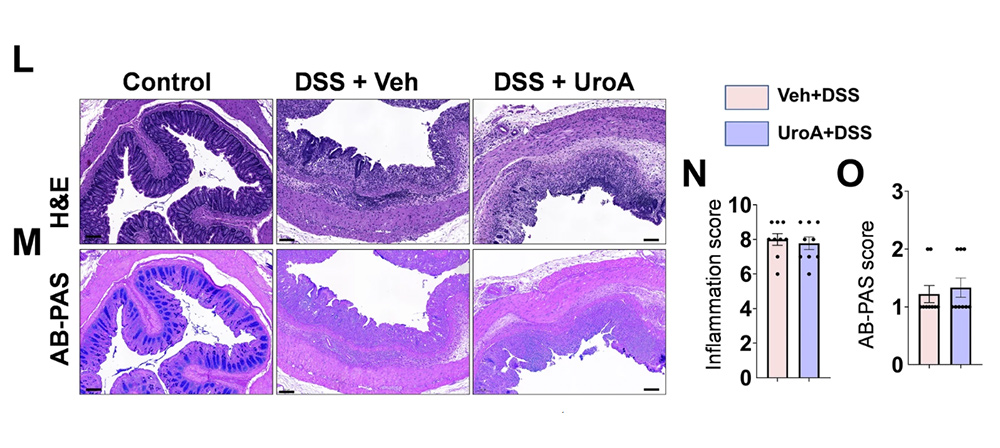
Figure 3. Colon tissue in a mouse colitis model: control, untreated colitis, and colitis treated with urolithin A.[2]
It Worked on Real Human Gut Tissue
The researchers didn't stop at mice. They applied urolithin A directly to intestinal tissue samples from people with inflammatory bowel disease. The tissue responded with higher levels of both IL-18 and IL-22, and the effect was strongest in the most inflamed samples [2].
Bottom line: this study gives a specific, receptor-level explanation for how urolithin A supports the gut's immune defenses, backed by evidence from real human tissue, not just animal models.
Putting the Two Studies Together
2024 Study | 2026 Study | |
What it protects | The mucus layer (physical barrier) | The immune defense system |
How it works | Increases mucus (MUC2) production | Triggers a chain reaction: AhR → NLRP6 → IL-18 → IL-22 |
Key switches involved | AhR + Nrf2 | AhR (gut lining cells only) → NLRP6 |
Tested in | Mice | Mice + real human gut tissue |
Extra benefit found | More short-chain-fatty-acid-producing bacteria | More antibacterial protein (REG3γ) |
Put together, the two studies map out urolithin A's mechanism of action for gut barrier support through two distinct signaling pathways: one thickens the physical barrier, the other strengthens its immune backup.
How Does This Compare to Other Gut-Health Ingredients?
Urolithin A supports the gut barrier by switching on specific receptors (AhR, Nrf2, NLRP6), a different approach than the live bacteria, botanicals, and amino acids most commonly used for gut health today.
Ingredient type | How it typically helps the gut barrier | Market presence |
Urolithin A | Switches on AhR/Nrf2 to boost mucus; triggers an AhR-NLRP6-IL-22 immune chain reaction | Emerging next-generation postbiotic |
Probiotics (strain-specific) | Live bacteria that colonize the gut and crowd out unwanted microbes | Dominant; the largest category by far |
L-glutamine | An amino acid gut cells use as fuel, especially under stress | Very common; the most frequently used active in leading "leaky gut" formulas |
DGL licorice root | Soothes and supports the mucosal lining | Very common in leaky gut blends |
Marshmallow root | A demulcent that coats and soothes the gut lining | Very common in leaky gut blends |
Butyrate / short-chain fatty acids | Fuel for gut lining cells; supports the proteins that seal cells together | Established; explicitly marketed for "leaky gut" support |
Because urolithin A works through a specific molecular signal rather than live bacteria, fermentable fiber, or a soothing botanical, it's generally seen as complementary to these other ingredients rather than a replacement for them. That's why it's often combined with, rather than positioned against, the more established options above.
What We Don't Know Yet
No human trial has directly tested oral urolithin A on gut barrier markers. Both studies used mice and lab-treated human tissue. Neither involved people taking urolithin A by mouth and having their gut barrier measured afterward.
The human tissue testing was done outside the body. Researchers applied urolithin A directly to tissue samples in a lab. This confirms the pathway exists in human tissue, but it doesn't confirm oral supplementation produces the same effect once digested.
The right human dose for this specific effect isn't established. Separate safety studies have found 250–1,000 mg per day well-tolerated in humans, but those studies weren't designed to measure gut barrier effects specifically.
Long-term effects haven't been studied. Neither study looked at what happens after months or years of continued use.
None of this contradicts the findings. It just marks where today's evidence ends and where future human research would need to pick up.
Frequently Asked Questions
What causes leaky gut?
Leaky gut, or increased intestinal permeability, develops when the gut's two-layer defense system breaks down: the mucus layer thins, or the tight junctions between gut lining cells loosen. Researchers have linked this breakdown to chronic inflammation, gut infections, an imbalanced gut microbiome, and conditions like inflammatory bowel disease (IBD). Diet and lifestyle factors are commonly discussed as contributors too, though the research connecting specific foods directly to barrier breakdown is still developing.
Does urolithin A fix a "leaky gut"?
The evidence so far shows urolithin A strengthens several components of the gut barrier: mucus production, immune signaling, and antibacterial defenses, in both mice and human tissue samples. No human trial has yet measured gut permeability directly after people take urolithin A by mouth, so the mechanism is well-supported while the real-world outcome in humans isn't confirmed yet.
How much urolithin A should I take for gut barrier support?
There's no confirmed urolithin A dosage for this specific gut-barrier benefit yet, since these two studies didn't test a human dose-response for it directly. Separate clinical studies on human safety have found doses of 250–1,000 mg per day well-tolerated over several weeks, and that's the range formulators most commonly work within.
Is urolithin A a probiotic?
No. Urolithin A is a single, specific compound, not a living organism. Your gut bacteria can produce it from foods like pomegranates and walnuts, or it can be taken directly as a supplement, which sidesteps the need for the right bacteria to be present in the first place.
Can urolithin A be paired with other gut-health ingredients?
Yes. Because it works through a distinct molecular pathway rather than live bacteria or fiber fermentation, it's commonly combined with probiotics, prebiotics, or short-chain-fatty-acid ingredients like butyrate rather than used as a substitute for them.
Looking to Formulate with Urolithin A?
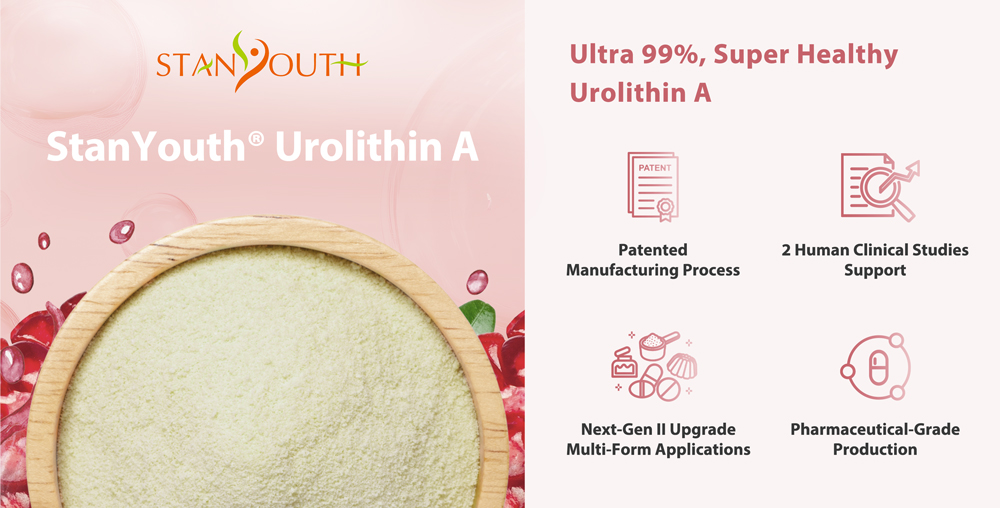
StanYouth® Urolithin A is Bonerge's flagship urolithin A ingredient, produced to over 99% purity and verified by HPLC/HNMR. It's positioned for sleep and circadian health, gut health, NAD⁺/NADH balance, antioxidant and anti-inflammatory support, skin health, and uric acid management, and it's available in oil-soluble, water-soluble, and high-bioavailability softgel delivery formats.
Explore StanYouth® Urolithin A for full specifications and samples.
Bonerge is also going beyond published literature with its own research: a randomized, placebo-controlled, quadruple-blind clinical trial with Huazhong University of Science and Technology on Urolithin A and Fisetin (BeFisetin®), at a scale of human trial that's uncommon among dietary supplement ingredient suppliers. Rather than relying on questionnaires alone, the study uses objective sleep-monitoring tools like polysomnography and actigraphy, plus biomarker testing (gut microbiota, DNA methylation, inflammatory markers) and standardized psychological assessment. The trial is still underway, so Bonerge isn't drawing conclusions until the results are in.
This article is for informational purposes only and does not constitute medical advice. Please consult a qualified healthcare provider before starting any new supplement or treatment regimen.
References:
[1] Yasuda T, Takagi T, Asaeda K, et al. Urolithin A-mediated augmentation of intestinal barrier function through elevated secretory mucin synthesis. Scientific Reports. 2024;14:15706. doi:10.1038/s41598-024-65791-x
[2] Ghosh S, Vanwinkle ZM, Bodduluri SR, et al. Urolithin A activates aryl hydrocarbon receptor-NLRP6-mediated pathways in intestinal epithelial cells to modulate mucosal immunity and strengthen gut barrier integrity. Nature Communications. 2026;17:5411. doi:10.1038/s41467-026-73760-3






 +1(425)866-9043
 sales@bonerge.com