











 Time:Feb 27, 2026
 Share:


Depression is now one of the most common chronic and disabling mental health disorders. Its symptoms include long-term low mood, low self-esteem, physical pain, and changes in sleep or appetite; in severe cases, it can lead to multiple suicide attempts [1].
Global data shows why people are searching for the best mood enhancers:
The Scale: Over 300 million people live with depression, a rate of 4.4% [2].
The Risk: It is the second leading threat to human health due to high suicide and disability rates [2].
The Future: The World Health Organization (WHO) predicts that by 2030, depression will be the #1 cause of the global disease burden [3].
While many use synthetic drugs, these often work slowly or cause side effects [4]. This is why natural mood-support ingredients have become a major focus for clinical research and public interest.

How Brain Inflammation Affects Mood Support
Many people think depression is just "feeling sad." However, it is a complex disorder driven by neuroinflammation and chemical imbalances [6].
Brain inflammation acts as a main driver of the condition [7]. When the body is stressed, it triggers a chain reaction: immune cells in the brain become overactive, pro-inflammatory chemicals are over-released, and the brain's protective barrier is weakened. This disrupts how neurons function, leading to depressive behaviors.
Also, key "messengers" (neurotransmitters) become imbalanced:
Low Serotonin: Causes low mood and an inability to feel pleasure.
Norepinephrine Issues: Lead to fatigue and poor focus.
Low Dopamine: Reduces motivation [8].
Crucially, brain inflammation creates a “vicious cycle.” It stops the body from making serotonin. It also pushes serotonin toward harmful pathways instead [9].
S-Equol is a promising option for mood support because it helps break this cycle. Research shows it can reduce inflammation, restore key neurotransmitters like serotonin, and support healthy brain function [10].
S-Equol as a Natural Mood Support Ingredient: Clinical Evidence
As a key part of the gut-brain axis, S-equol helps regulate mood across different life stages. Here is the evidence for why it is considered one of the best mood support supplements:
Supplements for Mood and Metabolic Issues
Metabolic health and emotions are linked. A study in Nutrition Research (2019) found that 0.25 g/kg of S-equol significantly reduced anxiety and depressive behaviors caused by metabolic dysfunction [10]. It increased activity and reduced "immobility," proving it can help mood issues linked to metabolic imbalance.
FINDINGS
S-equol significantly reduced anxiety- and depressive-like behaviors, increased exploratory activity, and reduced immobility, indicating benefit for mood issues linked to metabolic imbalance.
Stress-Related Brain Protection
Chronic stress and inflammation are closely linked to mood disorders. A study published in Food & Function (2021) investigated the effects of S-equol (10, 20, and 40 mg/kg) in a lipopolysaccharide (LPS)-induced depression model [11].
FINDINGS
S-equol significantly reduced depressive-like behaviors, lowered pro-inflammatory cytokines, restored serotonin and norepinephrine levels, and improved synaptic plasticity. These results suggest S-equol may support mood by reducing inflammation and restoring neurotransmitter balance.
Best Mood Enhancers for PMS/PMDD
Premenstrual mood symptoms are closely linked to hormonal changes and brain signaling. A study published in Neuropsychopharmacology Reports (2022) evaluated the effects of S-equol supplementation in women with premenstrual symptoms over two menstrual cycles [12].
FINDINGS
S-equol significantly improved overall symptom scores, including depression, anxiety, mood swings, and irritability. The results also suggested that gut microbiota composition may influence individual response to supplementation.
Menopausal Mood Support for "Non-Producers"
Menopausal symptoms and mood changes are closely linked to hormonal shifts. A study published in Menopause (2009) evaluated the effects of S-equol supplementation (10 mg/day) in a 12-week randomized, double-blind, placebo-controlled trial involving 134 women [13].
FINDINGS
S-equol significantly improved mood-related outcomes, including reductions in anxiety, tension, depression, and fatigue, along with increased vigor. The effects were particularly evident in women who could not produce equol naturally, supporting its role in menopausal mood support.
Technological Breakthrough: The Bio-Fermentation Advantage
For years, S-equol remained in the laboratory because it was nearly impossible to produce at scale. Natural soy contains only trace amounts of its precursor, and traditional extraction was too costly for the mass market.
The breakthrough came with Advanced Bio-fermentation Technology. Leading companies like Bonerge have pioneered directional fermentation to produce high-purity S-equol.
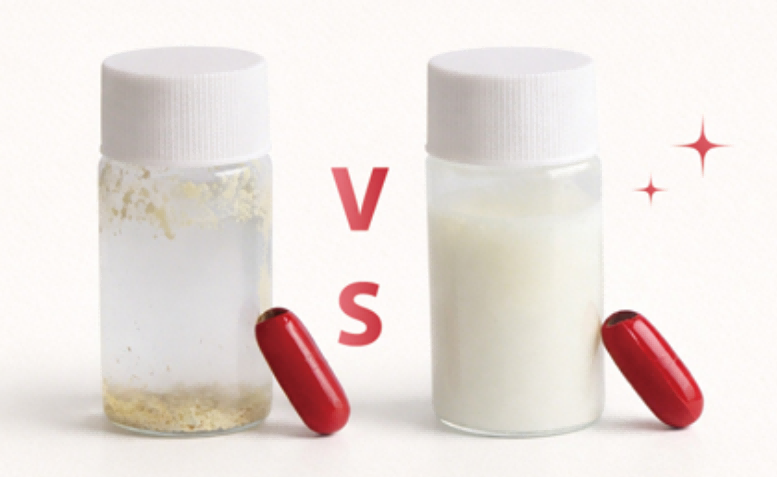
Unlike chemical synthesis, which makes a mix of isomers, directional fermentation produces a pure S-configuration. The equol made inside the human body is identical. This ensures high bioactivity and better absorption. It helps S-equol become the best mood support supplement for the public.
Market Outlook: Why Brands are Choosing S-Equol
S-equol is gaining recognition in the global health market as a solution positioned between traditional Hormone Replacement Therapy (HRT) and standard soy foods.
Strategic Market Position
S-equol offers a profile that is both safer and gentler than HRT, while providing more direct biological activity than typical soy isoflavones. This combination of effectiveness with a low-risk profile presents a clear value proposition for premium brands.
Targeting High-Value Consumers
Health-Conscious Women: Those seeking science-backed, natural solutions for aging, sleep, and long-term mood stability.
Equol Non-Producers: A significant portion of the population (up to 50–70%) cannot produce equol internally [5]. For these consumers, supplementation ensures consistent exposure and supports adherence.
Choosing the Best Mood Support Supplement
EquoYouth® S-equol has emerged as a leading ingredient in this segment. Produced via proprietary microbial fermentation, it delivers >99% purity of the S-configuration.
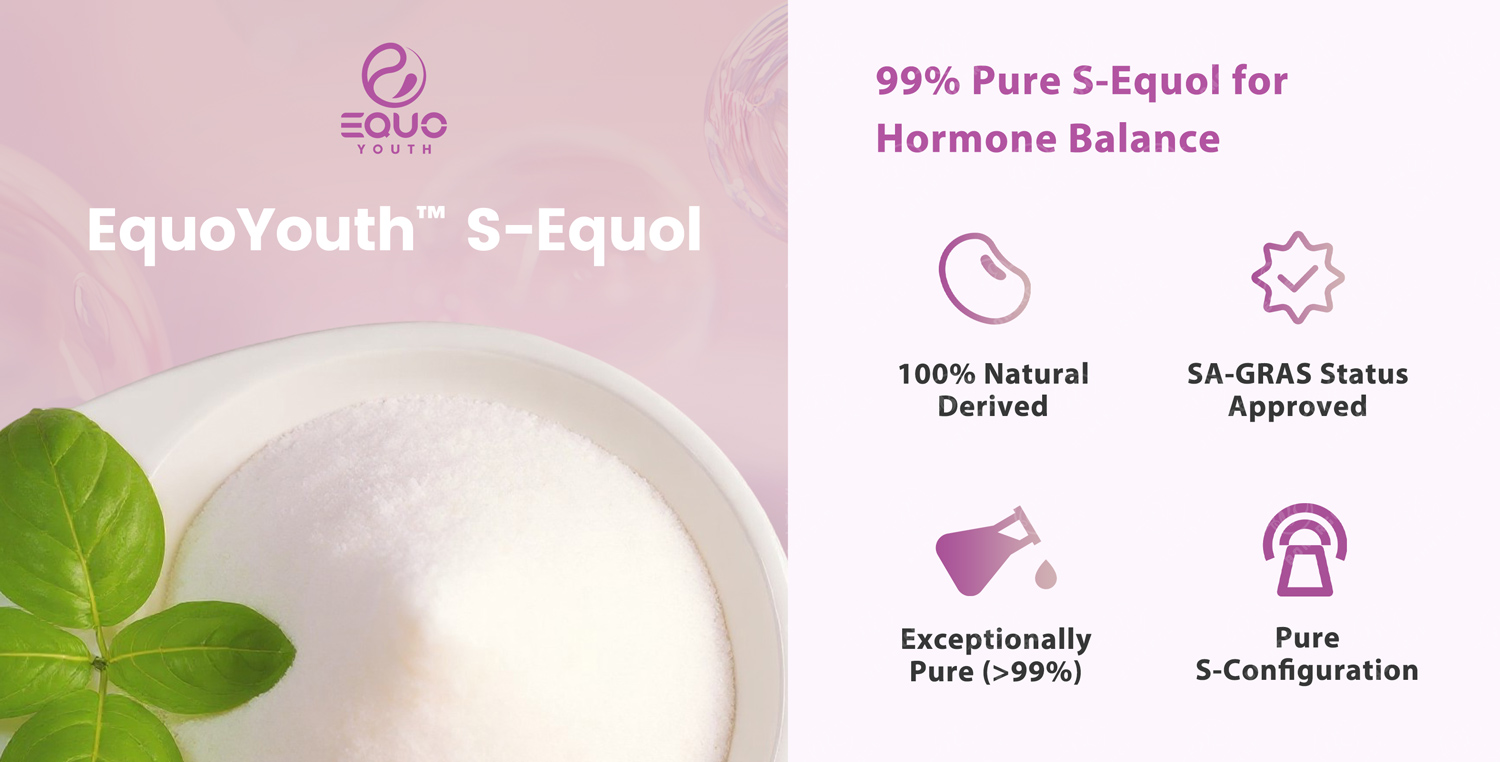
Safety: Certified with US FDA SA-GRAS status.
Trust: Backed by ongoing human clinical trials.
Innovation: Combines scientific validation, regulatory compliance, and manufacturing reliability, providing a strong foundation for global brands seeking differentiated mood support products.
This article is for informational purposes only and does not constitute medical advice. Please consult a qualified healthcare provider before starting any new supplement or treatment regimen.
References:
[1] Xia CY, Guo YX, Lian WW, Yan Y, Ma BZ, Cheng YC, Xu JK, He J, Zhang WK. The NLRP3 inflammasome in depression: Potential mechanisms and therapies. Pharmacol Res. 2023 Jan;187:106625. doi: 10.1016/j.phrs.2022.106625. Epub 2022 Dec 21. PMID: 36563870.
[2] Yu X, Zuo Y, Yang Y, Cheng W, Shi M, Cheng L, Shao Q, Xu Y, Chen L. Mechanism of Microbiota-Gut-Brain in Perimenopausal Depression: An Inflammatory Perspective. Expert Rev Mol Med. 2025 Sep 4;27:e28. doi: 10.1017/erm.2025.10011. PMID: 40905280; PMCID:
[3] Xia CY, Guo YX, Lian WW, Yan Y, Ma BZ, Cheng YC, Xu JK, He J, Zhang WK (2023) The NLRP3 inflammasome in depression: Potential mechanisms and therapies. Pharmacological Research 187, 106625. PMC12558631.
[4] Pearson K, Beier K, Mardis T, Munoz B, Zaidi A. The Neurochemistry of Depression: The Good, The Bad and The Ugly. Mo Med. 2024 Jan-Feb;121(1):68-75. PMID: 38404431; PMCID: PMC10887465.
[5] Li Y, Li T, Zhang Y, Wang Y, Wu G, Tan Y. Microbial metabolites in the gut-brain axis: their impact on depression pathophysiology and treatment. Neuroscience. 2026 Jan 26;593:1-7. doi: 10.1016/j.neuroscience.2025.12.002IF: 2.8 Q3 . Epub 2025 Dec 2. PMID: 41344619.
[6] Beurel, E., Toups, M., Nemeroff, C.B., 2020. The bidirectional relationship of depression and inflammation: double trouble. Neuron 107 (2), 234–256.
[7] Zhang, L., Xu, Z., Jia, Z., Cai, S., Wu, Q., Liu, X., Hu, X., Bai, T., Chen, Y., Li, T., Liu, Z., Wu, B., Zhu, J., Zhou, H., 2025. Modulating mTOR-dependent astrocyte substate transitions to alleviate neurodegeneration. Nat. Aging 5 (3), 468–485.
[8]Sălcudean, A.; Bodo, C.-R.; Popovici, R.-A.; Cozma, M.-M.; Păcurar, M.; Crăciun, R.-E.; Crisan, A.-I.; Enatescu, V.-R.; Marinescu, I.; Cimpian, D.-M.; et al. Neuroinflammation—A Crucial Factor in the Pathophysiology of Depression—A Comprehensive Review. Biomolecules 2025, 15, 502.
[9] Muthyala RS, Ju YH, Sheng S, Williams LD, Doerge DR, Katzenellenbogen BS, Helferich WG, Katzenellenbogen JA. Equol, a natural estrogenic metabolite from soy isoflavones: convenient preparation and resolution of R- and S-equols and their differing binding and biological activity through estrogen receptors alpha and beta. Bioorg Med Chem. 2004 Mar 15;12(6):1559-67. doi: 10.1016/j.bmc.2003.11.035IF: 3.0 Q1 . PMID: 15018930.
[10] Bax EN, Cochran KE, Mao J, Wiedmeyer CE, Rosenfeld CS. Opposing effects of S-equol supplementation on metabolic and behavioral parameters in mice fed a high-fat diet. Nutr Res. 2019 Apr;64:39-48. doi: 10.1016/j.nutres.2018.12.008IF: 3.1 Q2 . Epub 2018 Dec 21. PMID: 30802721; PMCID: PMC6435421.
[11] Lu C, Gao R, Zhang Y, Jiang N, Chen Y, Sun J, Wang Q, Fan B, Liu X, Wang F. S-equol, a metabolite of dietary soy isoflavones, alleviates lipopolysaccharide-induced depressive-like behavior in mice by inhibiting neuroinflammation and enhancing synaptic plasticity. Food Funct. 2021 Jul 5;12(13):5770-5778. doi: 10.1039/d1fo00547bIF: 5.4 Q1 . PMID: 34038497.
[12] Takeda T, Chiba Y. Evaluation of a natural S-equol supplement in treating premenstrual symptoms and the effect of the gut microbiota: An open-label pilot study. Neuropsychopharmacol Rep. 2022 Jun;42(2):127-134. doi: 10.1002/npr2.12234IF: 1.5 Q3 . Epub 2022 Feb 6. PMID: 35128842; PMCID: PMC9216369.
[13] Ishiwata N, Melby MK, Mizuno S, Watanabe S. New equol supplement for relieving menopausal symptoms: randomized, placebo-controlled trial of Japanese women. Menopause. 2009 Jan-Feb;16(1):141-8. doi: 10.1097/gme.0b013e31818379fa. PMID: 19131846.






 +1(425)866-9043
 sales@bonerge.com