












 Time:Mar 25, 2026
 Share:


Menopause brings a wide range of physical and emotional changes. As estrogen levels decline, many women experience symptoms such as hot flashes, sleep disturbances, mood changes, and bone loss. Because of these hormonal shifts, nutrition strategies have become an important area of interest for women seeking natural support.
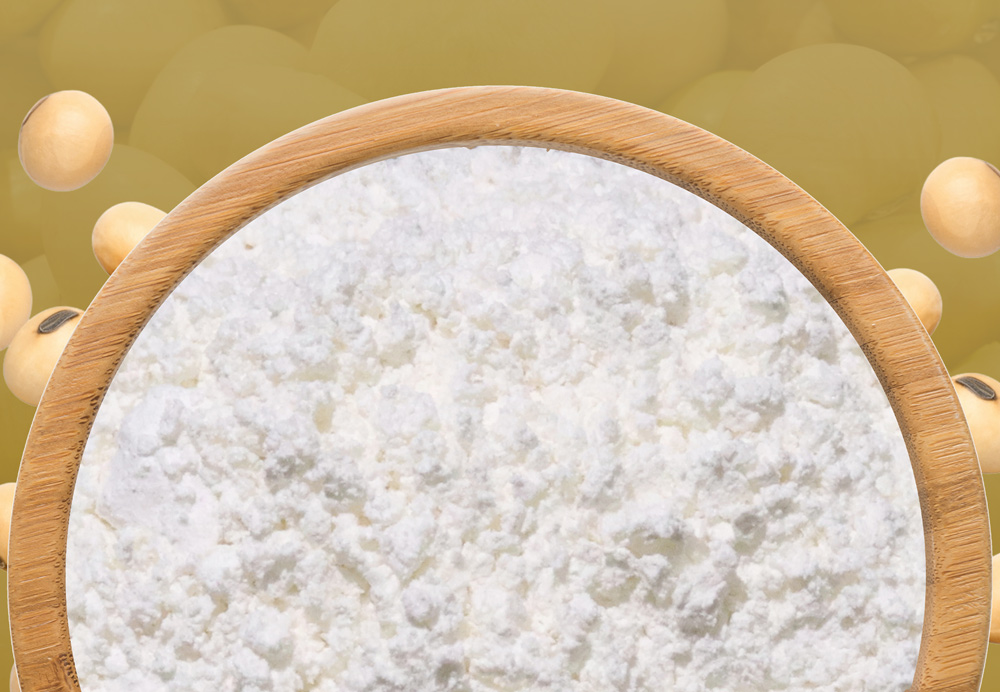
Among the most widely discussed dietary options are soy foods and soy supplements for menopause. Soy contains plant compounds called isoflavones that can interact with estrogen receptors in the body. Over the past two decades, research has explored how soy compounds may help support women during menopause.[1,2]
Understanding how soy works, and why some women benefit more than others, can clarify its role in managing menopause.

Soy and Menopause: Why Soy Is Often Recommended
Soy has long been associated with women's health. Populations with traditionally high soy intake, especially in parts of Asia, have reported fewer menopausal symptoms. These include hot flashes.[3]
The potential explanation lies in isoflavones, natural plant caompounds found in soybeans. Scientists classify isoflavones as phytoestrogens because their chemical structure lets them interact with estrogen receptors in the body.[4]
When estrogen levels decline during menopause, these compounds may provide mild estrogen-like activity. While their effects are weaker than the body’s own estrogen, this interaction may help support some systems. Hormone changes can affect these systems, including bone metabolism, skin structure, and vascular function.
Because of these properties, soy-based nutrition has become a common component of many menopause support strategies.
Common Soy Foods That Provide Isoflavones
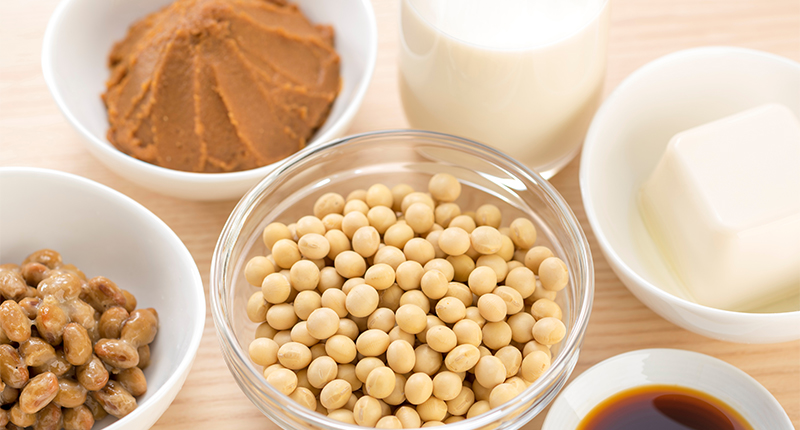
Many traditional foods contain meaningful levels of soy isoflavones. Incorporating these foods into the diet is often the first step for women exploring nutritional approaches to menopause support.
Common soy foods for menopause include:
Tofu
Tempeh
Miso
Edamame
Soy milk
Soybeans and soy-based foods—such as tofu, soy milk, and tempeh—are key sources of isoflavones that may help relieve menopausal symptoms. Whole soybeans provide ~128 mg isoflavones per 100 g, while tofu contains ~20–30 mg per 100 g.
A daily intake of 50–100 mg isoflavones (≈100–150 g soybeans or equivalent) is generally recommended; individuals with hormone-sensitive conditions should consult a healthcare professional and consume in moderation.[5]
The Equol Gap: Why Soy Foods Work Better for Some Women
S-equol is a key bioactive metabolite produced from soy isoflavones—primarily daidzein—through the action of specific intestinal microbiota. This implies that the health benefits of consuming soy foods depend, in part, on an individual's gut microbiome being able to complete this biotransformation process.
When you consume soy isoflavones, certain intestinal bacteria convert the isoflavone daidzein into S-equol, a compound with significantly stronger biological activity.
However, not everyone has the gut microbiota capable of performing this conversion. Research suggests that only 30–50% of people in Asian groups and about 20–30% in Western groups are natural equol producers [6, 7].
This "equol gap" explains why the health effects of soy foods vary widely; for women who cannot produce S-equol efficiently, the clinical benefits of soy may be limited.
The Shift from Traditional Soy Supplements to Targeted S-Equol
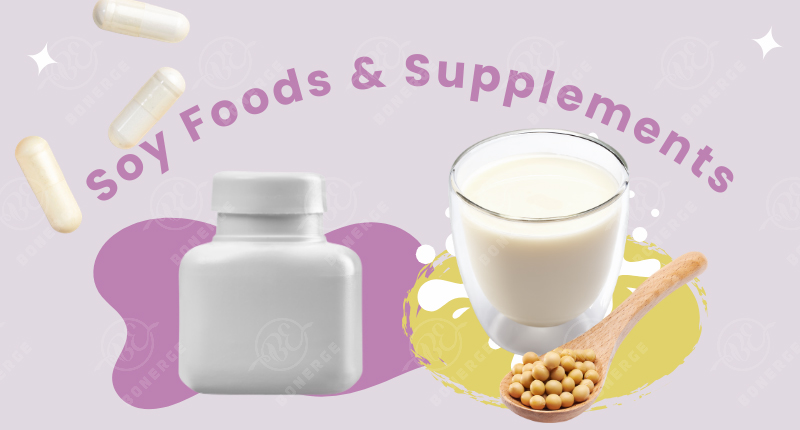
While whole soy foods provide essential nutrients like fiber and protein, many women turn to supplements for a more standardized dose of isoflavones.
However, traditional soy isoflavone supplements face the same challenge as food: their efficacy still depends on an individual’s internal ability to convert daidzein into S-equol.This limitation has led to a significant shift in nutritional science. Instead of relying on uncertain gut conversion, researchers have developed targeted strategies to provide S-equol directly.
By supplementing with the end-metabolite itself, women can bypass the need for specific gut bacteria, ensuring they receive the full biological benefits of soy’s most active compound regardless of their "producer status."
The Role of S-Equol in Menopause Support
Because S-equol is the most biologically active metabolite derived from soy isoflavones, it has attracted increasing scientific interest.
One important reason is its receptor selectivity. The body contains two primary estrogen receptors:
ERα, which is primarily expressed in breast and uterine tissue
ERβ, which is widely distributed in tissues such as bone, brain, skin, and vascular endothelium
Research shows that S-equol binds much more strongly to estrogen receptor beta (ERβ) (Ki = 0.73 nM) than to estrogen receptor alpha (ERα) (Ki = 6.41 nM), about nine times higher. This selectivity comes from its molecular fit with the ER binding domain. Traditional hormone therapies activate both ERα and ERβ, which can increase breast and endometrial cell proliferation. S-equol’s ERβ preference may provide benefits such as symptom relief and bone support while reducing the proliferative risks of ERα activation [8].
Building on this targeted mechanism, randomized controlled trials have confirmed that daily S-equol supplementation leads to measurable improvements in several menopause-related outcomes:
Vasomotor symptom relief: Significant relief from the frequency and intensity of hot flashes and night sweats[9].
Support for Bone Metabolism: Positive impact on markers tied to bone density, helping to counteract menopause-related bone loss[10].
Improvement in Skin Condition: Visible benefits for skin health, including reduced wrinkle depth and enhanced elasticity [11].
Safety Profile: A Multi-Dimensional Analysis of S-Equol
Safety is a primary concern for women considering soy-based support. Current research indicates that S-equol has a favorable safety profile across multiple physiological markers.
1. Breast Safety
A key study involving postmenopausal women undergoing breast biopsies found no significant association between S-equol production status and overall breast pathology, ductal epithelial hyperplasia, or breast cancer risk [12]. Unlike traditional hormone therapies, S-equol’s selective binding to estrogen receptors means it does not induce abnormal cell proliferation in breast tissue.
2. Reproductive Health
Toxicological research has confirmed that long-term exposure to S-equol does not cause pathological damage to reproductive organs. In animal models, high-dose dietary exposure showed no adverse effects on the ovaries, testes, or prostate, nor did it impact overall fertility [13].
3. Medication Compatibility
For women undergoing hormone therapy for breast cancer, drug interactions are a critical consideration. Clinical evidence shows that a standard daily dose of 10 mg of S-equol does not interfere with the pharmacokinetics of oral hormone therapy drugs, ensuring that it does not reduce treatment efficacy or increase side effects [14].
4. Long-Term Tolerability
Subchronic toxicity studies in Sprague Dawley rats demonstrated that long-term supplementation (up to 90 days) at various doses resulted in no abnormalities in blood chemistry, coagulation, or organ weights [15]. Human clinical trials further support this, showing excellent tolerability with no significant treatment-related adverse events, such as nausea or dizziness, across different age groups [16].
Choosing the Right Soy-Based Strategy
Soy foods and soy supplements both play a role in supporting women during the menopausal transition. Whole soy foods offer nutritional diversity and natural sources of isoflavones, while supplements may provide more consistent intake levels.
However, individual responses to soy can vary depending on gut microbiota and the body's ability to produce S-equol. As studies examine this metabolite, scientists now see S-equol as key to how soy works in the body.
For women looking for nutrition support during menopause, balanced food choices can help. Studied ingredients may also help. The strategic integration of nutrient-dense whole foods with clinically-validated ingredients creates a synergistic approach to long-term hormonal health and systemic well-being."
Future Perspectives: From Soy Isoflavones to S-Equol
Recent research suggests that S-equol may represent a more targeted approach to soy-based nutrition for menopause support. As the most active metabolite from soy isoflavones, S-equol is gaining more attention. Researchers use it to develop new nutritional ingredients for women’s health.
Biotechnology Advances: Enabling the Commercialization of S-Equol
Although the biological role and potential benefits of S-equol have been widely studied, its large-scale application in nutrition has only become feasible in recent years. A key challenge lies in its natural availability—plants such as soybeans contain only trace amounts of S-equol precursors, making direct extraction inefficient and costly.
Advances in microbial fermentation have provided a practical solution. By selecting specific bacterial strains capable of converting daidzein into S-equol, researchers have developed controlled fermentation systems that enable scalable and consistent production.
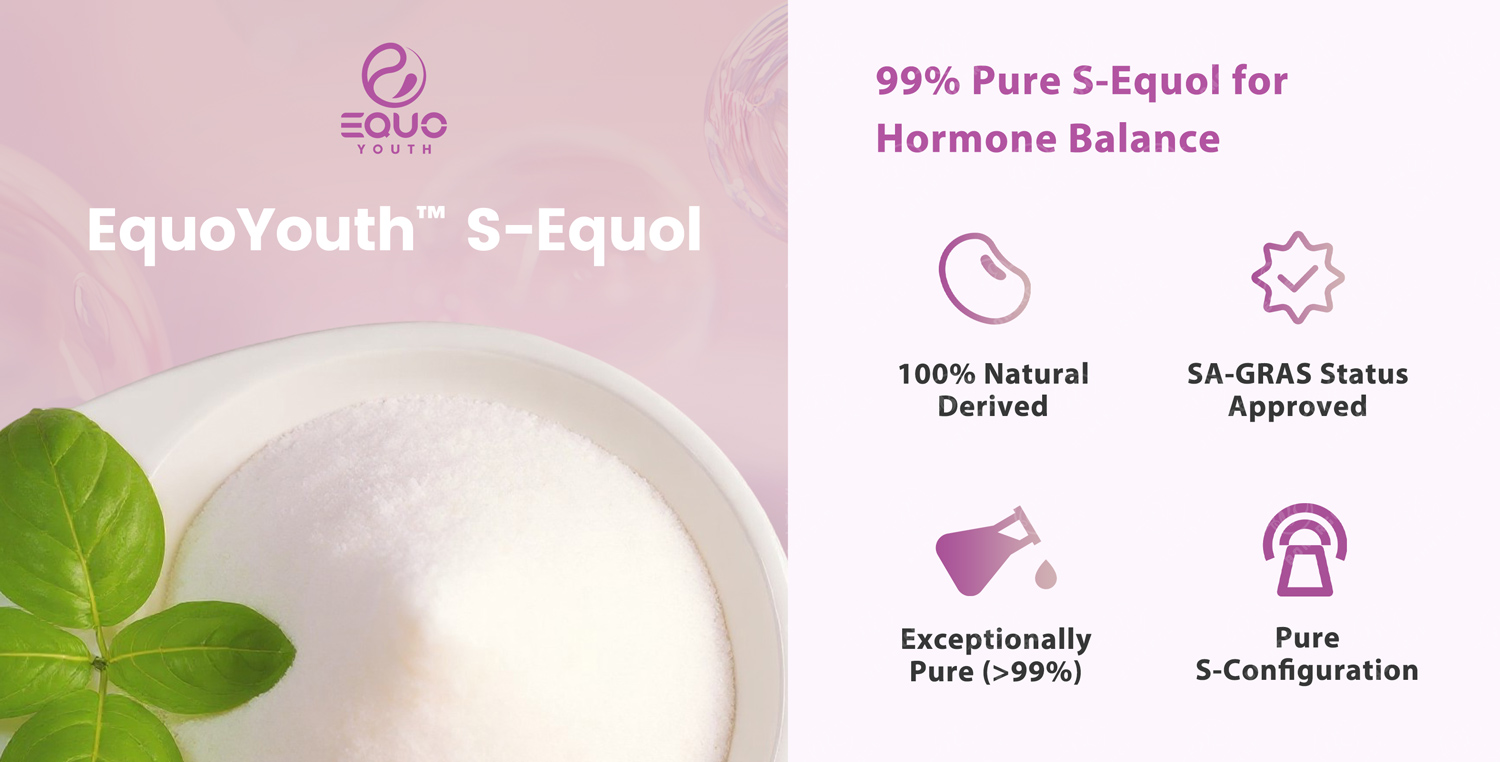
Importantly, fermentation-derived S-equol is produced in its pure S-configuration, which is structurally identical to the form generated in the human body. This contrasts with chemically synthesized equol, which often exists as a mixture of S- and R-isomers. The ability to produce bioactive S-equol with high purity and consistency has significantly improved its feasibility as a nutritional ingredient.
These technological developments have helped bridge the gap between scientific research and real-world application, supporting the growing use of S-equol in menopause-focused nutritional strategies.
This article is for informational purposes only and does not constitute medical advice. Please consult a qualified healthcare provider before starting any new supplement or treatment regimen.
References:
[1] Messina M. Soy foods, isoflavones, and the health of postmenopausal women. The American Journal of Clinical Nutrition. 2014;100(Suppl 1):423S–430S.
[2] Chen MN, Lin CC, Liu CF. Efficacy of phytoestrogens for menopausal symptoms: a meta-analysis and systematic review. Climacteric. 2015;18(2):260–269.
[3] Adlercreutz H. Phytoestrogens and breast cancer. The Journal of Steroid Biochemistry and Molecular Biology. 2002;83(1–5):113–118.
[4] Setchell KDR. Soy isoflavones—benefits and risks from nature's selective estrogen receptor modulators (SERMs). Journal of the American College of Nutrition. 2001;20(5):354S–362S.
[5] United States Department of Agriculture. USDA Database for the Isoflavone Content of Selected Foods, Release 2.1.
[6] Setchell KDR, Cole SJ. Method of defining equol-producer status and its frequency among vegetarians. Journal of Nutrition. 2006;136(8):2188–2193.
[7] Lampe JW. Is equol the key to the efficacy of soy foods? The American Journal of Clinical Nutrition. 2009;89(5):1664S–1667S.
[8] Setchell KD, Clerici C, Lephart ED, et al. S-equol, a potent ligand for estrogen receptor beta, is the exclusive enantiomeric form of the soy isoflavone metabolite produced by human intestinal bacterial flora. Am J Clin Nutr. 2005;81(5):1072-1079. doi:10.1093/ajcn/81.5.1072
[9] Aso T, Uchiyama S, Matsumura Y, et al. A natural S-equol supplement alleviates hot flushes and other menopausal symptoms in equol nonproducing postmenopausal Japanese women [J]. Journal of women's health (2002), 2012, 21(1): 92-100.
[10] Tousen Y, Ezaki J, Fujii Y, et al. Natural S-equol decreases bone resorption in postmenopausal, non-equol-producing Japanese women: a pilot randomized, placebo-controlled trial [J]. Menopause (New York, NY), 2011, 18(5): 563-74.
[11] Oyama A, Ueno T, Uchiyama S, et al. The effects of natural S-equol supplementation on skin aging in postmenopausal women: a pilot randomized placebo-controlled trial [J]. Menopause (New York, NY), 2012, 19(2): 202-10.
[12]Virk-Baker MK, Barnes S, Krontiras H, et al. S-(-)equol producing status not associated with breast cancer risk among low isoflavone-consuming US postmenopausal women undergoing a physician-recommended breast biopsy. Nutr Res. 2014;34(2):116-25.
[13] Brown NM, Lindley SL, Witte DP, et al. Impact of perinatal exposure to equol enantiomers on reproductive development in rodents. Reprod Toxicol. 2011;32(1):33-42.
[14] Sambe T, Imamura CK, Hida N, et al. Lack of effects of S-equol-containing supplement on the pharmacokinetics of oral hormone therapy drugs for breast cancer. Cancer Chemother Pharmacol. 2025;95(1):123.
[15] AnandaKumar SR, Handral M, Seekallu S. Safety assessment of (S)-Equol: Subchronic toxicity study in Sprague Dawley Rats. Toxicol Rep. 2024;13:101823.
[16] Jackson RL, Greiwe JS, Desai PB, et al. Single-dose and steady-state pharmacokinetic studies of S-equol, a potent nonhormonal, estrogen receptor β-agonist being developed for the treatment of menopausal symptoms. Menopause. 2011;18(2):185-93.






 +1(425)866-9043
 sales@bonerge.com