














 Time:Jan 23, 2026
 Share:


As interest in plant-based, non-hormonal approaches to women’s health continues to grow, S-equol has emerged as one of the most extensively studied and biologically relevant compounds derived from soy isoflavones.
This article provides a structured, evidence-based overview of S-equol—covering what it is, how it works, how it differs from soy isoflavones, its benefits, safety profile, and the populations for whom it may or may not be suitable.
What Is S-Equol?
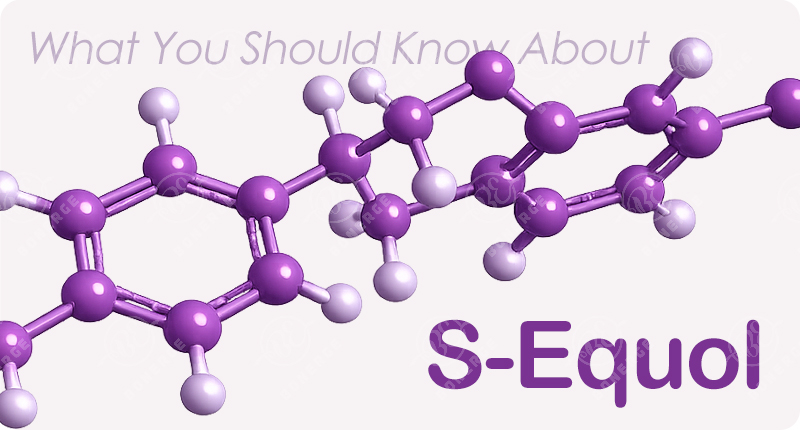
S-equol (chemical name: 7-hydroxy-3-(4-hydroxyphenyl)-chroman) is a non-steroidal compound belonging to the isoflavone family.
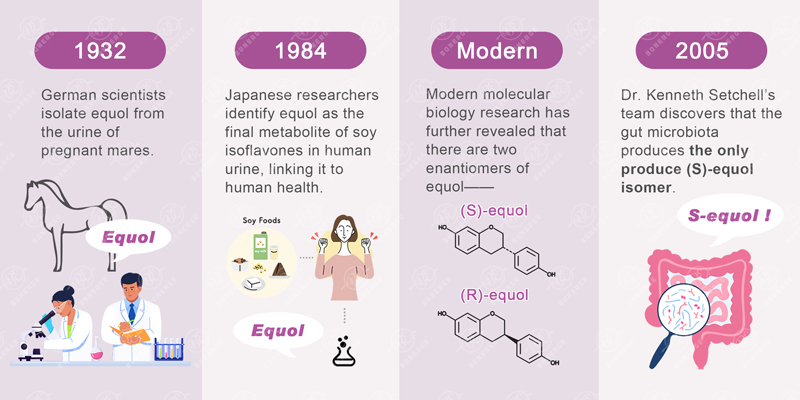
The scientific history of equol dates back to 1932, when German researchers first isolated equol from the urine of pregnant mares. However, its relevance to human health was not recognized until 1984, when Japanese scientists identified equol as the final metabolite of soy isoflavones in human urine, establishing its role in human nutritional metabolism [1].
Subsequent molecular research revealed that equol exists in two enantiomeric forms: (S)-equol and (R)-equol.
A major breakthrough occurred in 2005, when Setchell and colleagues demonstrated that only S-equol is naturally produced by human intestinal microbiota during the metabolism of the soy isoflavone daidzein [1].
Importantly, although equol is derived from soy isoflavones, only 20–35% of adults possess the specific gut bacteria required to produce S-equol endogenously, making direct S-equol intake particularly relevant for a large proportion of the population [2].
How Does S-Equol Work?
S-Equol as an “intelligent key” to estrogen receptors
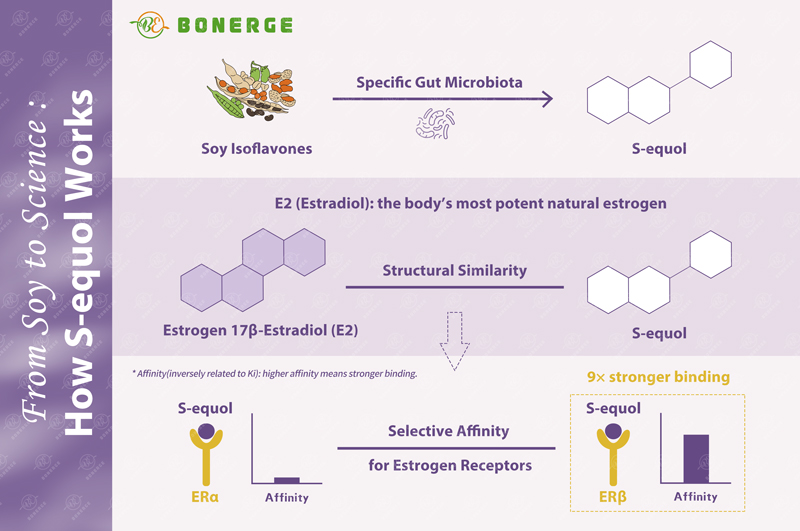
S-equol is the only bioactive equol enantiomer produced in the human body. Structurally, it closely resembles 17β-estradiol, the body’s primary endogenous estrogen [2]. However, S-equol exhibits a unique and clinically meaningful feature:
High selectivity for estrogen receptor beta (ERβ).
Binding studies have shown that S-equol has a significantly higher affinity for ERβ (Ki ≈ 0.73 nM) compared with estrogen receptor alpha (ERα; Ki ≈ 6.41 nM) [3,4].
This receptor subtype preference enables S-equol to:
Exert estrogen-like effects under low-estrogen conditions (e.g., postmenopause)
Demonstrate modulatory or mild anti-estrogenic activity in high-estrogen environments, such as certain estrogen-sensitive tissues [5,6]
This bi-directional regulatory behavior provides a more balanced hormonal support profile and helps explain why S-equol is often considered a gentler alternative to conventional hormone replacement approaches.
S-Equol vs Soy Isoflavones
Soy isoflavones are commonly consumed through foods such as tofu, soy milk, and soybeans. S-equol, however, is not directly present in soy; it is a downstream metabolite formed after intestinal transformation.
Although closely related, the two differ substantially in bioavailability, metabolism, and biological activity.
Circulating Bioavailability
Preclinical research shows that S-equol has approximately 18-fold higher affinity for ERβ than its precursor daidzein and exhibits binding characteristics similar to genistein [2].
In addition, reduced binding of S-equol to serum proteins enhances its biological activity, allowing a greater proportion of the compound to remain pharmacologically available in circulation.
Notably, nearly 50% of circulating S-equol exists in the free (unbound) form, which is significantly higher than that observed for daidzein (45.8%) and genistein (18.7%).
Gastrointestinal and Blood–Brain Barrier Permeability
Studies using the parallel artificial membrane permeability assay (PAMPA) indicate that S-equol has greater permeability across both the gastrointestinal tract and the blood–brain barrier compared with daidzein or genistein, supporting its potential neurological relevance.
Absorption Efficiency
Soy isoflavones often exist as glycosides that require deglycosylation and microbial conversion before absorption, reducing efficiency.
By contrast, S-equol is a small, bioactive molecule that does not require complex metabolic conversion. Unlike daidzein or genistein, S-equol undergoes minimal biotransformation once in circulation, enabling it to be directly absorbed through the intestinal epithelium and enter systemic circulation efficiently.
Metabolic Stability
The conversion of soy isoflavones into active metabolites depends heavily on individual gut microbiota composition, diet, and lifestyle, resulting in variable outcomes.
Direct S-equol intake bypasses this metabolic uncertainty, allowing more rapid and stable plasma concentrations to be achieved.
In simple terms, soy isoflavones are the precursor, while S-equol represents the refined, bioactive form.
The Scientific Research Journey of S-Equol
A PubMed search indicates that over 180 scientific publications related to S-equol have been published since 2004. Due to its estrogen receptor–modulating properties, research has focused on conditions associated with altered estrogen signaling, including:
Menopausal health
Bone and joint integrity
Brain and neurological function
Metabolic regulation
Hormone-sensitive tissues such as breast and prostate
This growing body of evidence has established S-equol as one of the most thoroughly characterized non-hormonal estrogen modulators.
Benefits of S-Equol
Menopausal Symptom Relief
In randomized, double-blind, placebo-controlled trials, postmenopausal women consuming 10 mg of S-equol daily for 12 weeks experienced a 58.7% reduction in hot flash frequency, compared with 34.5% in the placebo group [5].
Significant reductions in neck and shoulder muscle stiffness were also observed.
Skin Health and Anti-Aging
Clinical studies in postmenopausal women show that daily intake of 10–30 mg S-equol for 12 weeks significantly reduced wrinkle depth and area in a dose-dependent manner.
Additional studies in men demonstrated improvements in skin smoothness, hydration, tone uniformity, and pigmentation [5].
Mood and Neurological Support
In vitro research indicates that S-equol promotes neuronal health by increasing dendritic complexity in Purkinje cells and supporting astrocyte proliferation.
Human clinical trials further show that S-equol supplementation significantly reduces depression, anxiety, and fatigue scores in menopausal women, while improving overall vitality [5].
Bone and Joint Health
Preclinical and animal studies demonstrate that S-equol:
Promotes osteoblast differentiation
Suppresses cartilage-degrading enzymes
Reduces osteoarthritis severity scores in postmenopausal models
These effects are thought to be mediated through reductions in oxidative stress and modulation of bone remodeling pathways.
Safety of S-Equol
S-equol has been extensively evaluated for safety:
Naturally occurring and studied since the 1980s
Preferential ERβ binding supports uterine and breast safety [3,4]
Rapid absorption with peak plasma levels reached within 1–3 hours
Elimination half-life of approximately 7–10 hours
More than 80% excreted in urine within 24 hours
No evidence of genotoxicity, reproductive toxicity, or chronic toxicity in in vitro or in vivo studies
Human clinical studies report good tolerability even at high oral doses (up to 160 mg per day, three times daily for 14 days), with no drug-related serious adverse events observed.
By contrast, R-equol lacks sufficient systematic safety and toxicological data.
Who Is S-Equol For—and Who Is Not?
Suitable Populations
1. Perimenopausal and Postmenopausal Women
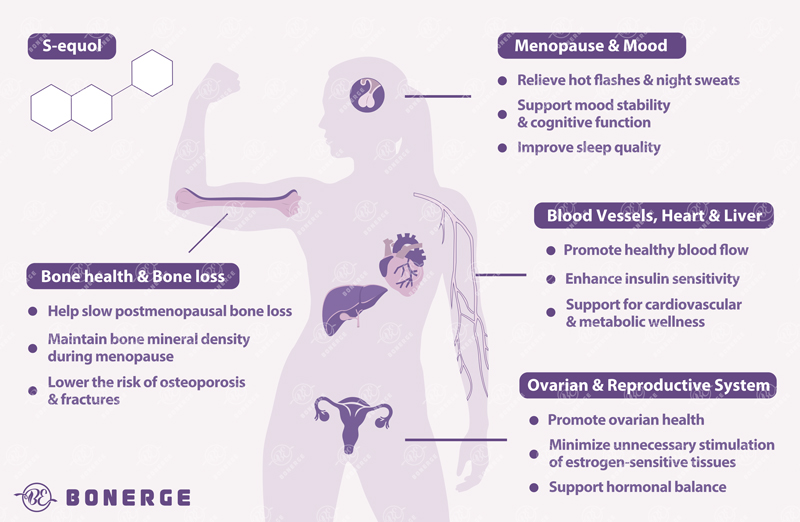
This is the primary population with the strongest body of clinical evidence. Women undergoing hormonal transitions often experience hot flashes, night sweats, mood changes, muscle stiffness, and bone density loss. Through its selective affinity for estrogen receptor beta (ERβ), S-equol provides non-hormonal, estrogen-like support without conventional hormone replacement.
2. Individuals Focused on Skin Aging and Healthy Aging
For adults over 35 experiencing visible signs of skin aging—such as wrinkles, dryness, reduced elasticity, and uneven tone—S-equol may support skin health through antioxidant activity and modulation of skin-related biological pathways.
3. Populations at Higher Risk of Bone Loss
Older adults, individuals with low physical activity levels, insufficient calcium intake, or a family history of osteoporosis may benefit from S-equol as part of a broader bone health nutrition strategy.
4. Individuals Concerned with Cardiovascular Health
Due to its antioxidant properties and potential support for endothelial function, S-equol has been studied in the context of cardiovascular health management. It should not replace prescribed medications, and individuals with existing conditions should consult healthcare professionals.
5. Equol Non-Producers
A significant proportion of adults are unable to convert soy isoflavones into equol due to gut microbiota composition. For confirmed equol non-producers, direct S-equol supplementation may provide access to the biological effects otherwise unavailable through soy intake alone.
Populations Requiring Caution or Avoidance
Individuals with estrogen-dependent cancers
Those with estrogen-related gynecological conditions (e.g., endometriosis, uterine fibroids)
Pregnant or breastfeeding women
Individuals with known allergies to soy or equol-related compounds
Children and adolescents
Individuals taking anticoagulants, hormone therapies, or other medications requiring medical supervision
Common S-Equol Ingredient Combinations in Finished Products
S-equol is frequently formulated with complementary ingredients to address specific health goals:
| Functional Focus | Common Co-Ingredients | Formulation Rationale |
Menopausal support | Black cohosh, B vitamins, soy isoflavones | Multi-pathway symptom management |
Bone & joint health | Calcium, vitamin D, glucosamine, chondroitin | Structural and metabolic support |
Beauty & anti-aging | Ergothioneine, collagen peptides, hyaluronic acid, ceramides, vitamin C | Inside-out skin support |
Mood & sleep | GABA, L-theanine, hops extract, magnesium glycinate | Nervous system balance |
Gut & metabolism | Probiotics, prebiotics, dietary fiber | Microbiota–hormone axis support |
Energy & vitality | Ginseng, maca, eleuthero, B vitamins | Fatigue and vitality support |
Prostate health (men) | Saw palmetto, pumpkin seed oil, lycopene, zinc | Hormonal balance and prostate support |
References
[1] Setchell KD, Brown NM, Lydeking-Olsen E. The clinical importance of the metabolite equol: a clue to the effectiveness of soy and its isoflavones. The Journal of Nutrition. 2002;132(12):3577–3584.
[2] Setchell KD, Clerici C, Lephart ED, et al. Equol: history, chemistry, and formation. The Journal of Nutrition. 2010;140(7):1355S–1362S.
[3] Setchell KD, Zhao X, Shoaf SE, Ragland K. S-equol, a potent ligand for estrogen receptor beta, is the exclusive enantiomeric form of the soy isoflavone metabolite produced by human intestinal bacterial flora. The American Journal of Clinical Nutrition. 2005;81(5):1072–1079.
[4] Kuiper GGJM, Lemmen JG, Carlsson B, et al. Comparison of the ligand binding specificity and transcript tissue distribution of estrogen receptors alpha and beta. Endocrinology. 1997;138(3):863–870.
[5] Ishiwata N, Melby MK, Mizuno S, Watanabe S. New equol supplement for relieving menopausal symptoms: a randomized, placebo-controlled trial. Menopause. 2009;16(1):141–148.
[6] Choi EJ, Jung JY, Kim GH. Equol induced apoptosis via cell cycle arrest in human breast cancer MDA-MB-453 but not MCF-7 cells.
Molecular Medicine Reports. 2008;1(2):239–244.





 +1(425)866-9043
 sales@bonerge.com